
Classic Spaghetti Aglio e Olio (Garlic & Oil Pasta)
Classic Spaghetti Aglio e Olio is the most delicious, easy dinner recipe you will ever make. Pasta with garlic, Parmesan, chilli flakes and parsley? Delizioso!
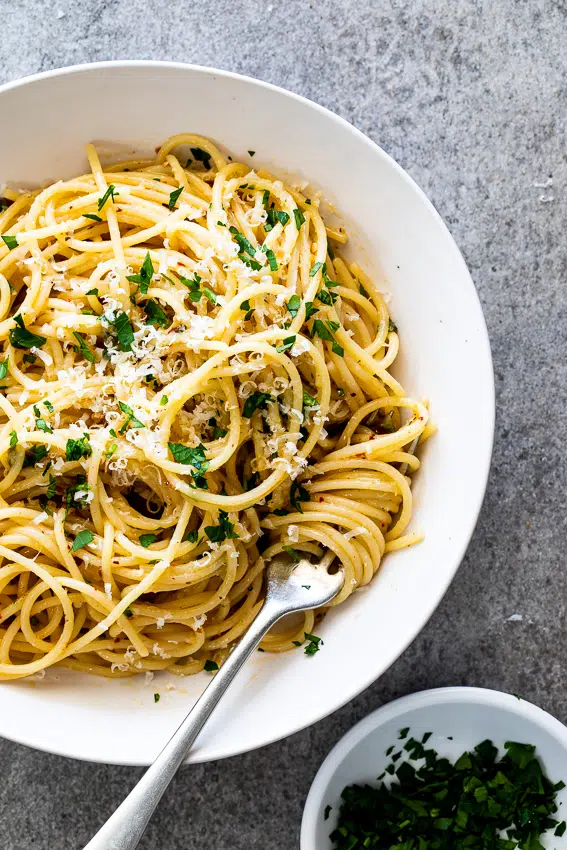
What is Aglio e Olio?
Aglio e olio (pronounced AH-lyoh eh OH-lyoh) is a classic Italian pasta dish that translates simply to “garlic and oil”, and that’s essentially all it is. Originating from Naples, Italy, this humble spaghetti dish has been a staple of Italian home cooking for centuries, proving that sometimes the simplest recipes are the most satisfying.
Made with just a handful of pantry ingredients (garlic, extra virgin olive oil, red pepper flakes, and pasta), aglio e olio is the dish Italians turn to for a quick, flavorful meal any night of the week. It’s often called “midnight spaghetti” because it’s the perfect thing to throw together when you get home late and need something delicious on the table in under 20 minutes.
What makes this dish so special is the technique. When you slowly toast thinly sliced garlic in good olive oil, then bring it all together with starchy pasta water, you create a silky, flavour-packed sauce that clings to every strand of spaghetti. It’s pure Italian comfort food at its best.
Tips for Perfect Aglio e Olio
Because this dish is so simple, technique matters. Here are the tips that make the difference between average and restaurant-worthy:
Don’t burn the garlic. This is the number one mistake. Keep the heat on medium-low and watch it carefully. You want the garlic light golden and fragrant, not brown. Burnt garlic turns bitter and will ruin the dish. If it goes too dark, start over.
Use good quality extra virgin olive oil. The oil isn’t just a cooking medium here, it IS the sauce. This is the time to reach for the good stuff: a fruity, flavourful extra virgin olive oil makes all the difference.
Reserve your pasta water. Don’t skip this step. That starchy cooking water is what transforms oil and garlic into an actual sauce. It emulsifies with the olive oil to create that silky, glossy coating you see in the best versions of this dish.
Undercook your pasta slightly. Pull the spaghetti from the water about 1 minute before it’s al dente. It will finish cooking in the garlic oil, absorbing all that flavour as it does.
Slice, don’t mince, the garlic. Thinly sliced garlic toasts more evenly and gives you those beautiful golden chips throughout the pasta. Minced garlic burns too quickly and can turn into a paste.
Ingredients and Substitutions
Here’s what you’ll need to make this classic aglio e olio, along with easy swaps if you need them:
- Spaghetti. The traditional pasta for aglio e olio and the one I recommend. Any good dried spaghetti will work, you don’t need to go artisan here, though bronze-die cut pasta does grip the sauce a little better. If you’re gluten-free, a rice or corn-based spaghetti works as a substitute, just keep in mind the pasta water won’t be quite as starchy so you may need a little extra to get the sauce silky.
- Fresh garlic. This is the star of the dish, so fresh is non-negotiable. Jarred minced garlic or garlic powder won’t give you the same flavour or those beautiful golden slices. You want to slice it thinly and evenly so it toasts at the same rate. I use about 6 to 8 cloves for a full batch, which sounds like a lot but mellows out beautifully once it’s gently toasted in the oil. Don’t be shy with it, the dish is literally named after garlic.
- Extra virgin olive oil. Think of the olive oil as a sauce ingredient, not just a cooking fat. You’ll be using a generous amount and you’ll taste every bit of it. This is the time to use a good quality extra virgin olive oil, something fruity and flavourful rather than that bottle that’s been sitting at the back of the cupboard for months. Avoid light or refined olive oil here as they don’t have the flavour you need. Other oils like avocado or vegetable oil are not suitable substitutes for this dish.
- Red pepper flakes (chilli flakes). These add a gentle warmth that balances the richness of the oil and garlic. Start with about half a teaspoon and adjust to your heat preference, you want a subtle kick, not a burn. If you’re sensitive to spice, you can reduce the amount or leave them out entirely. For more heat, a finely sliced fresh red chilli works beautifully as an alternative and looks gorgeous in the finished dish.
- Fresh parsley. Flat-leaf (Italian) parsley is what you want here: it has a brighter, cleaner flavour than curly parsley and holds up better when tossed through hot pasta. It adds colour and a subtle herbiness that lifts the whole dish. In a pinch, fresh basil makes a decent substitute, though the flavour profile will be slightly different.
- Parmesan cheese. I love a generous grating of parmesan over the top for that salty, umami finish. Use a good Parmigiano-Reggiano or Grana Padano and grate it fresh (the pre-grated stuff doesn’t melt the same way). It’s worth noting that parmesan is not traditional in aglio e olio (Italian purists would skip it), so feel free to leave it out if you prefer a more authentic version. Omitting it also keeps the dish dairy-free and vegan. Pecorino Romano is a great alternative if you want a sharper, saltier flavour.
- Salt and black pepper. Season the pasta water generously with salt, it should taste like the sea. This is where your pasta picks up most of its seasoning, so don’t hold back. You can always adjust with more salt and a crack of black pepper once everything is tossed together. Taste as you go: with so few ingredients, proper seasoning is what separates a good aglio e olio from a great one.
A note on nutritional information
Aglio e olio is a relatively light pasta dish, especially compared to cream-based sauces. A serving comes in at approximately 350 to 450 calories, with most of that coming from the pasta and olive oil. It’s naturally dairy-free and vegan, making it a great option for anyone with dietary restrictions. Adding protein like shrimp or a sprinkle of parmesan will adjust the calorie count, but the base recipe keeps things simple and satisfying without being heavy.
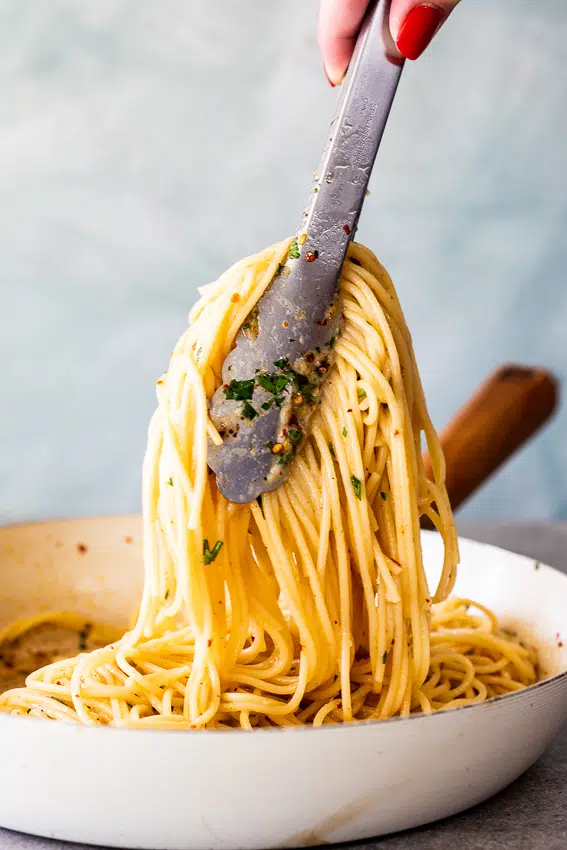
How to Make Spaghetti Aglio e Olio
This pasta comes together in the time it takes to boil your spaghetti. Here’s how to make it perfectly every time:
Step 1: Boil the pasta. Bring a large pot of generously salted water to a boil. Cook the spaghetti for 1 minute less than the package directions so it’s just shy of al dente, it’ll finish cooking in the sauce. Before draining, scoop out about a cup of the starchy pasta water and set it aside. This liquid is the secret to a silky sauce.
Step 2: Toast the garlic. While the pasta cooks, thinly slice the garlic. Heat a generous amount of extra virgin olive oil in a large pan over medium-low heat. Add the garlic and cook it slowly, stirring often, until it turns light golden (about 2 to 3 minutes). Add the red pepper flakes in the last 30 seconds. Keep the heat low here; burnt garlic tastes bitter and there’s no coming back from it.
Step 3: Bring it all together. Add the drained pasta directly to the pan with the garlic oil. Toss everything together, then add the reserved pasta water a few tablespoons at a time, tossing constantly. The starchy water will emulsify with the oil to create a glossy sauce that coats the spaghetti beautifully. Keep tossing and adding water until the pasta looks silky and saucy, not dry or oily.
Step 4: Finish and serve. Toss through the fresh parsley, season with salt to taste and serve immediately with an extra drizzle of olive oil if you like.
Aglio e Olio Variations
One of the best things about this dish is how easily it adapts. Once you’ve mastered the basic recipe, try these popular variations:
- Add protein. Want something more substantial? Try my Shrimp Aglio e Olio – the garlic butter sauce pairs perfectly with juicy prawns and it’s just as quick to make.
- Toss in vegetables. Broccoli florets, halved cherry tomatoes or baby spinach all work beautifully stirred through at the end. Broccoli is especially good. Just blanch it with the pasta for the last 2 minutes of cooking.
- Go traditional with anchovies. This is actually a classic Neapolitan addition. Melt a few anchovy fillets into the olive oil before adding the garlic, they dissolve completely and add an incredible savoury depth without any fishiness.
- Top with toasted breadcrumbs. For a bit of crunch, toast some panko breadcrumbs in olive oil with a pinch of garlic powder and scatter them over the finished pasta. It adds a wonderful contrast to the silky noodles.
Storage and Reheating
Leftover aglio e olio keeps well in an airtight container in the fridge for 2 to 3 days. To reheat, warm it in a pan over medium heat with a splash of water and a drizzle of olive oil – this brings the sauce back to life and stops the pasta from drying out. I wouldn’t recommend the microwave here as it tends to make the spaghetti rubbery. This dish is best enjoyed fresh, but the leftovers still make a great quick lunch.
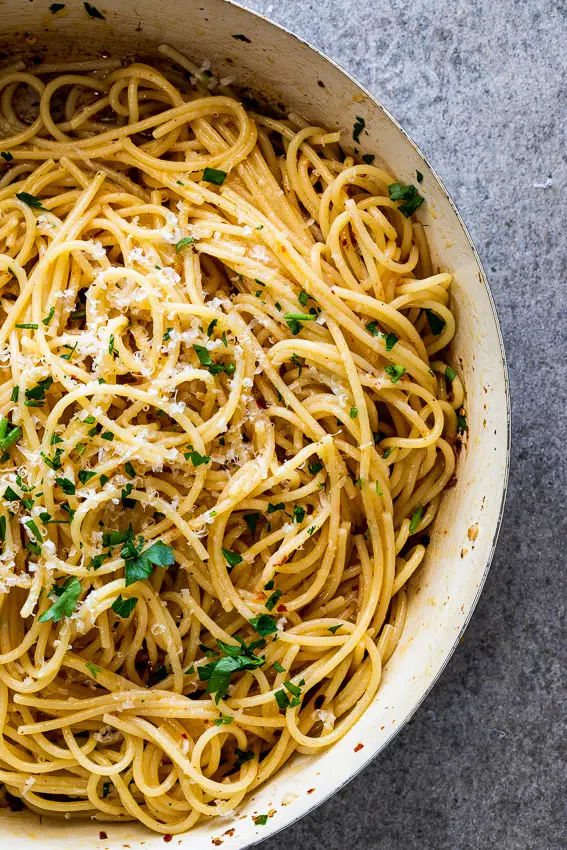
What to serve with aglio e olio
Although this is the perfect simple meal on its own, it’s delicious served with bread or a big salad.
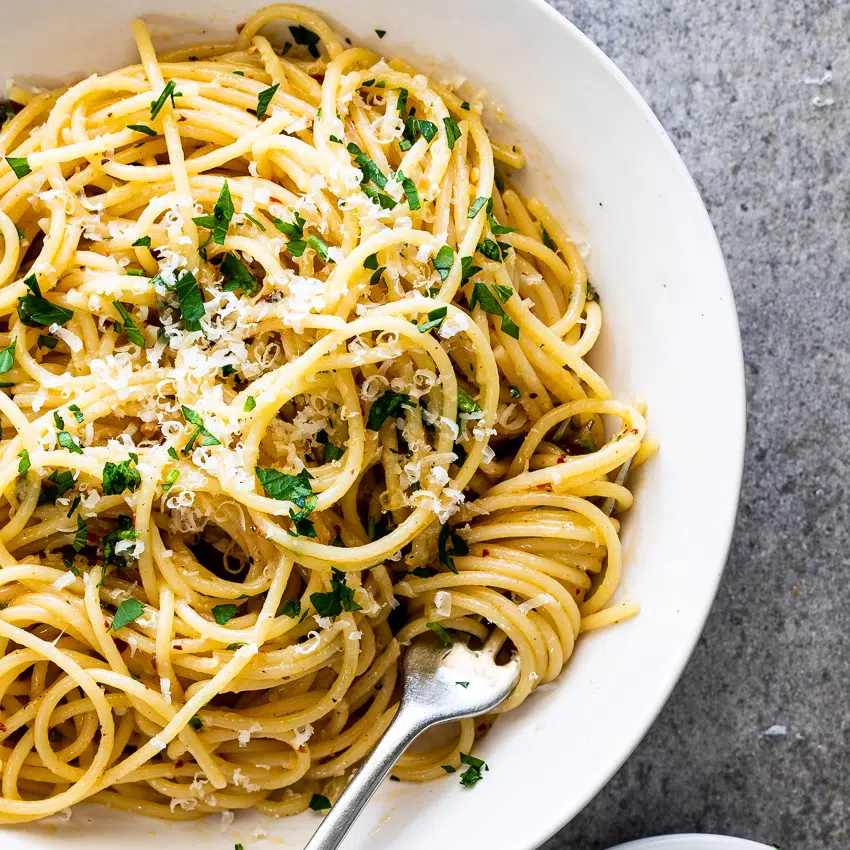
Ingredients
- 500 g / 1lb spaghetti
- 4 tbsp olive oil
- 6-8 garlic cloves thinly sliced
- 1-2 tsp chilli / red pepper flakes
- ½ cup grated Parmesan
- ½ cup parsley finely chopped
Instructions
- Bring a large pot of salted water to a boil. Add the spaghetti and cook until al dente.
- Heat a large frying pan/skillet over medium-high heat then add the oil and garlic.
- Add the chilli flakes and toast until the garlic starts to turn golden. Add a few tablespoons of the pasta’s cooking water and remove from the heat.
- Once the pasta is cooked, carefully transfer the cooked spaghetti to the pan with the garlic with a pair of tongs. Add a few tablespoons of the pasta cooking water and toss to emulsify.
- Add the Parmesan and parsley and continue tossing until the pasta is well coated. At this point, you can add more water if you think the pasta needs a little extra sauciness. Taste and season to taste if necessary then serve with extra Parmesan.
Notes
- Garlic: Slice thinly rather than mincing: it toasts more evenly and won’t burn as quickly. Keep the heat on medium-low and remove from heat the moment it turns light golden.
- Pasta water: Reserve at least 1 cup before draining. Add it a few tablespoons at a time while tossing, this is what creates the silky sauce.
- Pasta timing: Cook 1 minute less than the package directions. It finishes cooking in the pan with the sauce.
- Olive oil: Use a good quality extra virgin. The oil is the sauce, so you’ll taste it in every bite.
- Heat level: Start with ½ teaspoon of red pepper flakes and adjust to taste. For more heat, add a sliced fresh red chilli.
- Parmesan: Optional. Leaving it out keeps the dish dairy-free and vegan, and is actually more traditional.
- Variations: Add toasted breadcrumbs for crunch, toss through broccoli or cherry tomatoes for vegetables, or try it with shrimp for a protein-packed version.
- Storage: Leftovers keep in an airtight container in the fridge for 2–3 days. Reheat in a pan with a splash of water and a drizzle of olive oil.
Nutrition
FAQ
Aglio e olio is Italian for “garlic and oil”: the two core ingredients in this classic pasta dish. It’s one of the simplest and most traditional pasta recipes in Italian cooking, originating from Naples, Italy. Despite having just a handful of ingredients, the technique of slowly toasting garlic in good olive oil and emulsifying it with starchy pasta water creates an incredibly flavourful sauce.
Aglio e olio is pronounced AH-lyoh eh OH-lyoh. The “gl” in Italian makes a soft “ly” sound (similar to the “lli” in “million”), so “aglio” sounds like “ah-lyoh” rather than “ag-lee-oh.”
Both are classic Italian minimalist pastas, but they use completely different ingredients. Aglio e olio is a garlic and olive oil-based sauce, while cacio e pepe (meaning “cheese and pepper”) is made by emulsifying Pecorino Romano cheese with black pepper and pasta water to create a creamy, cheesy sauce – no oil or garlic involved. Aglio e olio originates from Naples, while cacio e pepe is a Roman dish. Both prove that Italian cooking is at its best when you let a few quality ingredients shine.
Aglio e olio is a relatively light pasta dish, especially compared to cream-based sauces. A serving comes in at approximately 350 to 450 calories, with most of that coming from the pasta and olive oil. It’s naturally dairy-free and vegan, making it a great option for anyone with dietary restrictions. The olive oil provides heart-healthy monounsaturated fats, and garlic is known for its anti-inflammatory properties. Adding protein like shrimp or a sprinkle of parmesan will adjust the calorie count, but the base recipe keeps things simple and satisfying without being heavy. You can lighten it further by using wholewheat spaghetti for extra fibre or adding vegetables like broccoli or spinach.
Absolutely! The garlic and olive oil sauce pairs well with a range of proteins. Shrimp is the most popular addition and works so well that it’s its own classic dish. My Shrimp Aglio e Olio uses the same base recipe with juicy garlic butter prawns and it’s just as quick to pull together. Grilled chicken, pan-seared salmon or crispy pancetta are all great options too. For a vegetarian protein boost, chickpeas or white beans tossed through at the end add substance without changing the character of the dish.
Use a good quality extra virgin olive oil – this is the one dish where it really matters. Since the oil is essentially the sauce, you’ll taste it in every bite, so choose something fruity and flavourful rather than a bland, refined option. You don’t need to spend a fortune, but avoid light olive oil, vegetable oil or anything labelled “pure olive oil” as these lack the depth of flavour the dish needs. A mid-range extra virgin from your local shop will do the job nicely.
The most common reason is burnt garlic. Garlic goes from perfectly golden to bitter and acrid very quickly, especially when sliced thinly. The fix is simple: keep the heat on medium-low and watch it carefully. You want the slices light golden and fragrant, not dark brown. If your garlic has gone too far, it’s better to start that step again with fresh garlic and oil. It only takes a few minutes and it’ll save the whole dish. Another possible cause is using old or low-quality olive oil, which can have a bitter aftertaste.
Aglio e olio is best served immediately: the sauce is at its silkiest and the pasta at its best texture straight from the pan. That said, leftovers keep well in an airtight container in the fridge for 2 to 3 days. Reheat in a pan over medium heat with a splash of water and a drizzle of olive oil to bring the sauce back to life. I’d avoid the microwave as it tends to make the spaghetti rubbery. This isn’t a dish I’d recommend batch cooking, but it only takes 20 minutes from start to finish so it’s almost as fast to make fresh.
No, they’re completely different despite sounding similar. Aglio e olio is an Italian pasta dish made with garlic and olive oil. Aioli is a garlic mayonnaise that originated in the Mediterranean (particularly Provence and Catalonia) and is used as a condiment or dip. The confusion is understandable since “aioli” also comes from the words for garlic and oil in Provençal, but the two share nothing beyond that: one is a pasta sauce, the other is a creamy emulsion closer to mayonnaise.
Aglio e olio is fairly light, so it pairs well with sides that add freshness or substance. A crisp green salad is the simplest option and helps balance the richness of the olive oil. Garlic bread is always a crowd-pleaser alongside pasta (try my Garlic Bread recipe). For something more substantial, a simple tomato and mozzarella salad, roasted vegetables, or a side of crusty bread with good olive oil for dipping all work well. If you’re serving it as part of a larger Italian spread, it sits beautifully alongside bruschetta or a classic Caesar salad.
i want to make this recipe, but not really a fan of parsley – what better flavour can you suggest? cheers, peter
Leave it out entirely or use a pinch of dried oregano.
So simple and delicious.
Thanks Diana! 🙂
Perfect weeknight recipe. I doubled up on the red pepper flakes and it was so tasty!
Delicious! So happy you liked it.
Great recipe. So easy!
Thanks Kate!
Absolutely amazing; simple is always the best! Grazie milla !
Always! 🙂