
Easy Shrimp Aglio e Olio Pasta Recipe (20 Minutes)
Aglio e olio (pronounced AH-lyoh eh OH-lyoh) means ‘garlic and oil’ in Italian and is one of the simplest classic pasta dishes you can make. This version adds succulent shrimp for a protein-packed twist that turns a humble pantry pasta into a complete meal. If you’d like to master the classic Aglio e Olio first, start there – it’s the foundation this recipe builds on.
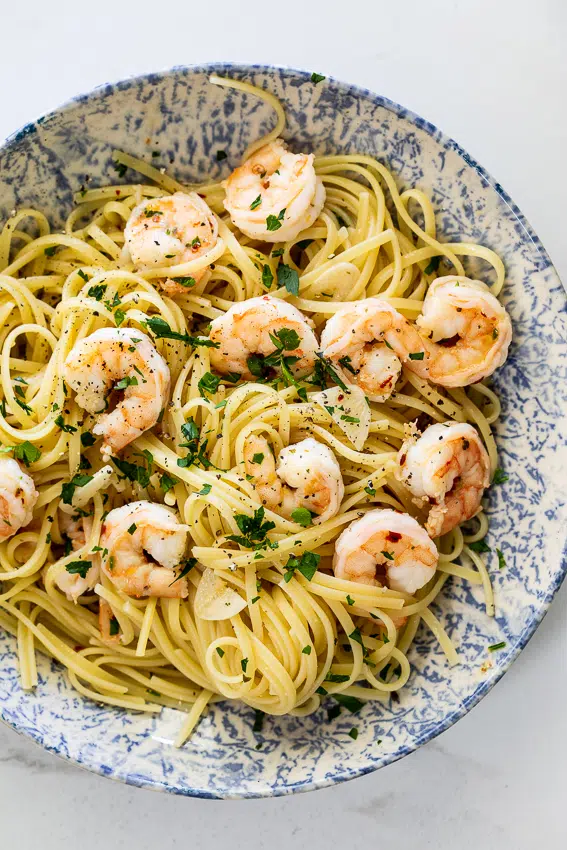
Ingredients and Substitutions
- Shrimp or prawns. Fresh or frozen both work well here – just make sure frozen shrimp are fully thawed and patted dry before cooking so they sear rather than steam. You want them peeled and deveined for ease of eating, though leaving the tails on is a nice visual touch if you’re plating up for guests. Medium to large shrimp are ideal, anything too small tends to get lost in the pasta, while jumbo shrimp take longer to cook and can throw off the timing.
- Extra virgin olive oil. Just like the classic version, the oil is the foundation of the sauce so quality matters. Use a good fruity extra virgin olive oil that you’d happily drizzle on bread. You’ll need a generous amount, enough to toast the garlic and coat the pasta, so don’t be tempted to cut back.
- Fresh garlic cloves. Fresh is essential here as jarred or powdered garlic won’t come close to the same result.
- Chilli flakes / red pepper flakes. For just a touch of heat. Feel free to omit or increase, based on your preference.
- Lemon juice. Fresh lemon juice adds a bright, clean note that lifts the whole dish and cuts through the richness of the oil. It also pairs naturally with seafood and stops the pasta from feeling heavy. Use freshly squeezed rather than bottled, the flavour difference is noticeable. Add it at the end so the brightness stays fresh rather than cooking out. If you don’t have lemons, a small splash of white wine vinegar works in a pinch, though the flavour won’t be quite the same.
- Parsley. Flat-leaf (Italian) parsley is what you want to use here.
- Pasta. I prefer long pasta for this (spaghetti, linguini, tagliatelle, etc) but any pasta shape will work.
- Salt and black pepper.
- Parmesan, for serving. know it’s not traditional in Italian cuisine to serve cheese with seafood pasta, but I love a generous grating of parmesan over the top of this dish. The salty, umami hit works really well against the garlic, chilli and shrimp. Use a good Parmigiano-Reggiano or Grana Padano.
Best Pasta for Shrimp Aglio e Olio
I use spaghetti here because it’s traditional and those long strands tangle beautifully with the shrimp and garlicky oil. But this recipe works well with a few other shapes too.
Linguine is a great swap: the slightly wider, flatter strands give you more surface area for the sauce to cling to, which means more flavour in every bite. Bucatini is another favourite, especially if you like a bit more chew. It’s essentially thick, hollow spaghetti and those little tubes trap garlic bits and oil inside for bursts of flavour. Angel hair works if you want a more delicate, lighter dish. Just watch it carefully as it cooks much faster and goes from perfect to overdone quickly.
I’d stick with long pasta for this recipe. Short shapes like penne or fusilli don’t give you that satisfying twirl of spaghetti coated in garlicky shrimp oil and they change the whole feel of the dish.
Aglio e Olio Variations
One of the best things about aglio e olio is how versatile that garlic and olive oil base is. Once you’ve got the technique down, you can take it in all sorts of directions:
- Seafood. Shrimp is the most popular addition (you’re already here!), but mussels, squid and flaky white fish like cod or haddock all work beautifully. For a mixed seafood version, toss through a combination of shrimp and mussels and you’ve essentially got a quick seafood pasta that rivals anything you’d order at a restaurant.
- Chicken. Slice chicken breast thinly, season with salt and pepper and pan-fry until golden before tossing it through the finished pasta. It’s a simple way to make this dish more filling for bigger appetites.
- Bacon or Pancetta. Crispy bacon or pancetta adds a smoky, salty depth that pairs perfectly with the garlic and chilli. Cook it first, set it aside, then use some of the rendered fat along with your olive oil to toast the garlic.
- Vegetables. Broccoli, cherry tomatoes, baby spinach or roasted mushrooms all make great additions. Broccoli is especially easy: just blanch the florets with the pasta for the last 2 minutes of cooking.
- Classic. If you love this flavour combination and want to strip it back to basics, try my classic Aglio e Olio – just garlic, olive oil, chilli and spaghetti. It’s the dish this recipe is built on and one of the simplest pasta recipes you’ll ever make.
A few notes about nutrition
This shrimp aglio e olio comes in at approximately 470 calories per serving with 22g of protein. The shrimp keeps the protein count high while the dish stays relatively light compared to cream-based pasta sauces. It’s a solid option if you’re after a satisfying weeknight meal that won’t leave you feeling heavy.
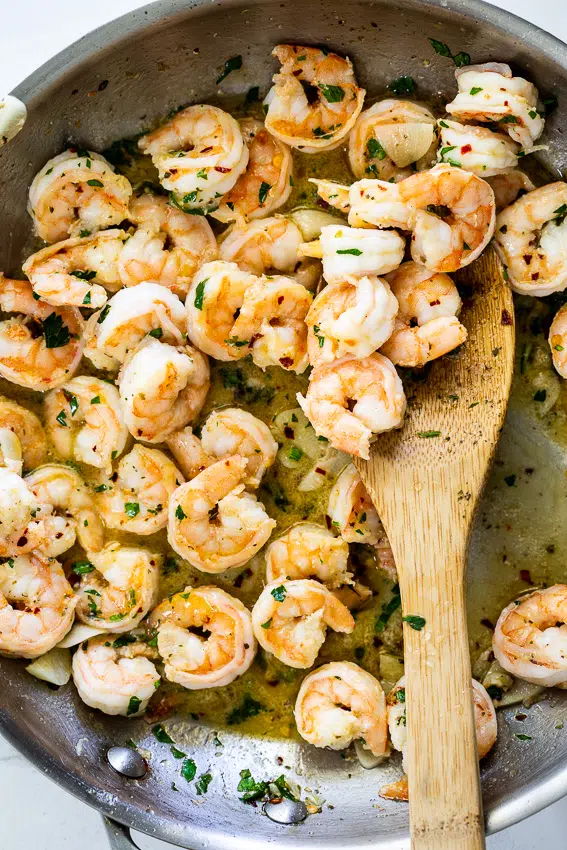
How to Make Shrimp Aglio e Olio
This garlic shrimp pasta comes together in about 20 minutes – most of that is just waiting for the water to boil. Here’s how to make it step by step:
Step 1: Cook the pasta. Bring a large pot of generously salted water to a rolling boil. Add spaghetti and cook for 1 minute less than the package directions – you want it just shy of al dente because it will finish cooking in the sauce. Before draining, scoop out about 1 cup of the starchy pasta water and set it aside. This is the key to building a silky sauce that actually clings to the pasta rather than sliding off.
Step 2: Toast the garlic. While the pasta cooks, heat a generous glug of extra virgin olive oil in a large frying pan over medium-low heat. Add thinly sliced garlic and the red pepper flakes and cook slowly, stirring often, until the garlic is light golden and fragrant, about 2 minutes. Watch it carefully here. Garlic goes from golden to burnt very quickly and burnt garlic will make the whole dish taste bitter.
Step 3: Cook the shrimp. Pat the shrimp completely dry with paper towels before they go in the pan – this is the step most people skip and it’s the difference between shrimp that sear with golden edges and shrimp that steam and turn rubbery. Turn the heat up to medium-high, add the shrimp to the pan in a single layer and season with salt and pepper. Cook for about 1 to 2 minutes per side until they’re pink, opaque and lightly golden in spots. Squeeze over the fresh lemon juice in the last 30 seconds of cooking.
Step 4: Bring it all together. Remove the pan from the heat. Add the drained pasta directly to the pan along with the chopped parsley. Toss everything together, then add the reserved pasta water a few tablespoons at a time, tossing constantly. The starchy water will emulsify with the olive oil to create a glossy, silky sauce that coats every strand of spaghetti. Keep adding and tossing until the pasta looks saucy and glossy, not dry or oily.
Step 5: Season and serve. Taste and adjust the seasoning with salt and pepper. Serve immediately with a grating of parmesan if you like, an extra drizzle of olive oil and a squeeze of lemon on the side.
How Long to Cook Shrimp for Aglio e Olio
Shrimp cook quickly and overcooking them is the most common mistake and will leave you with tough, chewy shrimp rather than juicy, tender ones. In a hot pan, medium to large shrimp need about 1 to 2 minutes per side, roughly 3 to 4 minutes total. You’ll know they’re done when they’ve curled into a loose C-shape, turned evenly pink and are opaque all the way through. If they’ve curled into a tight O-shape, they’re overdone.
Two tips that make a big difference: pat the shrimp dry before cooking so they sear instead of steam and don’t overcrowd the pan. If your pan isn’t large enough to hold all the shrimp in a single layer, cook them in two batches. Crowded shrimp release moisture and steam rather than getting that golden sear you want.
Can You Make Shrimp Aglio e Olio Ahead of Time?
This dish is at its absolute best served straight from the pan: the sauce is silkiest and the shrimp are most tender right after cooking. I wouldn’t recommend making it fully ahead of time as the pasta absorbs the sauce as it sits and the shrimp can become rubbery when reheated.
That said, you can prep everything in advance to make the actual cooking almost effortless. Slice the garlic, chop the parsley, juice the lemon and pat the shrimp dry – store it all in the fridge and you’ll have dinner on the table in under 15 minutes when you’re ready to cook.
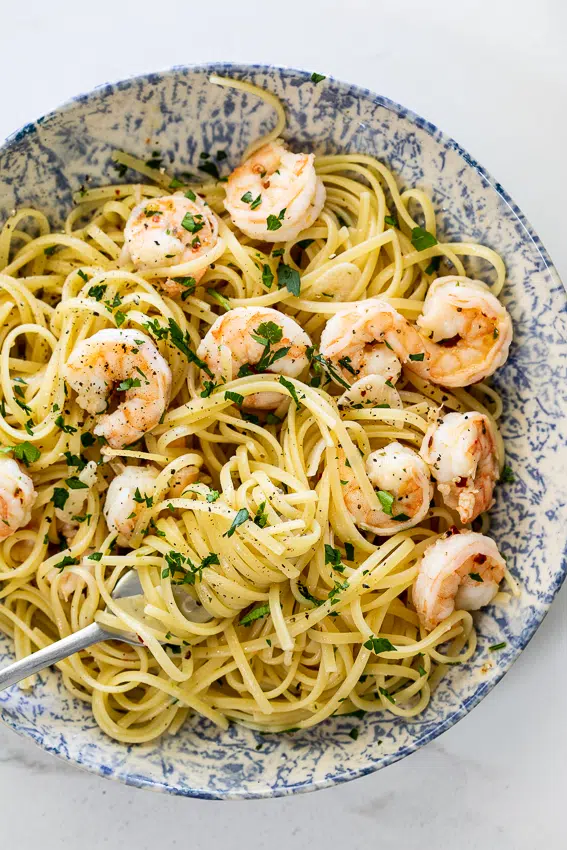
Serving Suggestions
We love this aglio e olio recipe on its own as a simple meal but you can add a side of garlic bread or a big fresh salad as side dishes.
Video
Ingredients
- 500 g / 1lb spaghetti
- 4 tbsp olive oil
- 4-6 garlic cloves thinly sliced
- 1-2 tsp chilli / red pepper flakes
- 500 g (1lb) shrimp peeled and deveined
- 1-2 tsp lemon juice to taste
- ½ cup grated Parmesan
- ½ cup parsley finely chopped
Instructions
- Bring a large pot of salted water to a boil. Add the spaghetti and cook until al dente.
- Heat a large frying pan/skillet over medium-high heat then add the oil and garlic.
- Add the chilli flakes and toast until the garlic starts to turn golden.
- Add the shrimp and cook until pale pink and opaque throughout. Season with salt and pepper and add lemon juice. Add a few tablespoons of the pasta's cooking water and remove from the heat.
- Once the pasta is cooked, carefully transfer the cooked spaghetti to the pan with the shrimp with a pair of tongs. Add a few tablespoons of the pasta cooking water and toss to emulsify.
- Add the Parmesan and parsley and continue tossing until the pasta is well coated. At this point, you can add more water if you think the pasta needs a little extra sauciness. Taste and season to taste if necessary then serve with extra Parmesan.
Nutrition
FAQ
Absolutely. Frozen shrimp work just as well as fresh. Thaw them fully before cooking by placing them in a colander under cold running water for about 5 minutes. The important step is patting them completely dry with paper towels afterwards. Excess moisture is the enemy of a good sear and shrimp that are still wet will steam in the pan instead of getting those golden, caramelised edges that add so much flavor.
Medium to large shrimp are ideal. They’re big enough to stand up to the pasta and garlic without getting lost, but not so large that they take too long to cook and throw off the timing of the dish. Look for shrimp labelled 21/25 or 16/20 (that’s the count per pound). Anything smaller tends to disappear among the spaghetti and jumbo shrimp can be harder to cook evenly.
Yes. Shrimp and prawns are interchangeable in this recipe. The difference between the two is technically about species and body structure, but from a cooking and flavour perspective they behave identically. Use whichever is more readily available where you are. In many parts of the world, including South Africa, Australia and the UK, what Americans call shrimp are sold as prawns.
The most common cause is overcooking. Shrimp go from perfectly tender to tough and rubbery within a very narrow window, often just 30 seconds too long. Pull them from the heat as soon as they’re pink, opaque and curled into a loose C-shape. If they’ve curled into a tight O, they’ve gone too far. The other common culprit is not drying the shrimp before cooking, which causes them to steam rather than sear, resulting in a less appealing texture.
Shrimp Pasta Recipes
Husband loved it but wants less pepper flakes next time. Otherwise delicious.
I made this recipe, just used 1/2 tsp of red pepper flakes and my pasta was Bucatini.
Delicious. I will make this many more times. Came together so quick. Made enought for another dinner with a salad for me and my husband.
It’s not mentioned in the ingredients how much lemon juice to use so I had to omit it. Could you fix that, please?
Done! With cooking, lemon juice, salt and pepper can very be often added to taste.
Made it tonight. Family loved it! Simply served with my garlic french bread toast. Absolutely Awesome. Thank you!
Hi Alida, all of your recipes are truly simply delicious. I have to make a comment about a fairly strict Italian rule in Italy for seafood and cheese. Since Aglio e Olio was used in the title it implies this is an Italian dish. Well, it is until you get to the penultimate dish ingredient: ½ cup grated Parmesan. The ultra majority of Italians in Italy never use any cheese with their seafood. So maybe I would have titled it ‘Garlic and Oil’, or noted at the end about the Italian custom. I like your site and you and your team always have done a great job. I make Gamberetti all’Aglio e Olio every couple of weeks. 🙂
Thanks Alesandro. I’m aware that Italians don’t normally combine seafood and cheese but since this isn’t a truly authentic recipe, it’s not a worry to me. I’m sure most who don’t want to, will leave the parmesan out 🙂
Pretty good! My family liked it. I need to do a little more garlic next time. Yes, there will be a next time with this recipe. I didn’t do the lemon juice because it was not listed in the ingredients.
I added tahini to this and we use gluten free pasta. Fabulous, fast recipe!
I’d love to try this! How much lemon juice do you suggest? It is not listed in the ingredients.
I usually add to taste, as not all lemons are created equal. Start with a teaspoon and add more to taste.