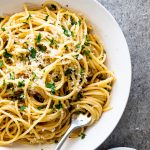
Classic Spaghetti Aglio e Olio Recipe
This classic Spaghetti Aglio e Olio (pronounced AH-lyoh eh OH-lyoh) is a traditional Italian pasta with garlic and olive oil. Ready in 15 minutes with just 5 pantry ingredients. The simplest, most delicious weeknight dinner.
Servings 4
Calories 383kcal
Ingredients
- 500 g / 1lb spaghetti
- 4 tbsp olive oil
- 6-8 garlic cloves thinly sliced
- 1-2 tsp chilli / red pepper flakes
- ½ cup grated Parmesan
- ½ cup parsley finely chopped
Instructions
- Bring a large pot of salted water to a boil. Add the spaghetti and cook until al dente.
- Heat a large frying pan/skillet over medium-high heat then add the oil and garlic.
- Add the chilli flakes and toast until the garlic starts to turn golden. Add a few tablespoons of the pasta's cooking water and remove from the heat.
- Once the pasta is cooked, carefully transfer the cooked spaghetti to the pan with the garlic with a pair of tongs. Add a few tablespoons of the pasta cooking water and toss to emulsify.
- Add the Parmesan and parsley and continue tossing until the pasta is well coated. At this point, you can add more water if you think the pasta needs a little extra sauciness. Taste and season to taste if necessary then serve with extra Parmesan.
Notes
- Garlic: Slice thinly rather than mincing: it toasts more evenly and won't burn as quickly. Keep the heat on medium-low and remove from heat the moment it turns light golden.
- Pasta water: Reserve at least 1 cup before draining. Add it a few tablespoons at a time while tossing, this is what creates the silky sauce.
- Pasta timing: Cook 1 minute less than the package directions. It finishes cooking in the pan with the sauce.
- Olive oil: Use a good quality extra virgin. The oil is the sauce, so you'll taste it in every bite.
- Heat level: Start with ½ teaspoon of red pepper flakes and adjust to taste. For more heat, add a sliced fresh red chilli.
- Parmesan: Optional. Leaving it out keeps the dish dairy-free and vegan, and is actually more traditional.
- Variations: Add toasted breadcrumbs for crunch, toss through broccoli or cherry tomatoes for vegetables, or try it with shrimp for a protein-packed version.
- Storage: Leftovers keep in an airtight container in the fridge for 2–3 days. Reheat in a pan with a splash of water and a drizzle of olive oil.
Nutrition
Calories: 383kcal | Carbohydrates: 56g | Protein: 12g | Fat: 12g | Saturated Fat: 3g | Cholesterol: 11mg | Sodium: 245mg | Potassium: 78mg | Fiber: 1g | Vitamin A: 890IU | Vitamin C: 10.9mg | Calcium: 154mg | Iron: 1.7mg
