
Easy Turkish Eggs with Spicy Butter
These Turkish eggs are one of those recipes that sound unusual until you try them. A bed of cool, seasoned yogurt topped with soft eggs and a drizzle of warm, smoky chili butter. The moment you cut into the egg and the runny yolk mixes with the tangy yogurt and spiced butter, something magical happens. Every component on its own is simple. Together, they’re extraordinary.

I’ll be honest, I was skeptical. Yogurt and eggs didn’t appeal to me at all on paper. But after reading rave reviews from seemingly every person who has ever tried them, I gave them a go. They’re light, savory, warming and on the table in about 10 minutes. Swipe a piece of warm pita or crusty bread through that pool of buttery, garlicky goodness and tell me this isn’t one of the best breakfasts you’ve ever had.
What Are Turkish Eggs?
Turkish eggs, known as çılbır (pronounced chil-bir), are a traditional Turkish breakfast dish that dates back to the 15th century Ottoman Empire. The dish consists of poached or fried eggs served over thick, garlic-infused yogurt and topped with a spiced butter sauce, traditionally made with Aleppo pepper or red pepper flakes.
Çılbır has been a staple of Turkish breakfast culture for centuries and has gained massive popularity worldwide in recent years as people discover the combination of warm eggs, cool tangy yogurt and smoky, spiced butter.
While the traditional version uses poached eggs, I prefer either boiling mine until they’re perfectly jammy or giving them a slow-fry so they’re still soft around the edges.
Ingredients and Substitutions
- Eggs. The star of the dish. Use the best eggs you can find as the quality shows when the egg is this front and center. I use two eggs per serving but one works if you’re keeping things lighter. Whichever way you cook them, a soft or runny yolk is essential.
- Greek yogurt. Use a thick, full-fat Greek yogurt for the best results but for a lower calorie, higher protein option I often use low fat Greek yogurt (and that is reflected in the nutritional information below). It needs to be thick enough to hold its shape. Avoid flavored yogurt entirely. Plain is the only option here. Any thick, plain yogurt (labneh, skyr, natural yogurt) works as a substitute.
- Fresh garlic. Traditionally, the garlic is grated into the yogurt but I prefer a softer, mellow garlic flavor (especially with breakfast), so I decided to cook the garlic in the butter instead. Either way works, it’s just up to your personal preference.
- Butter. The vehicle for the spiced oil that gets drizzled over the top. It adds richness and carries the smoky, spicy flavors of the paprika and chili flakes. I always use salted butter and just season gently. For a dairy-free version, extra virgin olive oil makes a good substitute. Heat it with the spices the same way and drizzle over the yogurt and eggs.
- Red pepper flakes (chili flakes). These bloom in the hot butter and infuse it with a gentle, spicy warmth. Start with half a teaspoon and adjust. Aleppo pepper is the traditional choice and has a milder, slightly fruity heat that’s beautiful here if you can find it. Regular red pepper flakes work perfectly well.
- Smoked paprika. Adds that gorgeous red color to the butter and a warm smokiness that ties everything together. Regular paprika works but you’ll miss the smoky depth. A tiny pinch goes a long way.
- Fresh herbs. I love either parsley, chives or dill, however a combination of the three also work well. Mint is a lovely alternative and more traditional in some versions of çılbır. Fresh basil works too. Use whatever combination you have but fresh herbs make a noticeable difference. Don’t substitute dried.
- Salt and black pepper. Season the yogurt with a pinch of salt and a good crack of pepper. It amplifies the flavor and balances the tanginess.


How to Make Turkish Eggs
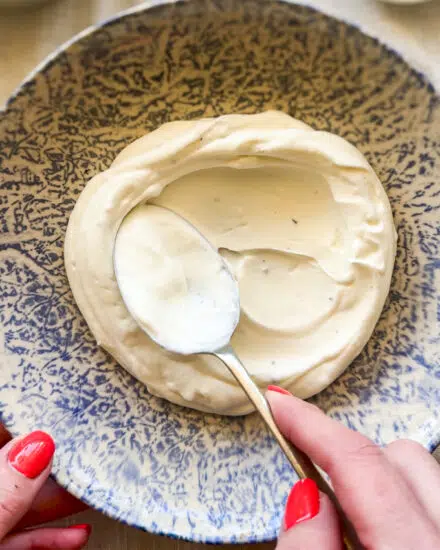
Step 1: Make the garlicky yogurt. Spoon the Greek yogurt into a shallow serving bowl and season with salt and pepper, to taste. Stir to combine and spread the yogurt across the base of the bowl, creating a bed for the egg. If you’re making this for two, divide between two bowls.
Step 2: Make the spiced butter. Melt the butter in a small skillet or saucepan over medium heat. Once melted, add the garlic, red pepper flakes and smoked paprika. Swirl and cook for about 30 to 60 seconds until the butter turns a deep reddish-orange and smells smoky and fragrant. Remove from heat immediately. The spices can burn quickly in hot butter, so keep the heat moderate and pull it off the moment it’s fragrant. Set aside.
Step 3: Cook the eggs. I boiled my eggs for 7 minutes in boiling water followed by an ice bath. You can also poach the eggs or fry them. Boiling works for me as I can boil a bunch of eggs and keep them in the fridge, making this a great make-ahead breakfast. It’s also easier for entertaining.
Step 4: Assemble. Place the cooked eggs on top of the yogurt. Drizzle the spiced butter generously over everything. Garnish with fresh herbs and an extra crack of black pepper. Serve immediately with warm pita bread, flatbread or crusty toast.

What to Serve with Turkish Eggs
- Warm pita bread. The most traditional accompaniment. Warm it in a dry pan for 30 seconds per side and use it to scoop up the yogurt, egg and butter. This is the best way to eat this dish.
- Crusty toast. A thick slice of toasted bread holds up well to the saucy yogurt and gives you something sturdy to pile everything onto.
- Flatbread or naan. Any soft, warm flatbread works beautifully for tearing and dipping.
- Cottage cheese tortillas. For a higher-protein option, my cottage cheese tortillas (recipe coming soon) are an excellent pairing that keeps the whole meal high in protein.
- Nothing at all. If you’re keeping things low-carb or keto, the dish is completely satisfying without bread. The yogurt provides enough base and substance on its own.

Video
Ingredients
- 2 cup Greek yogurt
- 1 garlic clove sliced or minced (I like sliced as I like the texture but mincing is perfectly fine)
- 3 tbsp butter
- ½-1 tsp chilli flakes
- ½ tsp smoked paprika
- 4 eggs boiled, poached or fried
- salt and black pepper to taste
- fresh herbs parsley/dill/chives
Instructions
- Spoon the yogurt into a small bowl then season with salt and pepper
- In a small skillet or pan set over medium-high heat, melt the butter then add the garlic, chilli flakes and smoked paprika.
- Cook for a minute until the butter is melted and foamy then remove from the heat.
- Cook the eggs to your preference – I boiled mine for 7 minutes.
- Divide the yogurt mixture between two serving bowls then add the eggs and drizzle over a few tablespoons of the spicy butter.
- Garnish with fresh herbs then serve immediately with pita bread or flatbread of your choice.
Nutrition
Frequently Asked Questions
Çılbır (pronounced chil-bir) is the Turkish name for Turkish eggs. It’s a traditional Ottoman dish dating back to the 15th century consisting of eggs served over garlicky yogurt with a spiced butter sauce. It’s been a staple of Turkish breakfast culture for centuries.
Greek yogurt or any thick, strained yogurt is strongly recommended. Regular yogurt is too thin and will run all over the plate rather than forming a stable bed for the egg. If regular yogurt is all you have, strain it through a cheesecloth or fine mesh sieve for 30 minutes to thicken it.
It’s a combination. The yogurt is cool (not ice-cold, ideally slightly below room temperature). The egg is hot, straight from the pan. The butter is warm. The contrast between the temperatures is a key part of what makes the dish so good.
The yogurt can be mixed and refrigerated a few hours ahead. The spiced butter can be made and kept in a jar in the fridge for up to a week and reheated. The eggs should be cooked fresh just before serving, unless you’re using boiled eggs in which case they can be boiled and kept in the shell in the fridge for up to 3 days.
I use two per serving for a satisfying breakfast. One egg works if you’re keeping things lighter or serving it alongside other breakfast items. Three eggs makes it a very substantial meal.
Yes. Crumbled feta is a common addition. Toasted sesame seeds or nigella seeds add a nice crunch. A squeeze of lemon juice over the yogurt brightens it further. Sumac sprinkled on top adds a tangy, citrusy note that’s traditional in Turkish cooking. Za’atar is another excellent option.
Very. A serving with two eggs and Greek yogurt gives you roughly 25 to 30 grams of protein. The yogurt provides probiotics and calcium. The only indulgent element is the butter, and you can reduce the amount or substitute olive oil if you prefer. It’s naturally gluten-free (without the bread) and low in carbohydrates.
More Egg Recipes
If you love this recipe, try these:
Cheesy Egg Bagel Breakfast Sandwich
Easy Breakfast Egg Crêpes
Egg in a Hole Bacon Grilled Cheese
Spicy Cheesy Scrambled Eggs
How to Fry an Egg
So delicious! I love your suggestion about putting the garlic in the butter. Makes it a little more mellow! Oregano is taking over my herb garden so I used that and it was perfect!