
Slow Roasted Greek Lamb Recipe
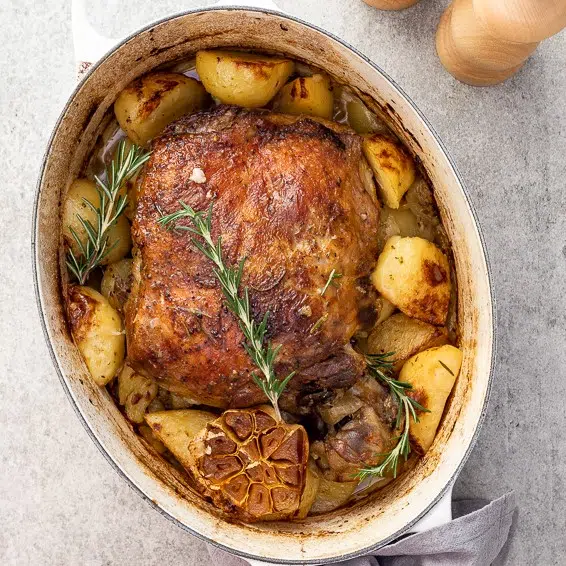
This slow roasted Greek lamb is the kind of meal that fills the house with the most incredible aroma for hours and delivers juicy, succulent lamb. Rubbed with garlic, oregano, lemon and olive oil, then braised low and slow in a Dutch oven until the meat is meltingly tender and the braising liquid has turned into the richest, most flavorful sauce. It’s my go-to for Easter, Sunday lunch and any time I want to cook something that feels celebratory without spending the whole day in the kitchen.
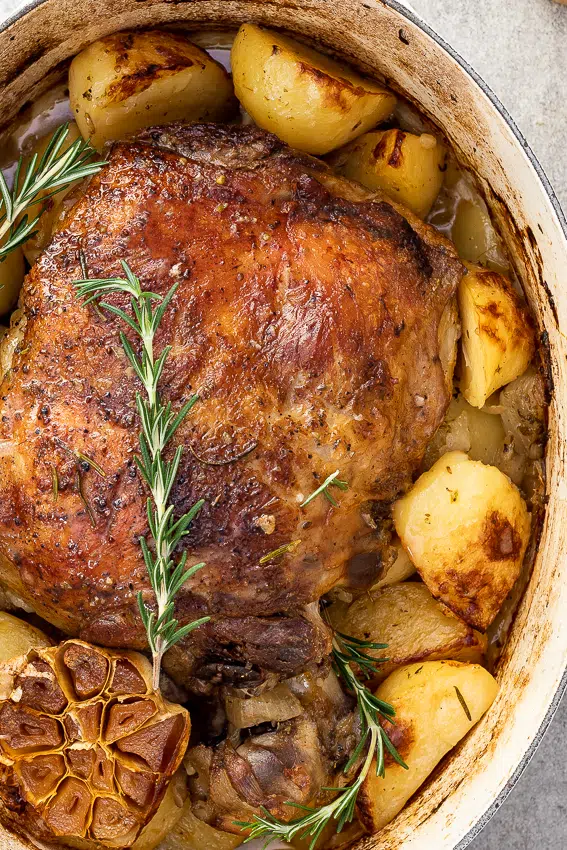
What I love about this recipe is how little active work it takes. The hands-on time is about 15 minutes of prep: rubbing in the seasoning, chopping the potatoes and setting up the braising liquid. After that the oven does everything. You walk away, the lamb braises under that heavy Dutch oven lid and a few hours later you’ve got a centerpiece that looks and tastes like it took all day.
Ingredients and Substitutions
- Lamb: I used a bone-in half leg of lamb to fit my oval Dutch oven but a lamb shoulder will also work. If using a whole leg of lamb, use a larger, deep roasting dish.
- Potatoes.
- Onions.
- Whole garlic bulb.
- Fresh rosemary.
- Salt, pepper and dried oregano.
- Lemon.
- White wine. Substitute with stock and extra lemon juice if you’d prefer to keep this recipe alcohol-free.
- Lamb stock. Beef stock works too but lamb stock delivers the most delicious gravy.
Cooking Time and Temperature Guide
Getting the timing right is the most important part of slow roasted lamb. Too little time and the meat is tough. Too much and it dries out. This guide gives you a reliable framework based on the weight of your lamb. For truly pull-apart lamb, I recommend 4 hours covered roasting and 1 hour uncovered roasting so 5 hours in total. I usually go for 3-4 hours total roasting so the lamb is sliceable (which we love) but still super tender and juicy.
The method: Start with high-heat at 400°F (200°C) for 30 minutes, then drop the temperature to 325°F (160°C) for the low-and-slow braise.
Low-and-slow cooking times (at 325°F / 160°C after the initial sear):
- 2 lbs (1 kg): approximately 2 hours
- 3 lbs (1.5 kg): approximately 2.5 to 3 hours
- 4 lbs (2 kg): approximately 3 to 3.5 hours
- 5 lbs (2.5 kg): approximately 3.5 to 4 hours
- 6 lbs (3 kg): approximately 4 to 4.5 hours
These times are a guide, not a guarantee. Every oven runs slightly differently and bone-in cuts take a little longer than boneless. The real test is tenderness, not time. When the lamb is ready, a fork should slide in easily and the meat should pull apart with almost no resistance. If it’s not there yet, cover it back up and give it another 20 to 30 minutes.
The target internal temperature for fall-apart tender lamb is 195°F to 205°F (90°C to 96°C). This is well past the “safe” temperature of 145°F (63°C) but that’s intentional. Slow roasted lamb needs to go much higher for the connective tissue and collagen to break down into the soft, shreddable texture you’re after.
How to Make Slow Roasted Greek Lamb (Step by Step)
Step 1: Prepare the Lamb
Pat the lamb dry with paper towels. Drizzle over some olive oil. Season the lamb generously all over with salt, pepper and dried oregano Don’t be shy with the seasoning. The lamb is a large piece of meat and it needs enough salt to flavor it all the way through.
Step 2: Prepare the Braising Base
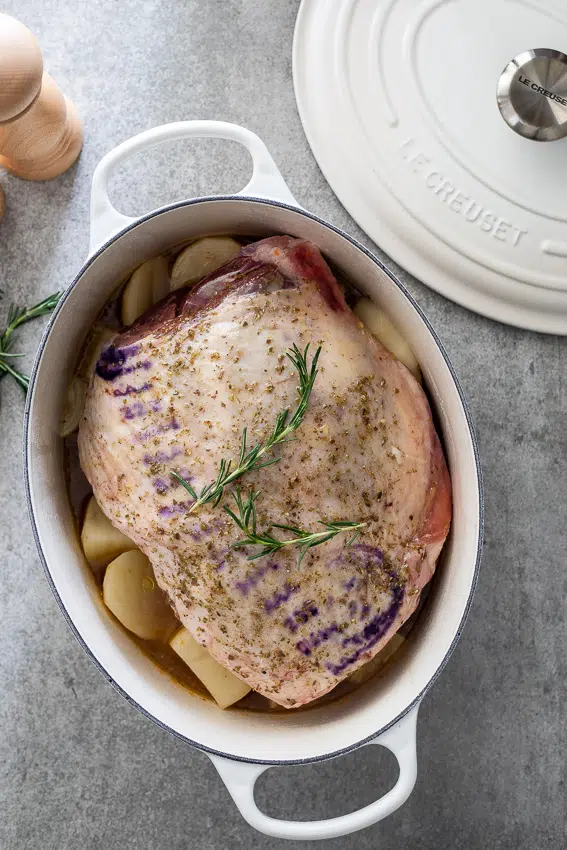
Scatter chunked onions, a halved garlic bulb, peeled and chopped potatoes, lemon peel and fresh rosemary into the bottom of a large, deep Dutch oven or pot. The potatoes cook in the lamb fat and all those aromatics, delivering addictive potatoes. Pour in the stock and wine. The liquid should come about a third of the way up the lamb, not cover it. You’re braising, not boiling. I like to have a little extra stock and/or wine to top up the liquid half-way through roasting if necessary.
Step 3: High-Heat Sear
Place the lamb on top of the aromatics in the Dutch oven, cover with the lid and put it into a preheated oven at 400°F (200°C) for 30 minutes. This initial blast of high heat starts the browning process and develops flavor on the surface of the meat before the temperature drops for the slow cook.
Step 4: Low-and-Slow Braise
After 30 minutes, reduce the oven temperature to 325°F (160°C). Keep the lid on and let the lamb braise slowly. The steam trapped under the lid keeps the meat incredibly moist while the low heat gradually breaks down the tough connective tissue into soft, tender meat. Refer to the cooking time guide above based on the weight of your lamb. Check on the liquid-levels half-way through and top up if needed – I like to have enough sauce to pour over the lamb once finished.
Step 5: Final Browning
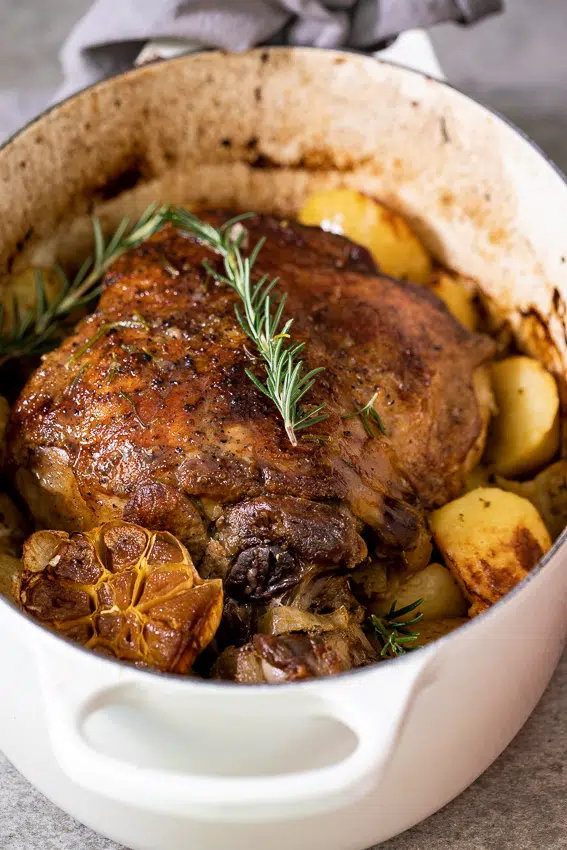
After 3-4 hours, remove the lid and return back to the oven for another hour. This lets the surface of the lamb dry out slightly and develop a deeper, more golden crust. The braising liquid will also reduce and concentrate during this time, which intensifies the flavor of the sauce.
Step 6: Rest the Lamb
Remove the Dutch oven from the oven and transfer the lamb to a cutting board or platter. Tent loosely with foil and let it rest for at least 15 to 20 minutes. Resting allows the juices to redistribute through the meat. If you cut into it immediately, those juices run out onto the board and the lamb tastes drier. Patience here pays off. You can pour off the braising liquid and return the potatoes to the oven if you want to crisp them up, but that’s totally optional.
Step 7: Make the Sauce
I honestly just pour the braising juices over the lamb and potatoes when serving but you can absolutely make a gravy out of it. Place the liquid into a small saucepan and whisk in 2 teaspoons of cornstarch mixed with 2 tablespoons of water. Place over medium heat and simmer until thickened. Season to taste then serve over the sliced lamb and potatoes.
Why a Dutch Oven Makes the Best Slow Roasted Lamb
Most slow roasted lamb recipes call for a roasting pan covered with foil. It works, but a Dutch oven is significantly better for this recipe and here’s why.
Better heat distribution. A Dutch oven (especially cast iron or enameled cast iron) holds and distributes heat more evenly than a thin roasting pan. This means the lamb cooks more consistently with fewer hot spots.
- Superior moisture retention. The heavy lid of a Dutch oven creates a much tighter seal than foil over a roasting pan. This traps more steam inside, which keeps the lamb incredibly moist during the long braise. The difference in tenderness is noticeable.
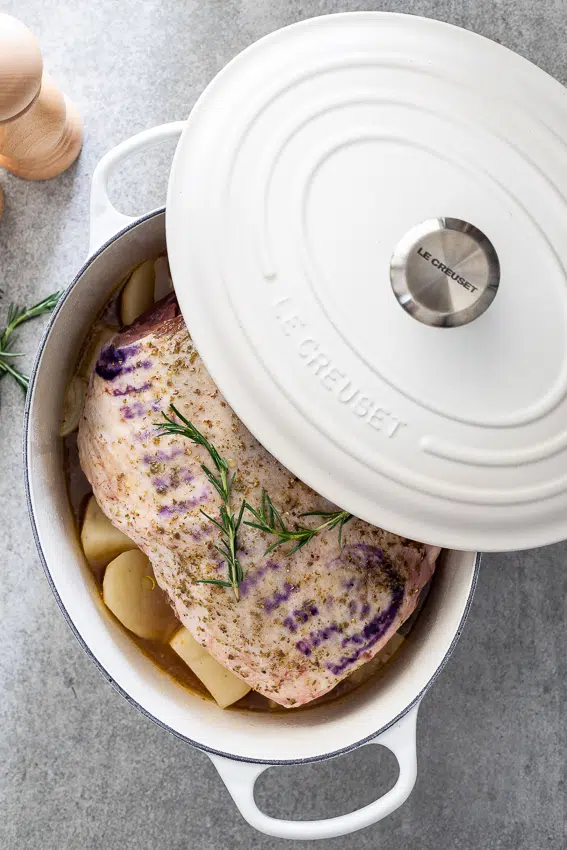
- It goes from oven to table. A beautiful Dutch oven (like a Le Creuset) can go straight from the oven to the dinner table as a serving dish. For a holiday meal like Easter, this makes the presentation effortless and impressive.
- Better braising liquid. Because the seal is tighter and the heat is more even, the braising liquid at the bottom of the Dutch oven reduces more gradually and concentrates into a richer, more flavorful sauce.
- The right size matters. Use a Dutch oven that fits the lamb snugly but not too tightly. You want a little room around the edges for the braising liquid and aromatics but not so much space that the liquid spreads too thin and evaporates. A 5 to 7 quart Dutch oven works for most lamb leg or shoulder cuts.
If you don’t have a Dutch oven, a heavy roasting pan sealed tightly with a double layer of foil will work too.
What to Serve with Greek Lamb
Slow roasted Greek lamb is rich and deeply savory, so the sides should add freshness, acidity and lighter textures to balance the plate.
- Greek lemon potatoes. I would suggest this recipe if you’re not interested in roasting the potatoes with the lamb. Potatoes roasted in olive oil, lemon juice, garlic and oregano until golden and crispy on the edges. If you’re using a roasting pan for the potatoes, add a few spoonfuls of the lamb braising liquid for incredible flavor.
- Tzatziki. Cool, tangy and refreshing. The yogurt and cucumber cut through the richness of the lamb beautifully. It’s the contrast that makes this pairing so good.
- A simple cucumber tomato salad. Tomatoes, cucumber, red onion, feta and a simple olive oil dressing. A fresh, crunchy salad is essential alongside rich, slow-cooked meat. Keep it traditional and don’t overdress it.
- Warm pita bread. For scooping up the lamb, the sauce and the tzatziki. Warm the pita in a dry pan or under the broiler for a minute so it’s soft and pliable. Flatbread is a nice option too.
- Roasted vegetables. Zucchini, bell peppers, eggplant and cherry tomatoes roasted with olive oil, garlic and oregano. These Mediterranean vegetables complement the Greek flavor profile perfectly.
- Rice pilaf. A simple herb and lemon rice pilaf is a great alternative to potatoes if you want something lighter. The lemon ties in with the Greek seasoning on the lamb.
- Hummus. A bowl of smooth hummus with a drizzle of olive oil and warm pita alongside the lamb turns the meal into more of a spread, which is perfect for entertaining.
Video
Ingredients
- 2.5-3 kg (approx 6.5lbs) bone-in leg of lamb
- 2 tbsp dried oregano
- salt and pepper to taste
- 3 tbsp olive oil
- 6 large potatoes peeled and sliced into 6 chunks each
- 1 onion roughly chopped
- peel of 1 lemon
- 1 head of garlic halved
- 3 sprigs fresh rosemary
- 1 cup white wine
- 2 cups lamb/beef stock + extra for topping up braising liquid
Instructions
- Pre-heat the oven to 200ºC/400ºF.
- Place the peeled potatoes, onions and lemon peel in a large, oven-proof Dutch oven/pot and season with salt, pepper, oregano and olive oil. Add rosemary and garlic.
- Drizzle 1-2 tablespoons olive oil over the lamb and season generously with salt, pepper and oregano. Place the lamb over the potatoes then pour in the stock and wine.
- Cover with a lid and place in the oven. Allow to roast for 30 minutes then turn the heat down to 160ºC/320ºF for 3-4 hours until the lamb is tender.
- Remove the lid and turn the heat back up to 200ºC/400ºF and allow the lamb to roast until golden brown (approximately 1 hour). At this point you can remove the lamb and cover with foil to rest for at least 10 minutes, ideally up to 30 minutes. Pour the stock into a jug and place the potatoes back in the oven to roast until golden brown and crisp.
- Slice/shred the lamb once rested and serve with the potatoes and gravy.
Nutrition
Frequently Asked Questions
Yes, and I’d actually recommend it for entertaining. Cook the entire recipe the day before, let it cool and refrigerate in the Dutch oven with the lid on. The flavors develop and deepen overnight. On the day, take it out of the fridge about an hour before reheating, then warm in the oven at 325°F (160°C) with the lid on for 45 minutes to an hour until heated through and bubbling. Remove the lid for the last 15 minutes to re-crisp the surface. This makes it perfect for Easter or any holiday meal because the hardest part is already done.
Bone-in leg of lamb is my go-to but a lamb shoulder is also excellent. Bone-in leg is the classic choice for a Greek-style roast. The bone adds flavor during the long cook and helps the meat stay moist. The key to getting a bone-in leg tender rather than tough is the braising liquid and the Dutch oven lid, which trap steam and keep the leaner meat from drying out. As long as you have enough liquid in the pot and keep the lid on during the slow cook, leg produces beautifully tender results. Lamb shoulder is a great choice too as it has more connective tissue and fat than leg, which means it becomes incredibly tender and flavorful when cooked low and slow (also a great choice if you want more of a shreddable, pulled-lamb). The fat bastes the meat from the inside and the connective tissue melts into gelatin, giving you that fall-apart texture. It’s also typically cheaper than leg.
Plan for roughly 1 lb (500g) of bone-in lamb per person. A 4 lb shoulder comfortably feeds 4 to 6 people with leftovers. For a larger gathering like Easter, go for a 5 to 6 lb shoulder or use two smaller ones.
Yes, and I would actually suggest cooking the lamb ahead of time if you’re entertaining as cooking times can differ. This way you know your lamb is ready and waiting for your guests, not the other way around. Make sure you give yourself 1-2 hours to ensure the lamb reaches the right level of doneness. You could also cook the lamb fully the day ahead and reheat right before serving but I would suggest cooking the potatoes separately.
The most reliable test is the fork test. Push a fork into the thickest part of the meat and twist. If it pulls apart easily with almost no resistance, it’s done. If it feels tight or you have to tear the meat, give it another 20 to 30 minutes. For temperature, fall-apart tender lamb should read 195°F to 205°F (90°C to 96°C) internally. This is well above the safe minimum of 145°F (63°C) because you need those higher temperatures for the connective tissue to break down into soft, shreddable meat. Visual cues include the meat pulling back from the bone, the surface being deeply browned and the braising liquid having reduced and thickened.
Store the meat and sauce in separate airtight containers in the fridge for up to 3 days. Keeping them separate prevents the meat from absorbing too much liquid and becoming waterlogged. When reheating, combine them in a pot or Dutch oven, cover and warm gently over medium-low heat. Add a splash of stock if the sauce has thickened too much.
Leftover Greek lamb is incredibly versatile. Shred it into pita wraps with tzatziki and salad. Stir it into pasta with olives, feta and cherry tomatoes. Pile it onto flatbread with hummus and pickled onions. Fold it into an omelet with feta and herbs. The braising sauce also makes an incredible base for a quick lamb and orzo soup with vegetables.
Love lamb? Try these recipes:
- Indian-spiced lamb chops
- Slow-braised lamb shanks
- Easy sticky lamb ribs
- Greek lamb chops with Tzatziki
.
Absolutely delicious and so easy
Made this with leg of mutton from a three year old ram and meat is tender and moist and delicious! I might try putting in a whole diced lemon instead of just the peel next time as I felt the lemon flavour got a little lost.
Hi, how long would you recommend slow roasting a 4kg leg of lamb?
Thanks,
Larisa
I would work on 4-5 hours if you want leg of lamb that can pull apart. It also depend if the bone is left in the leg of lamb as that will need longer cooking time.
Hello! I am planning on teaming this for the upcoming holiday, and my lamb is 3.6 lbs and semi boneless-should I roast it for only two hours?
Thank you!
For a more precise result I would use a meat thermometer.
I’ve got a 3kg leg of lamb but don’t have a big casserole dish – would it work in a roasting dish with aluminium foil covering it as a lid?
Yes, it will work fine.
What if My lamb roast doesn’t have a bone?! Will this still work?
It will, you will just need to adjust the cooking time as it will cook much faster.
Wow! I love lamb and this recipe looks wonderful! One question before I go to buy the ingredients – what type of potato do you use? I’d be inclined to use Yukon Gold, but I want to be sure because of the raves about the potatoes. Thanks so much for helping me finalize my much needed braised lamb recipe!
Yukon gold will be perfect.
It was a wonderful lunch. Groans of satisfaction all round. I could eat those potatoes all week. I’m just confused about the instruction to pour out the stock…….I had no stock at all. It was all absorbed into the potatoes. I used Tsatzki as the “gravy”. I will make this again…..
Hi there, Im making this tonight! We have 4 lbs of lamb. How long should we slow roast it for? Only 2 hrs instead of 2-3?
I would start with two hours, yes. Check on it regularly and when it can pull apart easily, it’s ready!
Could I use a slow cooker instead of a casserole dish on the oven?
You could, yes.
This so was delicious. As it’s summer I served it with your tzatziki recipe plus a greek salad and hummus. Thank you!
Sound delicious!
Hi there, would you be able to tell me what size your oval casserole Le Crueset is?
It’s a 28cm. 🙂
Hi?
Your recipe sounds amazing! I just bought a lamb for my family’s weekend gathering and can’t wait to try your recipe. One quick question: if I don’t have lamb/beef stock, is it possible to use any substitute? Will using just water be alright?
Thank you so much!
Just water or wine is perfect.
Being of armenian descent, lamb is a staple. Let me tell you this was the best Christmas eve meal we’ve ever had. Those potatoes? Holy cow. So creamy in the middle but with a nice crisp on the outside. I really want to make yhis again when I host new years eve. Can beef be substituted for the lamb? Do Ineed to cook it at different temps/times? This recipe is a new addition to our rotation. I just need to know how many variations I can make! Thanks Alida for a wonderful recipe!!
Beef will work well, just adjust the cooking time to ensure the beef is cooked to your liking. It really depends on the cut and the size of the beef you use. So happy you liked this recipe. 🙂
Loved this. The soft garlic, lemony gravy and those potatoes! Everything was great.
Those potatoes are heaven, right?
Best lamb recipe I’ve tried. So easy and comes out perfect every time.
Wow! That’s a wonderful compliment. Thanks Rachel!
The lamb was the perfect main for our family’s Easter. So tender and I must say, the potatoes were the best I’ve ever had. Will be my go-to from now on.
Yay! I’m so happy to hear that.
Can’t wait to try this!
Hope you love it!
Easter lunch sorted! That looks fantastic and the new Le Creuset collection is so up my alley. Lovely.
Thanks Christine! Hope you love it.