
Easy Rosemary Shortbread
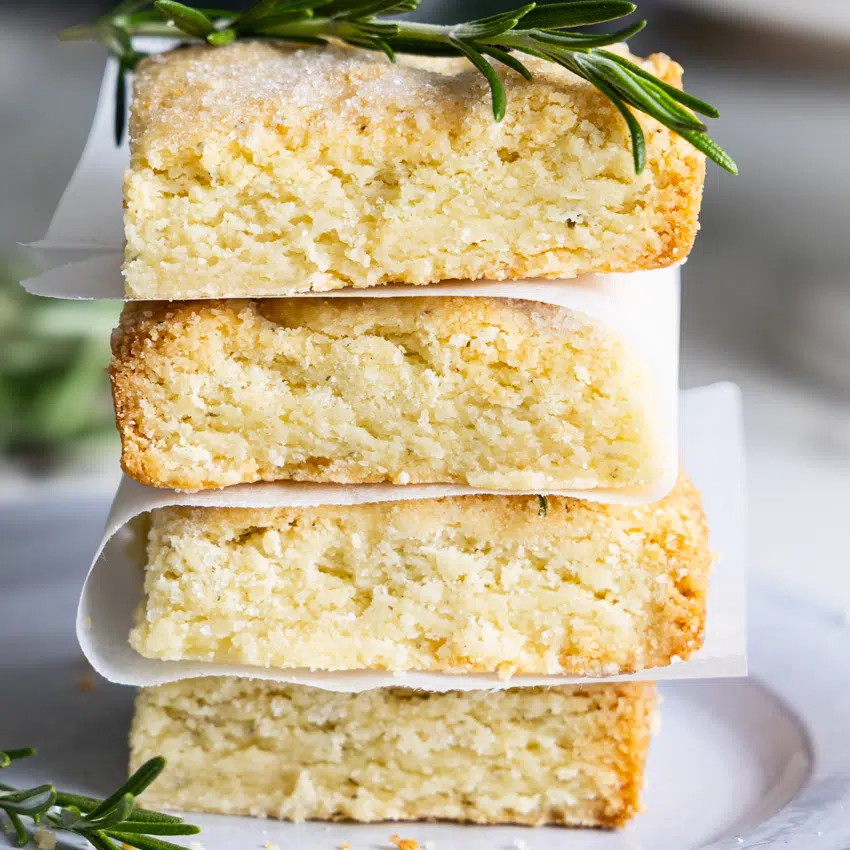
Buttery, melt-in-your-mouth shortbread studded with finely chopped fresh rosemary. These cookies are simple, elegant and a little unexpected, which is exactly why it deserves a spot in your Christmas Cookie box.
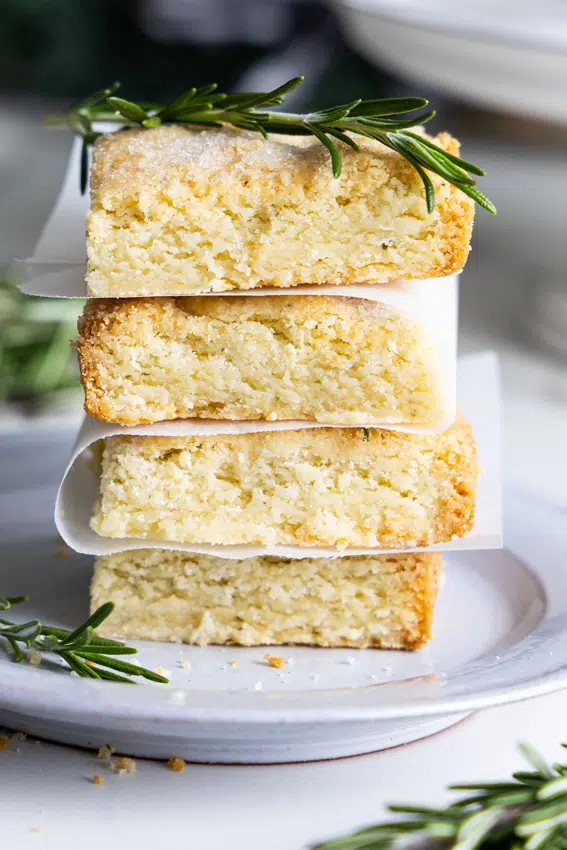
They are quick to make (I love using the food processor for this but I give stand-mixer instructions too) and you’ll have perfectly crisp, buttery, fragrant shortbread cookies in an hour. They’re also one of the best make-ahead cookies you can bake because the dough freezes well and baked shortbread lasts for at least a week at room temperature in an airtight container.
Why You’ll Love This Recipe
Honestly, every person who has tasted these rosemary shortbread cookies have been surprised by how unbelievably delicious they are. The rosemary is there, but not overpowering and adds a sophisticated flavor. The herby, savoury-sweetness feels festive and isn’t overly sweet. I also love that the dough comes together so quickly, is pressed into a baking pan. No rolling out, no cutting. The shortbread is cut into bars and it’s as easy as that!
Ingredients and Substitutions
- Rosemary. Use fresh rosemary. Don’t substitute dried here. Dried rosemary tends to taste woody and sharp and the little needle won’t distribute evenly through the dough. Fresh rosemary gives you a fragrant, almost piney warmth that’s completely different. You’ll blitz is with the sugar in the food processor, which breaks id down and releases all those delicious oils right into the dough.
- Butter. I always bake with salted butter, but unsalted works well too.
- Sugar. I like using caster sugar for shortbread but granulated sugar is a fine substitute.
- Flour and cornstarch. The combination of flour and cornstarch gives you melt-in-the-mouth shortbread.
- Salt. Crucial, especially if you’re using unsalted butter. This recipe was developed with salted butter so add a half-teaspoon more salt if you’re using unsalted butter.
Variations
Add lemon or orange zest for a citrus note. You could also add finely chopped pistachios for extra texture.
How to Make Rosemary Shortbread
- Make the dough: Start by pulsing the sugar and fresh rosemary leaves together in a food processor until the rosemary is finely chopped and the sugar is fragrant. This step grinds the rosemary right into the sugar so the flavor is in every single bite. If you’re making this dough in a stand mixer, chop the rosemary as finely as you can then rub it into the sugar before proceeding with the rest of the dough. Add the butter and pulse until combined with the sugar then add the flour, cornstarch and salt and pulse until the dough just comes together.
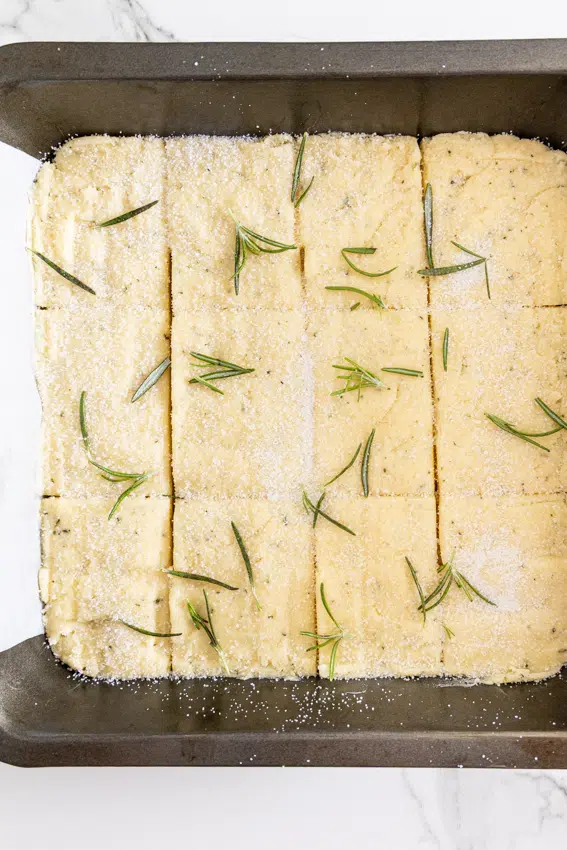
- Shape and bake: Press the dough into a parchment-lined baking dish (9x9in/23x23cm). Ensure it’s smooth and even then cut into squares. I initially cut this batch into 12 rectangles but the shortbread is rich and buttery so you can easily get 24 small squares out of this quantity of dough. Sprinkle over a little extra sugar and a few rosemary leaves then bake at 350°F/180°C for 20-25 minutes until the edges just barely start to turn golden. Don’t overbake – shortbread should be pale!
- Re-cut and cool: Once baked, remove from the oven and recut the shortbread to ensure clean lines. Allow to cool in the pan for 10 minutes then turn out on a wire rack to cool completely.
Storage and Make-Ahead
Baked cookies keep in an airtight container at room temperature for up to a week, which makes them ideal for building a cookie box over several days. The raw dough can be pressed into a baking pan, sliced, wrapped in plastic wrap and frozen for up to 3 months. When you’re ready to bake, simply uncover and bake from frozen for an extra 5 minutes.
Ingredients
- 100 g (½ cup) caster sugar
- 2 tbsp fresh rosemary leaves
- 225 g (1 cups) butter room temperature
- 225 g (2 cups) flour
- 1 tbsp cornstarch
- ½ tsp salt
Instructions
- Preheat the oven to 180°C/350°F and line a 23x23cm/9x9in cake pan with parchment paper.
Food processor instructions
- Add the sugar and rosemary leaves to the bowl of a food processor and pulse until the rosemary is finely chopped.
- Add the butter and pulse until combined with the sugar.
- Add the dry ingredients and blend until the dough just comes together.
Stand mixer instructions
- Finely chop the rosemary then rub into the sugar with your finger tips to release the fragrant oils.
- In the bowl of a stand mixer fitted with a paddle attachment, cream together the butter and rosemary-sugar until light and fluffy.
- Add the flour and cornstarch then mix until just combined.
Shape and bake
- Press the shortbread mixture into the prepared cake pan lined with parchment paper.
- Flatten with a spatula or the bottom of a measuring cup.
- Using a sharp knife or bench scraper, slice the dough into 18-24 even cookies.
- Sprinkle over a few teaspoons more sugar and extra rosemary leaves (optional).
- Place in the preheated oven and bake for 20 minutes until a skewer comes out clean and the top is lightly golden brown.
- Remove from the oven and immediately re-slice to allow for even breaking once cooled. Allow to cool completely.
Nutrition
Frequently Asked Questions
I really don’t recommend it. Dried rosemary has a woody, almost sharp flavor that doesn’t soften during baking the way fresh does. Fresh rosemary gives you a fragrant, aromatic warmth that’s much more pleasant in a sweet cookie. Blitzing it with the sugar in the food processor is what makes the flavor work so well.
Yes! The stand mixer instructions are in the recipe card. The only major difference is you need to chop the rosemary super finely with a sharp knife and rub into the sugar to get a similar end result.
Yes. A 1:1 gluten-free flour blend that contains xantham gum works well in shortbread.
Absolutely! Press the dough into a baking pan (a disposable foil pan works well), wrap tightly then freeze for up to 3 months. Bake from frozen for an extra few minutes.
Up to a week in an airtight container at room temperature.
Yes. Layer the between parchment paper in an airtight container or freezer bag and freeze for up to 3 months. Thaw at room temperature for about 30 minutes before serving.
It really does. It’s subtle, fragrant and almost floral.
A cup of tea or coffee is the obvious answer and the right one. They are the ultimate after-dinner sweet treat with espresso and make an excellent homemade gift.