
All The Kitchen Essentials You Need
You don’t need a kitchen full of gadgets to cook well. You need good basics that you use every day and nothing that sits in a drawer collecting dust. These are the kitchen essentials I reach for constantly, the tools I’d buy first if I was starting from scratch and the only equipment you need to make every recipe on my blog.
I’ve organized them from most essential to nice-to-have so if you’re building a kitchen on a budget, start at the top and work your way down. The first five items are non-negotiable. Everything after that makes cooking easier, faster or more enjoyable but isn’t strictly necessary until you need it.
The Non-Negotiables
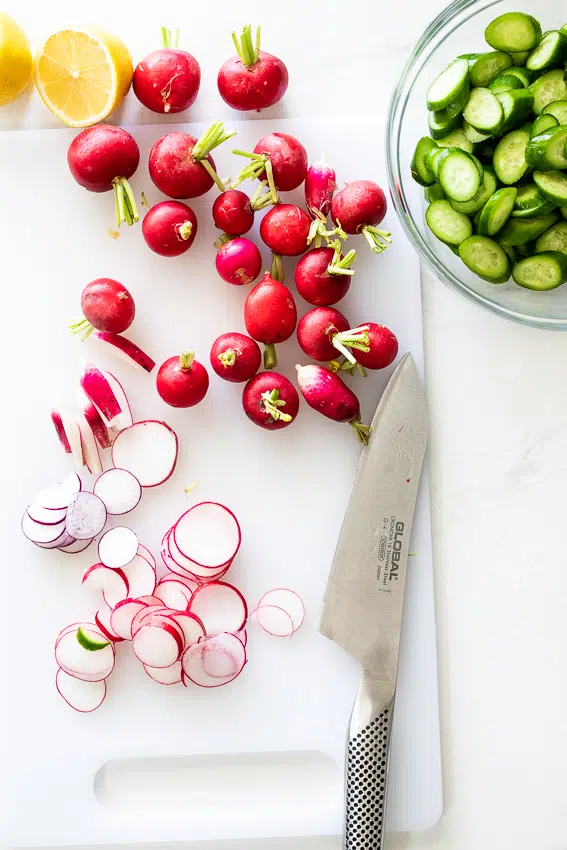
A Good Quality Chopping Board
An item you’ll use everyday. It’s out on the counter permanently and it gets used for every meal I cook. Invest in one that’s big enough to work on comfortably (nothing worse than chopping on a board that’s too small and having ingredients fall off the edges) and heavy enough that it doesn’t slide around while you’re cutting. Tip: Place a piece of damp paper towel under your board to secure it.
Wood and bamboo boards are my preference. They’re kinder to your knife edges than plastic or glass, they look beautiful on the counter and they last for years if you care for them. Avoid glass chopping boards entirely. They’re terrible for your knives and they look cheap regardless of how much they cost. Composite boards are great if you’re not keen on the maintenance a wooden board requires but not keen on the issues of using plastic.
Knives
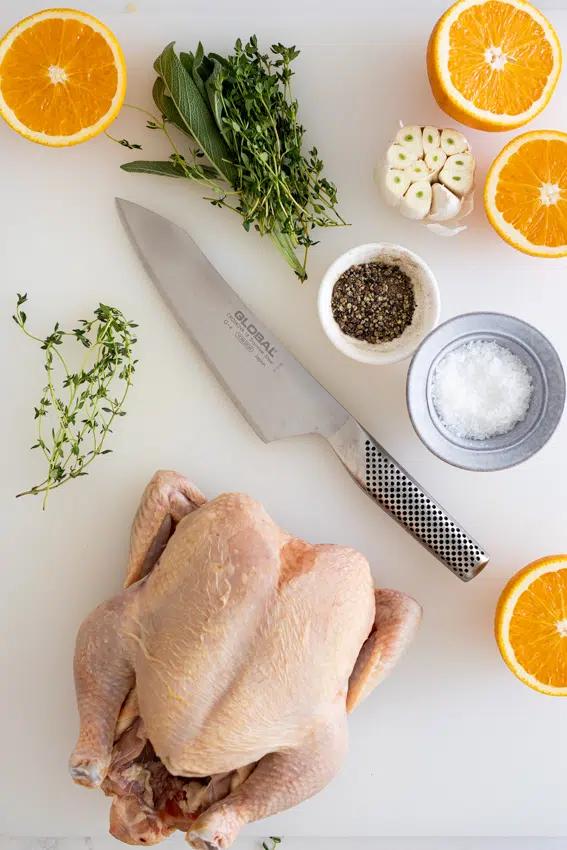
You only need three knives. That’s it.
- A chef’s knife. This is the one that does 90% of the work. Chopping vegetables, slicing meat, mincing garlic, dicing onions. If you can only afford one good knife, make it a chef’s knife. Buy the best quality you can afford and keep it sharp. A sharp knife is safer and more efficient than a dull one.
- A serrated bread knife. For bread, tomatoes, cake layers and anything with a crust or skin that a straight blade would crush rather than cut. You don’t need to spend a fortune on this one. A mid-range serrated knife lasts for years because the serrations maintain their edge much longer than a straight blade.
- A paring knife. A small, short-bladed knife for detail work: peeling, trimming, hulling strawberries, deveining shrimp, cutting small items where a chef’s knife feels too big.
I also reach for a small serrated knife more than I ever expected to. It’s perfect for tomatoes, citrus and anything where you need to cut through a skin without crushing what’s underneath. It’s not essential but it’s earned its place in my knife block.
Wooden Spoons
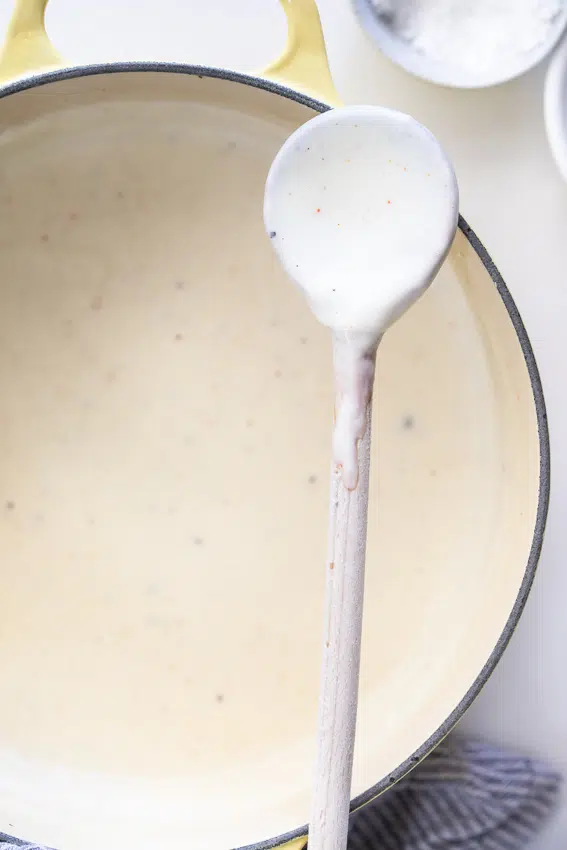
One wooden spoon is sufficient but having a few different shapes makes cooking easier. A flat-edged spoon for scraping the bottom of a pan (essential for deglazing and making sure nothing sticks). A rounded spoon for stirring soups, sauces and batters. A spoon with a corner for getting into the edges of a pot.
Wooden spoons don’t scratch non-stick or enameled cookware, they don’t conduct heat (so they won’t burn your hand), they don’t react with acidic ingredients and they last essentially forever. They’re also inexpensive, which means you can have several without spending much.
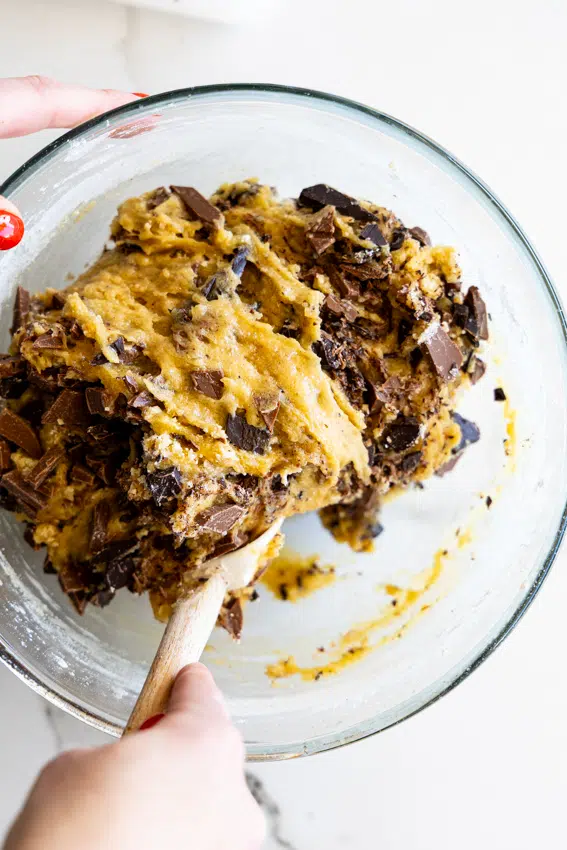
Mixing Bowls
A nesting set in at least three sizes. You’ll use them for prepping ingredients, marinating, mixing batters, tossing salads, whisking dressings and serving. You always need more mixing bowls than you think you do. In the middle of cooking dinner I’ll have three or four bowls out at once holding prepped ingredients waiting to go into the pan.
Stainless steel is my preference: lightweight, durable, non-reactive and virtually indestructible. Glass is good for mixing and serving but slightly heavier. Plastic works but stains and retains odors over time.
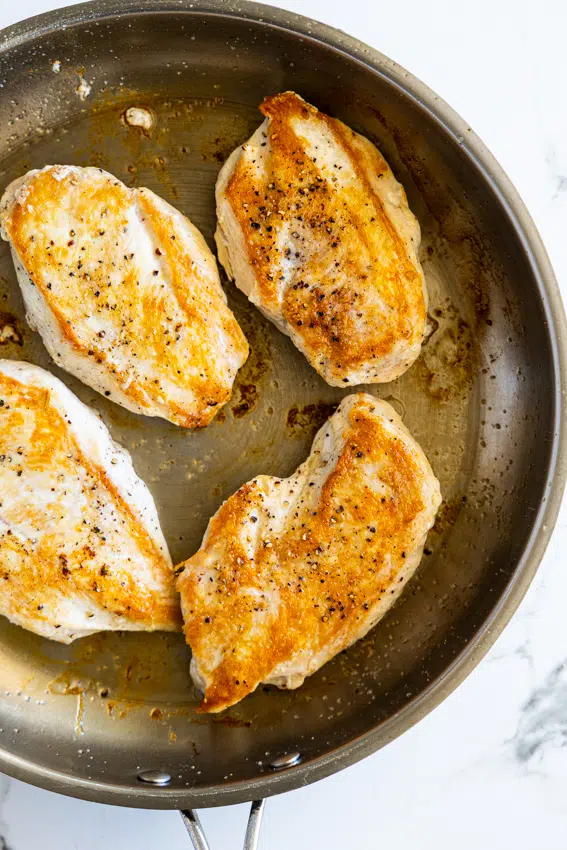
A Stainless Steel Frying Pan
If you own only one pan, make it a good quality stainless steel frying pan. It sears proteins beautifully (better than non-stick because non-stick can’t handle the high heat needed for a proper sear), it builds fond on the bottom that becomes the base for pan sauces, it goes from stovetop to oven without any issues and it lasts a lifetime. It takes a little practice to cook with compared to non-stick (food will stick if the pan isn’t hot enough or if you don’t use enough oil) but once you get the hang of it, you’ll reach for it first every time.
Cookware
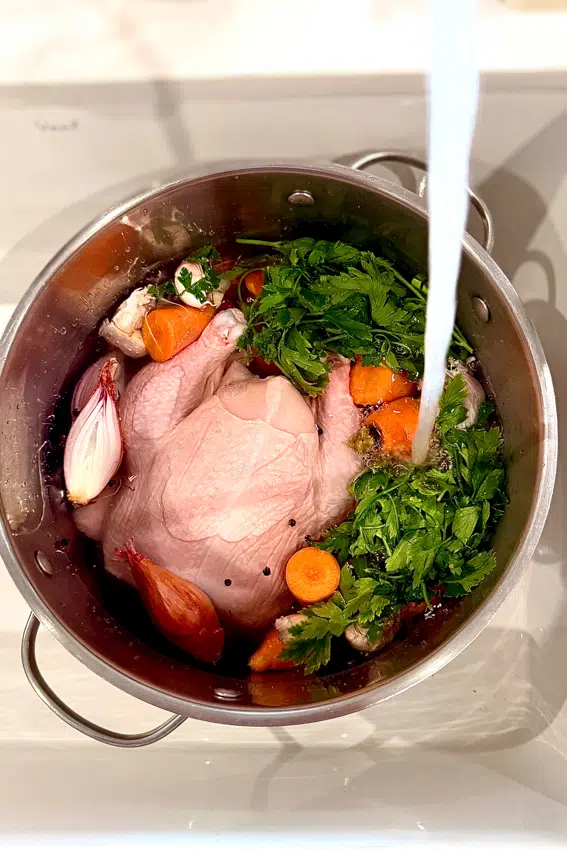
Stockpot
A large, deep pot for cooking soups, stews, stock, boiling pasta and blanching vegetables. Nothing fancy. It just needs to be big enough to hold a full batch of soup or enough water to cook pasta without overflowing. A heavy-bottomed one distributes heat more evenly and is less likely to scorch on the bottom.
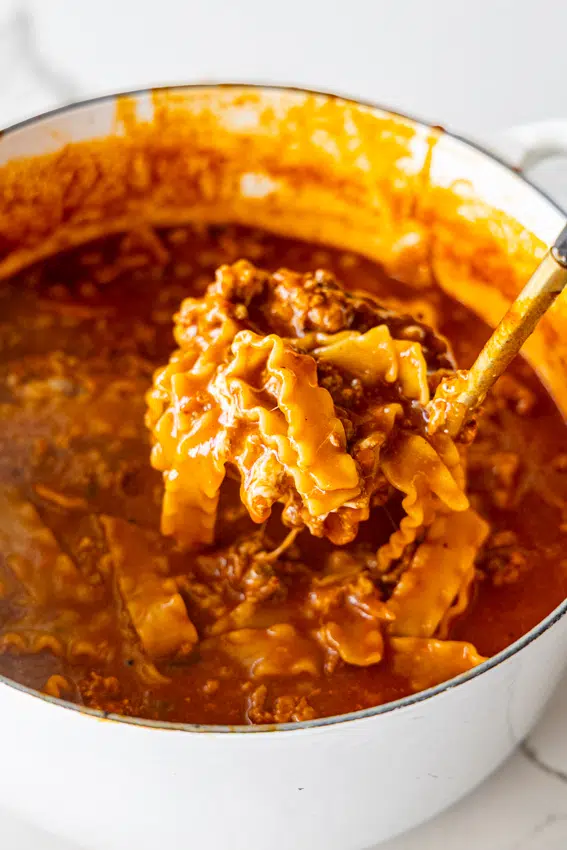
Dutch Oven
A heavy, lidded pot (like a Le Creuset or similar enameled cast iron) for braising, slow cooking, making bread, simmering curries and anything that needs to go from stovetop to oven. A Dutch oven is one of the most versatile pieces of cookware you can own. It retains heat beautifully, distributes it evenly and the heavy lid traps moisture so braised meats come out incredibly tender. It’s an investment but one that pays for itself over decades of use.
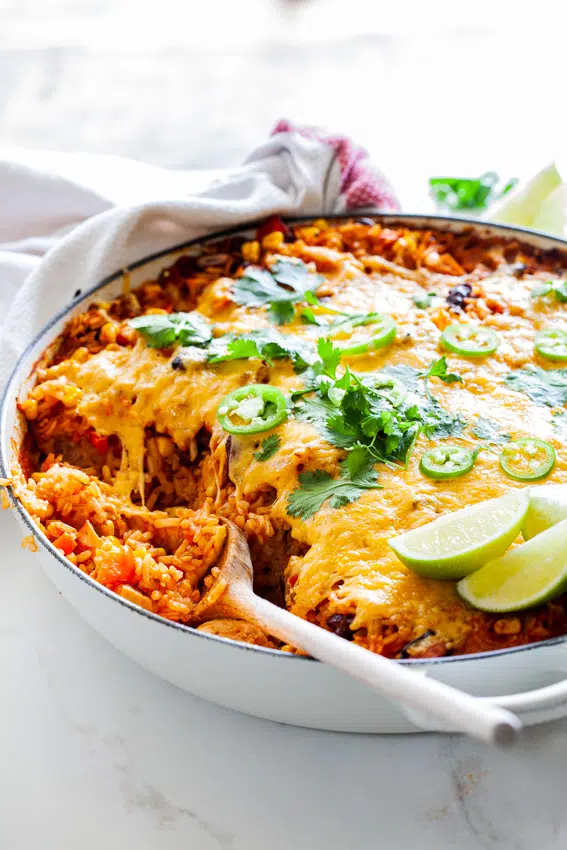
Braiser / Buffet Casserole
This is my personal daily workhorse and the piece of cookware I use more than anything else. A braiser is wider and shallower than a Dutch oven, which gives you more surface area for browning and searing while still being deep enough for sauces, curries and one-pot meals. I use mine for everything from weeknight curries and braised chicken to pasta sauces. If you cook a lot of one-pot meals, a braiser might become your most-used piece of cookware too.
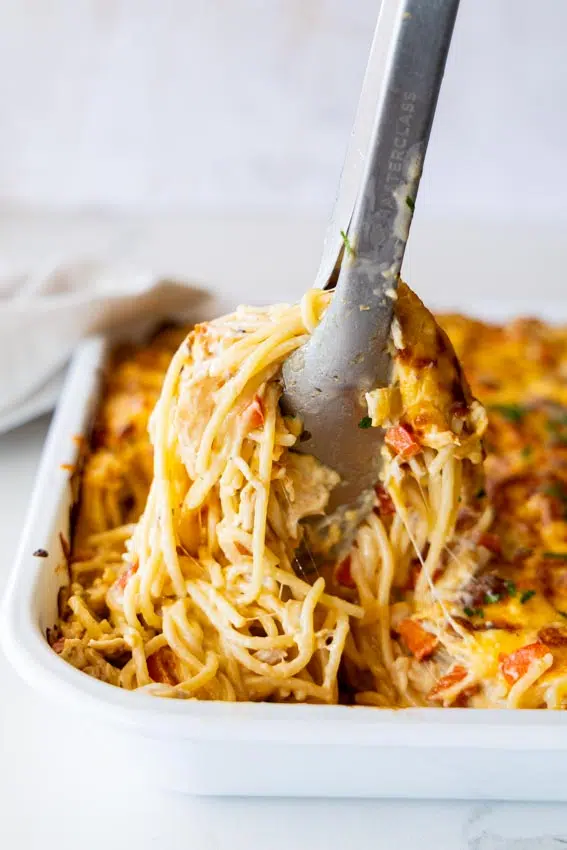
Utensils
- Tongs. I have them in at least two sizes and I use them daily. Tongs are an extension of your hand: flipping meat, tossing pasta, serving salads, pulling things from the oven, turning vegetables in a roasting pan. A good pair of spring-loaded tongs with both metal and silicone tips (so they don’t scratch non-stick) is the most versatile utensil in the kitchen.
- A peeler. A good, sharp potato peeler is essential if you cook with root vegetables that need peeling often. It’s also great for getting parmesan shavings for salads and pasta dishes.
- Rubber spatulas. For scraping every last bit of batter from a bowl, folding ingredients gently, stirring sauces and scraping the sides of a blender or food processor. Heat-resistant silicone spatulas are worth the small premium because they won’t melt if they touch a hot pan.
- A metal spatula (fish slice/turner). Flat, thin and flexible for flipping pancakes, eggs, fish fillets and anything delicate that a pair of tongs would crush or break. Essential for getting under a seared piece of protein and lifting it cleanly.
- A ladle. For serving soups, stews, sauces and curries. A deep ladle with a comfortable handle makes serving from a hot pot much easier and less messy than pouring.
- Metal serving spoons. Large, sturdy spoons for serving rice, vegetables, casseroles and anything that needs scooping rather than ladling.
- A masher. For mashed potatoes, smashing beans, crushing avocado for guacamole and mashing bananas for baking. A simple wire masher is all you need.
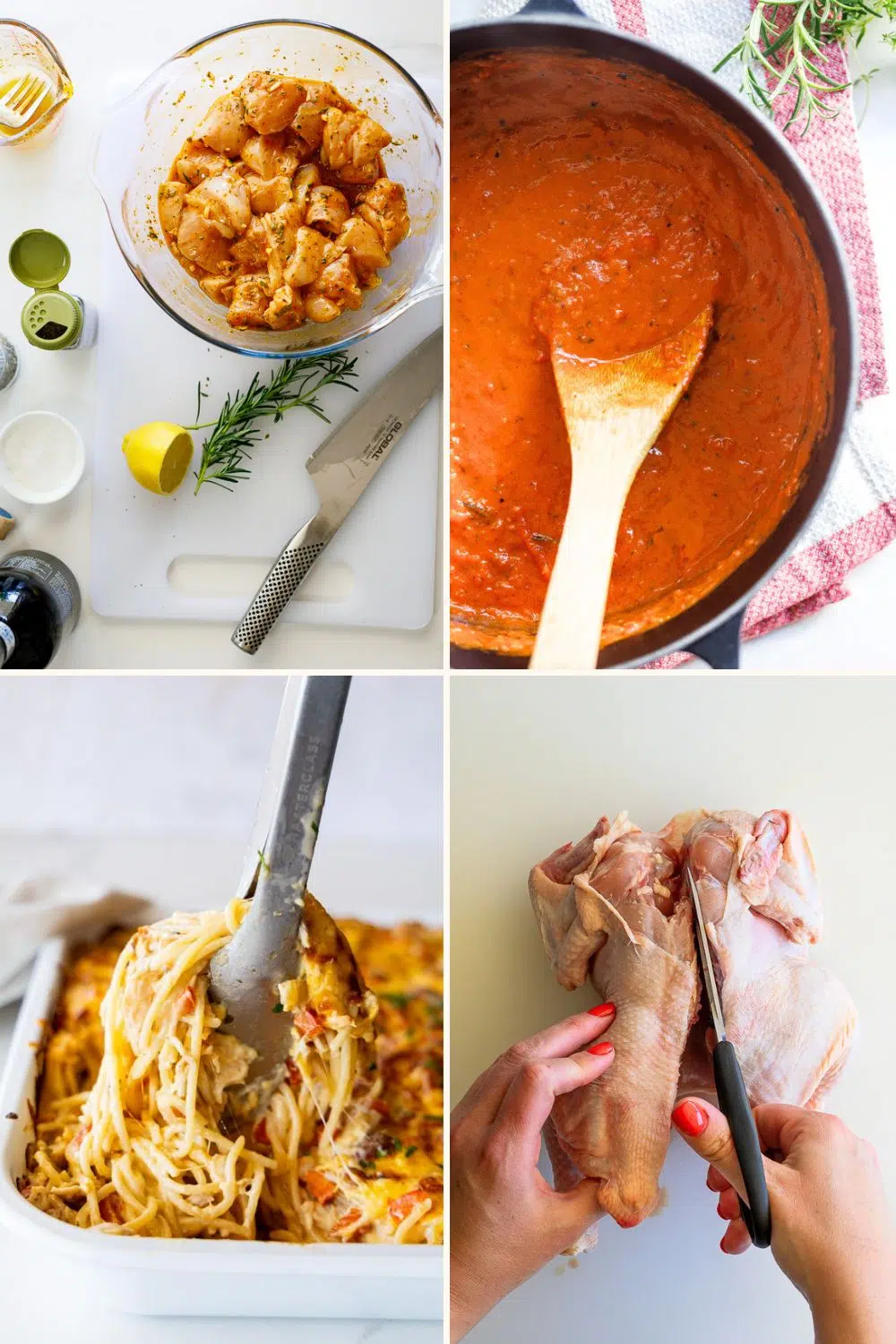
- Shears/scissors. I use my kitchen shears often. I often spatchcock my own chickens, they’re great for cleaning shrimp/prawns and I often use it to snip herbs or spring onions.
- Cookie scoops. I use my cookie scoops surprisingly often. For everything from meatballs, to cookies and portioning pancake batter.
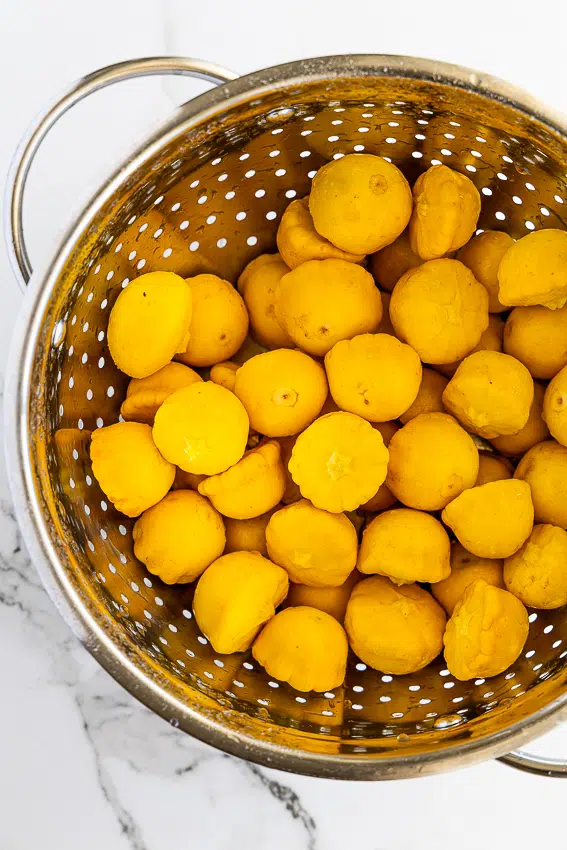
Prep Tools
- A colander. For draining pasta, rinsing canned beans, washing vegetables and straining stock. One large colander is enough.
- A box grater. For grating cheese, carrots, zucchini, ginger and anything that needs to be shredded quickly. The different sides (coarse, fine, slicing) make it surprisingly versatile.
- A microplane. For zesting citrus, grating garlic into a paste, finely grating parmesan and grating nutmeg and ginger. Once you own a microplane you’ll use it constantly. The fine grating is something a box grater can’t replicate.
- Whisks. I have a few sizes because a small whisk is surprisingly useful. A large whisk for batters, eggs and combining dry ingredients. A small whisk for sauces, dressings, vinaigrettes and anything in a small bowl or pot where a large whisk is too big and clumsy. The small whisk gets more use than you’d expect.
Support Cookware
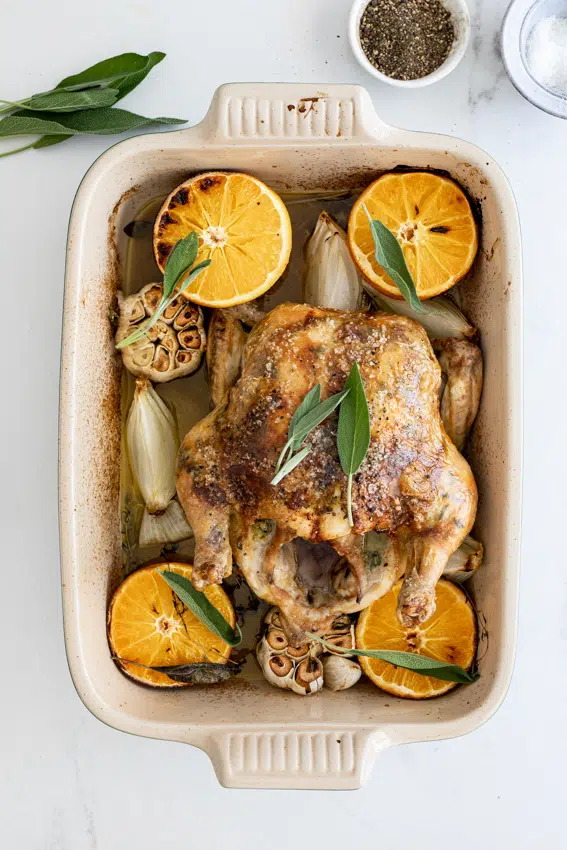
A roasting pan. For whole chickens, roasts, large cuts of meat and anything that needs to be roasted in the oven with space around it for air circulation and drippings. I like both ceramic and metal for this – it just depend on personal preference.
Sheet pans (baking trays). You can never have enough sheet pans. They’re for roasting vegetables, baking cookies, toasting nuts, catching drips under a pie, making sheet pan dinners and about a hundred other things. Buy at least two. Three is better. Heavy-gauge aluminum or stainless steel that won’t warp in a hot oven.
If You Bake
These aren’t daily essentials for everyone but if baking is your thing, they’re non-negotiable:
- A wire cooling rack. For cooling cakes, cookies and bread after baking. Elevating baked goods allows air to circulate underneath and prevents the bottom from getting soggy from trapped steam.
- A sieve (fine mesh strainer). For sifting flour, dusting powdered sugar, straining sauces and draining small quantities of liquid. It doubles as a sifter so you don’t need a separate one.
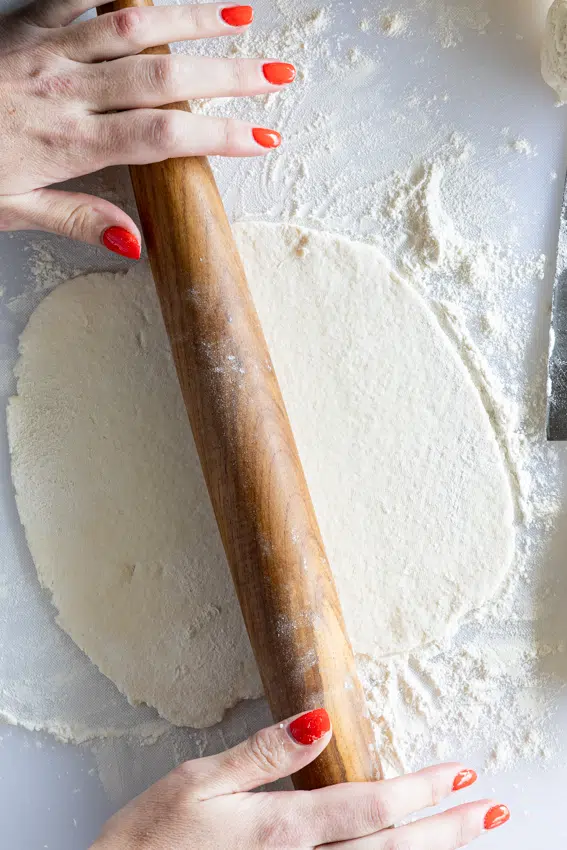
- A rolling pin. For rolling pastry, cookie dough, pie crusts and any dough that needs to be flattened. A simple wooden or marble pin without handles works best and gives you the most control.
- Measuring cups and spoons. Liquid measuring cups (glass or clear plastic with a spout) for liquids. Dry measuring cups (metal or plastic, flat-topped for leveling) for flour, sugar and dry ingredients. A set of measuring spoons for teaspoons and tablespoons. Baking is chemistry and accurate measurements matter more than in any other type of cooking.
What You Don’t Need
Just as important as what you buy is what you skip. These are the items that clutter kitchens without earning their space:
- Unitaskers. If a tool does only one thing (avocado slicer, egg separator, garlic press, banana slicer) you almost certainly don’t need it. A knife and your hands can do what most unitaskers do.
- Knife sets in a block. Most knife blocks come with 12 to 15 knives and you’ll use 3 of them. Buy 3 good knives individually rather than a set of 15 mediocre ones. If you want to expand your collection, buy knives individually and do your research on the usability. If you’re an experienced cook, boning knives, cleavers, etc. are incredibly useful but shouldn’t form part of your knife collection if you’re just an everyday homecook.
- Expensive gadgets you’ve never used. If it’s been in the box for 6 months, you don’t need it. The best kitchen tools are the ones you reach for without thinking and those are almost always the simple basics on this list.
Frequently Asked Questions
A good chef’s knife. If you can only invest in one thing, make it a quality chef’s knife that feels comfortable in your hand. A good knife makes every task in the kitchen faster, easier and safer.
Not necessarily. A mid-range stainless steel pan, a sturdy stockpot and a Dutch oven are worth investing in because they last decades. But you don’t need the most expensive version of everything. Buy the best you can afford for the items you’ll use daily (knife, frying pan, Dutch oven) and spend less on items you use occasionally.
Three: a chef’s knife, a serrated bread knife and a paring knife. These three cover every cutting task in a home kitchen. A small serrated knife is a useful fourth addition but not essential.
Both have their place although more and more people are moving away from non-stick due to its toxic potential. Stainless steel is better for searing, browning and building fond for sauces. Non-stick is better for eggs, pancakes and delicate fish. If you can only have one, start with stainless steel and learn to cook with it. Add a non-stick pan later for eggs and pancakes.
Le Creuset and Staub are the gold standard. They’re expensive, but in my opinion completely worth it. One piece of Le Creuset cookware will last you a lifetime and will be used every single day. Lodge makes excellent enameled cast iron too, at a much cheaper price. Any heavy, enameled cast iron Dutch oven will perform well. The key is the weight and heat retention.
Not much said about, cast iron pans I own several from 4 in to 8 in to 9 in cast iron, they are my go to pans, and I also have stainless steel steel