
Brown Butter Sage Sauce
This brown butter sage sauce is one of those recipes that feels impossibly elegant for how little effort it takes. Butter is gently cooked until the milk solids turn golden and nutty, then crispy sage leaves are added to create a sauce that’s rich, aromatic and deeply savory. It’s the kind of thing you’d happily pay for at a nice Italian restaurant and it takes less than 10 minutes to make at home.
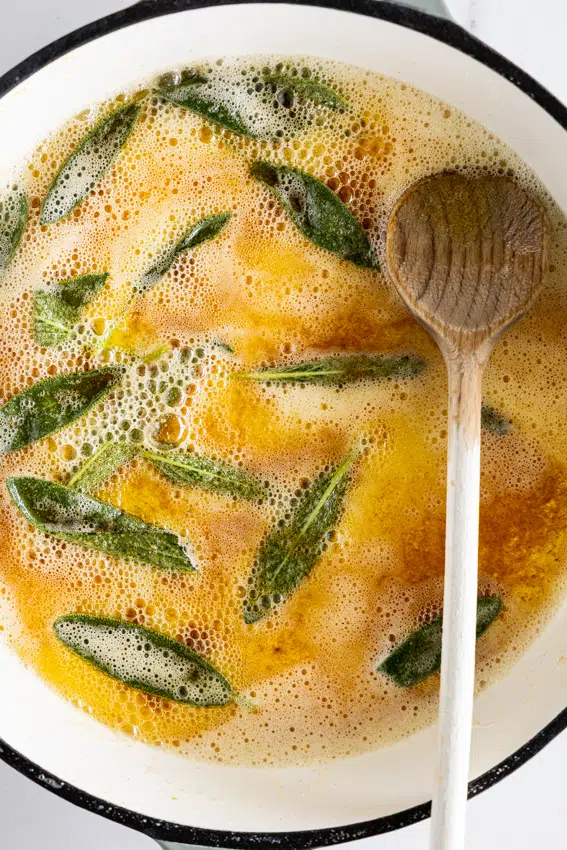
The combination of brown butter and sage is a classic Italian pairing, most often served over fresh ravioli, gnocchi or filled pasta. The nuttiness of the browned butter and the aromatic flavor of the crispy sage complement each other perfectly. It’s simple, unfussy cooking at its very best.
This sauce starts with beurre noisette (the French term for brown butter), which is the technique of cooking butter until the milk solids toast and develop a warm, hazelnut-like flavour. If you’d like to learn more about the technique and discover other ways to use it, check out my Beurre Noisette (Brown Butter) guide. This recipe takes that foundation and turns it into a complete sauce with crispy sage, a squeeze of lemon, and a crack of pepper.
Ingredients and Substitutions
- Unsalted butter. This is the star of the sauce, so use a good quality unsalted butter. Unsalted is important because the flavours concentrate as the water in the butter evaporates during browning. Having said that, I often make this with salted butter as that’s what I have on hand regularly and the end result is still delicious – just adjust the seasoning to your preference.
- Fresh sage leaves. Fresh sage is non-negotiable here. Look for sage with no dark spots or wilting. Larger leaves work best because they hold their shape and get beautifully crispy in the butter. You’ll want about 15 to 20 leaves for a generous batch. If you absolutely cannot find fresh sage, fresh thyme leaves make a decent alternative, though the flavour profile will be quite different.
- Salt and black pepper. Season to taste at the end. A generous crack of black pepper works especially well with sage and brown butter. If you’re serving this over pasta, remember that the pasta water should already be well-salted, so taste before adding more.
Optional:
- Lemon juice. A squeeze of fresh lemon juice at the end brightens the sauce and cuts through the richness of the butter.
- Garlic (optional). A clove or two of thinly sliced garlic added just before the sage gives the sauce an extra savoury depth.
- Parmesan cheese, for serving. A generous grating of Parmigiano-Reggiano or Grana Padano over the top adds a salty, umami finish that rounds out the whole dish.
Brown Butter Sage Sauce Variations
- Add toasted pine nuts. Scatter a handful of toasted pine nuts over the finished sauce for a lovely crunch and extra nuttiness. They complement the brown butter perfectly and add visual interest.
- Add chilli flakes. A pinch of red pepper flakes added with the sage gives the sauce a gentle warmth that balances the richness of the butter. Start with a small pinch and adjust to taste.
- Add capers. A tablespoon of drained capers added alongside the sage creates a more complex, briny sauce. The capers crisp up in the hot butter and add little bursts of tangy flavor. This variation is especially good over fish.
- Add brown butter breadcrumbs. Toast panko breadcrumbs in a separate pan with a little brown butter until golden and crunchy, then scatter them over the finished pasta. The crunchy breadcrumbs add a wonderful textural contrast to silky pasta and smooth sauce.
- Swap herbs. While sage is the classic choice, fresh thyme or rosemary both work well with brown butter. Thyme is especially nice with mushroom dishes and rosemary pairs beautifully with roasted vegetables and lamb.
- Make it a cream sauce. For a richer version, add a splash of cream to the brown butter after the sage has crisped. Stir it through and let it warm for 30 seconds. You lose the clean simplicity of the original, but you gain a luscious, velvety sauce that coats pasta beautifully.
How to Make Brown Butter Sage Sauce
This sauce comes together in under 10 minutes. The key is watching the butter carefully and having your sage leaves ready to go before you start.
- Step 1: Prep the sage. Wash and thoroughly dry the sage leaves before you begin. Any moisture on the leaves will cause the hot butter to splutter when they go in. Pat them dry with a paper towel or let them air dry while you prepare everything else. Have them ready beside the stove.
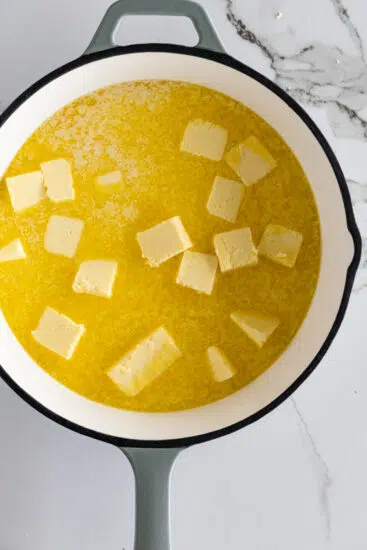
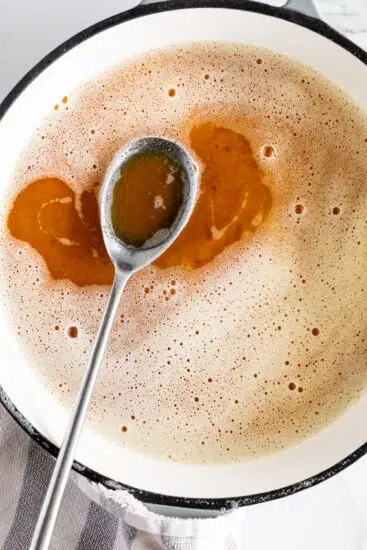
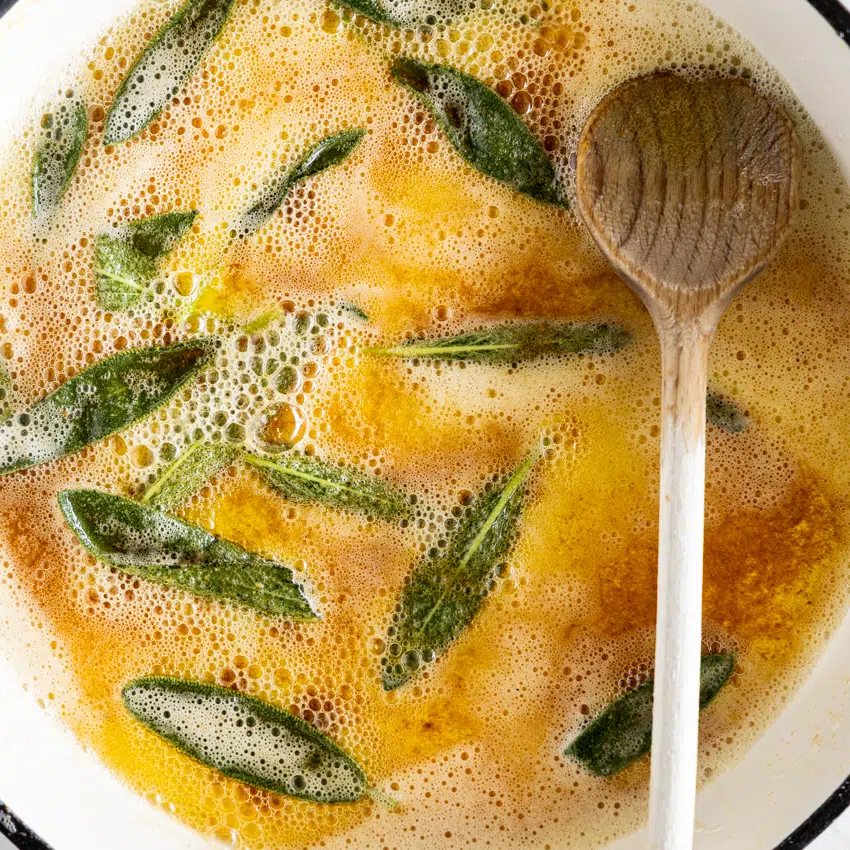
- Step 2: Brown the butter. Cut the butter into roughly even pieces and place them in a light-coloured pan (stainless steel is ideal) over medium heat. Let the butter melt completely, then continue cooking. It will start to foam as the water content evaporates. Swirl the pan gently and watch the colour. After a few minutes, the foaming will subside and you’ll see small golden brown flecks forming at the bottom of the pan. The butter will smell nutty and toasty. This is your brown butter. For a more detailed breakdown of the browning technique, see my Beurre Noisette guide.
- Step 3: Add the sage. As soon as the butter reaches that golden brown, nutty stage, add the sage leaves in a single layer. They’ll sizzle and crisp up in the hot butter, which takes about 30 seconds to 1 minute. You’ll see the edges curl slightly and the leaves will become crisp and translucent. If you’re adding garlic, add it about 30 seconds before the sage.
- Step 4: Finish the sauce. Remove the pan from the heat immediately once the sage is crispy. Squeeze in the lemon juice (be careful, it will splutter), season with salt and pepper and give it a gentle swirl. The sauce is ready. If you’re serving it over pasta, toss the cooked pasta directly into the pan with a splash of pasta water and mix until everything is coated.
Tips for Perfect Brown Butter Sage Sauce
Use a light-coloured pan. You need to see the milk solids changing colour at the bottom of the pan. A stainless steel saucepan or skillet is ideal. In a dark non-stick or cast iron pan, you’re guessing rather than watching, and brown butter goes from perfect to burnt very quickly.
Dry your sage leaves thoroughly. Wet sage in hot butter causes aggressive spluttering, which is both dangerous and messy. Give the leaves a good pat with paper towels before they go in.
Don’t overcrowd the sage. Add the leaves in a single layer so they crisp evenly. If your pan isn’t large enough, work in two batches. Overcrowded leaves will steam rather than crisp.
Have everything ready before you start. Brown butter waits for no one. Once it hits that golden stage, you need to add the sage immediately. If you’re still washing leaves or slicing garlic when the butter is ready, you’ll end up with burnt butter. Prepare all your ingredients before you turn on the heat.
Pull the pan off the heat slightly early. The residual heat in the pan will continue cooking the butter for a few seconds after you remove it from the stove. It’s better to pull it a touch early and let the carry-over heat finish the job than to push it too far.
Listen to the butter. As the water evaporates, the butter will sizzle and pop. When the sizzling quietens down and the butter starts to foam more gently, the browning is about to happen. This audio cue is surprisingly helpful, especially for beginners.
Can You Make Brown Butter Sage Sauce Ahead of Time?
This sauce is best served straight from the pan when the sage is crispiest and the butter is at its most glossy. It only takes about 5 minutes of active cooking, so the smartest approach is to prep everything in advance (wash and dry the sage, slice the garlic, juice the lemon, measure the butter) and make the sauce fresh in the final minutes before serving.
If you’re really short on time, you can brown the butter up to 2 weeks ahead and store it in the fridge. When you’re ready, gently melt it in a pan and add fresh sage leaves to crisp. You get freshly crisped sage with pre-made brown butter, which is a good compromise.
How to Store Brown Butter Sage Sauce
Leftover sauce keeps in an airtight container in the fridge for up to 3 days. The butter will solidify as it cools, which is completely normal. Reheat gently in a pan over low heat until smooth, adding a splash of water if it needs loosening and a squeeze of fresh lemon to revive the brightness. The sage won’t be as crispy as when freshly made, but the flavour will still be good.
I wouldn’t recommend freezing the finished sauce as the sage leaves lose their texture entirely. You can freeze brown butter on its own for up to 3 months in ice cube trays, then make the full sauce fresh by melting a cube and adding fresh sage.
What to Serve Brown Butter Sage Sauce With
This sauce is incredibly versatile, but it pairs best with dishes that let the nutty butter and crispy sage take centre stage:
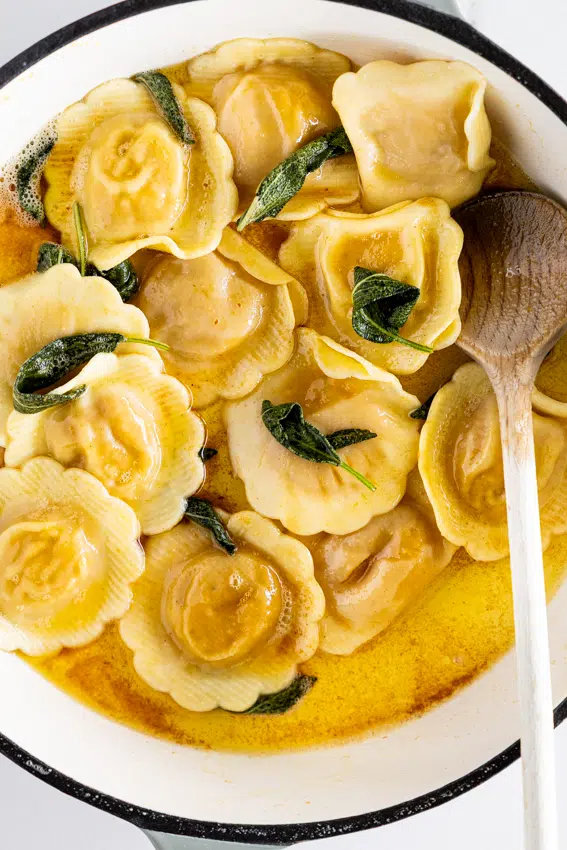
- Ravioli. This is the most classic pairing. Fresh ravioli filled with ricotta and spinach, butternut squash or mushrooms are all beautiful with brown butter sage sauce. The simplicity of the sauce lets the filling shine. Spoon the sauce generously over the ravioli and scatter the crispy sage leaves on top.
- Gnocchi. Whether you’re making fresh potato gnocchi or using good quality store-bought, brown butter sage sauce turns them into something special. The pillowy gnocchi soak up the nutty butter beautifully. Pan-fry the gnocchi in the brown butter for a minute before adding the sage for an even more satisfying texture with crispy edges.
- Tortellini. Another filled pasta that works perfectly here. Cheese or meat-filled tortellini with brown butter and sage is a classic northern Italian combination.
- Spaghetti or pappardelle. While filled pasta is the traditional choice, this sauce works well with long pasta too. Toss through freshly cooked spaghetti or pappardelle with a good splash of pasta water to emulsify the butter into a silky coating.
- Chicken. Pan-seared chicken breast or thighs finished with brown butter and sage make an elegant weeknight dinner. Cook the chicken first, set it aside, then make the sauce in the same pan to pick up all the caramelised bits from the chicken.
- Pork chops. The earthy sage and nutty butter are a natural pairing with pork. Sear the chops, then spoon the sauce over the top.
- Butternut squash. Roasted butternut squash drizzled with brown butter sage sauce is one of the best autumn side dishes you can make. The sweetness of the squash against the nutty, savoury butter is a perfect match.
Ingredients
- ½ cup (112g) butter
- 14 sage leaves
- 1-2 tsp lemon juice optional
- salt and black pepper to taste
Instructions
- Wash and thoroughly dry the sage leaves with paper towels. Any moisture will cause the hot butter to splutter. Have them ready beside the stove before you start.
- Cut the butter into even pieces and place in a light-coloured pan over medium heat.
- Let it melt completely, then continue cooking. It will foam as the water evaporates.
- Swirl the pan gently and watch the colour. After a few minutes, the foaming will subside and golden brown flecks will form at the bottom. The butter will smell nutty and toasty. This is your brown butter.
- Add the sage leaves in a single layer. They'll sizzle and crisp in about 30 to 60 seconds. The edges will curl slightly and the leaves will become crisp and translucent. If using garlic, add it about 30 seconds before the sage.
- Remove from heat. Squeeze in the lemon juice (it will splutter), season with salt and pepper, and swirl gently.
- If serving with pasta, toss the cooked pasta directly into the pan with a few tablespoons of reserved pasta water until everything is coated and glossy.
Notes
- Butter: Use unsalted. The flavours concentrate as the water evaporates, so salted butter can become too salty.
- Sage: Must be fresh, not dried. Dried sage won’t crisp and has a very different flavour. Pat leaves completely dry before adding to the butter.
- Pan: Use a light-coloured pan so you can see the butter changing colour. Dark pans make it too hard to judge.
- Pasta water: Reserve 1 cup before draining. Add a few tablespoons at a time when tossing pasta in the sauce to create a silky coating.
- Serving suggestion: Best over ravioli, gnocchi, or tortellini. Also excellent over roasted butternut squash or cauliflower.
- Storage: Leftovers keep in the fridge for up to 3 days. Reheat gently in a pan with a splash of water and a squeeze of fresh lemon.
Nutrition
Frequently Asked Questions
It’s rich, nutty, and deeply savoury with an earthy, aromatic note from the sage. The butter develops a warm, toasted, almost caramel-like quality when browned, and the crispy sage adds an aromatic herbal flavour that’s quite different from dried sage. A squeeze of lemon at the end adds brightness that keeps the whole thing balanced. It tastes far more complex than you’d expect from something so simple.
It’s both, in a way. The technique of browning butter (beurre noisette) is French, but the combination of brown butter with sage as a pasta sauce is firmly Italian, particularly from northern Italy where butter-based sauces are more common than tomato or olive oil-based ones. In Italian, it’s called “burro e salvia” (butter and sage). The version in this recipe draws on both traditions.
I’d strongly recommend using fresh sage for this recipe. Dried sage won’t crisp up in the butter and has a quite different flavor that can taste dusty or slightly musty compared to the bright, aromatic quality of fresh leaves. The crispy sage leaves are a key part of the dish, both for flavour and texture. Fresh sage is widely available at most supermarkets, and a single bunch will give you more than enough for this recipe.
Filled pasta is the most traditional choice. Ricotta and spinach ravioli, butternut squash ravioli or cheese tortellini are all classic pairings. Potato gnocchi is another favourite. For long pasta, pappardelle or tagliatelle work well because the wide, flat ribbons hold the sauce nicely. Spaghetti works too, though filled pasta or gnocchi is where this sauce really shines.
If the sauce feels oily rather than silky, it likely needs pasta water. When you toss the pasta into the sauce, add a few tablespoons of the starchy pasta cooking water and toss vigorously. The starch in the water emulsifies with the butter to create a glossy, cohesive sauce that clings to the pasta rather than sitting on top as a pool of oil. Keep adding small amounts and tossing until the sauce looks creamy and coats each piece of pasta.
Add the sage leaves after the butter has browned, not during. If you add them too early, they’ll burn while the butter is still developing its colour. Once the butter is golden brown and nutty, add the sage leaves and they’ll crisp in about 30 to 60 seconds. Remove the pan from heat as soon as the leaves are crisp and the edges have curled slightly. Having the pan off the heat when the sage goes in is a safer approach if you’re nervous about timing.
Yes, the lemon is optional. The sauce will still be delicious with just the brown butter and sage. However, I’d recommend including it if you can. The acidity brightens the dish and prevents it from feeling heavy, especially if you’re serving a generous portion over pasta. Without it, the sauce can taste one-dimensional after a few bites.
No. Brown butter (beurre noisette) is butter cooked until the milk solids are golden brown and nutty. Burnt butter has gone past that stage and the milk solids have turned dark and bitter. The difference is only a matter of seconds and about 10 degrees of temperature, which is why watching the colour carefully and pulling the pan off the heat at the right moment is so important. If it smells bitter or acrid rather than nutty and toasty, it’s gone too far.