
Easy Chia Pudding
This chia pudding is the easiest make-ahead breakfast you’ll ever make. Four ingredients, 5 minutes of hands-on time and then the fridge does the rest while you sleep. By morning you’ve got a creamy, thick, pudding-like breakfast that’s packed with fiber and protein and ready to eat straight from the jar.
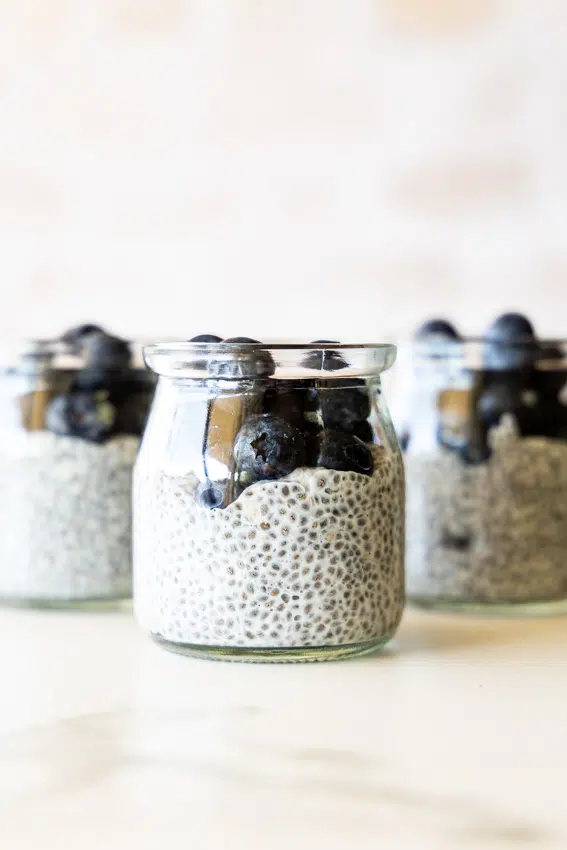
I make a big batch at the beginning of every week and portion it into jars for grab-and-go breakfasts. Top with fresh fruit, a drizzle of honey, a spoonful of nut butter or my easy stewed apples and it feels like a treat rather than a healthy obligation. The base recipe is intentionally simple because the real fun is in the variations. Chocolate peanut butter, mango, berry, cinnamon vanilla. Once you’ve got the base down, the flavor combinations are endless.
What Is Chia Pudding?
Chia pudding is made by soaking chia seeds in liquid (usually milk) until the seeds absorb the liquid and form a thick, gel-like pudding. Chia seeds can absorb up to 12 times their weight in liquid, which is what gives the pudding its distinctive thick, creamy texture without any cooking.
The result is somewhere between a pudding and an overnight oats in texture. The seeds become soft and slightly gelatinous with a subtle pop when you bite into them. It’s a texture that most people love once they try it, though it can take a first-timer by surprise if they’re not expecting it.
Chia pudding is naturally gluten-free, can easily be made dairy-free with plant-based milk and is one of the best sources of both fiber and omega-3 fatty acids you can eat for breakfast. Two tablespoons of chia seeds contain roughly 10 grams of fiber, which is about a third of the daily recommended intake. That’s a significant amount from a single ingredient.
Ingredients
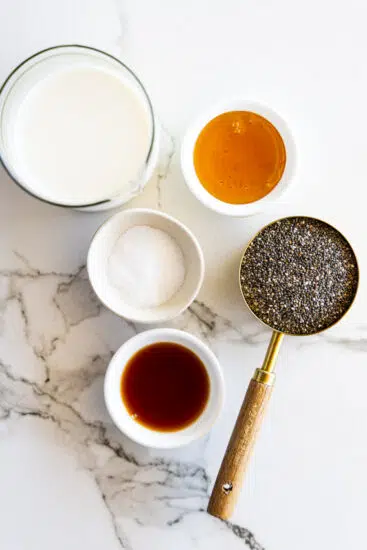
- Chia seeds. You can use either black or white chia seeds. There’s no meaningful difference in flavor or nutrition between the two. Black seeds are more widely available. White seeds are slightly less visible in the pudding if you prefer a cleaner look, especially in lighter-colored variations like vanilla or mango. Buy them in bulk if you’re making chia pudding regularly as it’s significantly cheaper than buying small packets.
- Milk. You can use absolutely any milk. I like whole milk for the richest, creamiest result but any plant-based alternative works beautifully. Macadamia milk and cashew milk are my favorites for their natural creaminess. Almond milk, oat milk, soy milk, rice milk and coconut milk all work well too. The choice really comes down to whether you tolerate dairy and which flavor you prefer. Thicker milks (coconut, cashew, macadamia) give you a thicker, more luxurious pudding. Thinner milks (almond, rice) give a lighter, more delicate result. For a higher protein version, use a high-protein milk or add a scoop of protein powder blended with the milk before mixing.
- Sweetener. This is optional but I’ll be honest, I’m not a fan of unsweetened chia pudding. It needs a little sweetness to taste like something you actually want to eat. For a lower-carb option, I use xylitol. Brown sugar, coconut sugar, honey and maple syrup all work well. Maple syrup is especially good in the vanilla cinnamon variation. Start with a small amount and adjust to taste. You can always add more sweetness when you serve it (a drizzle of honey on top, sweet fruit, etc.) so err on the side of less in the base.
- Vanilla extract or vanilla paste. I add vanilla to every batch regardless of the flavor variation. It rounds out the pudding and adds a warmth that makes everything taste better. Vanilla paste gives you those beautiful flecks throughout the pudding but extract works just as well for flavor.
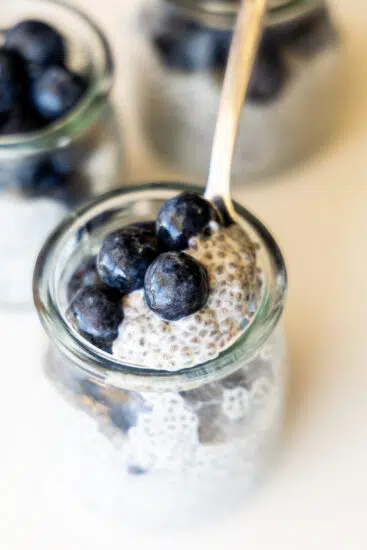
How To Make Chia Pudding
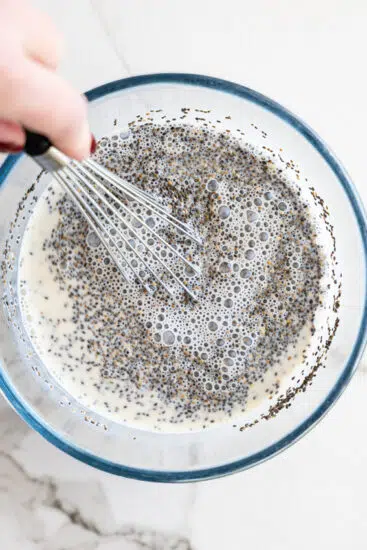
Step 1: Mix. Combine the chia seeds, milk, sweetener and flavorings (vanilla, cinnamon, etc.) in a mixing bowl or jar. Whisk everything together thoroughly.
Step 2: Wait 5 minutes, then whisk again. This is the step that prevents clumping. After 5 minutes the chia seeds will have started to gel and you’ll notice them clumping together. Give the mixture another good whisk to break up any clumps and redistribute the seeds evenly through the milk. This second whisk is the difference between a smooth, even pudding and one with lumpy pockets of dry seeds.
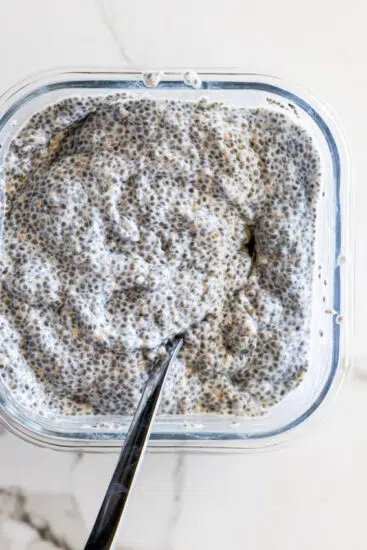
Step 3: Cover and refrigerate. Pop the bowl or jar in the fridge and let it set for at least 8 hours, ideally overnight. The chia seeds need time to fully hydrate and absorb the liquid. The longer they soak, the softer and creamier the texture becomes.
Step 4: Serve. Give the pudding a stir, transfer to serving jars or bowls and add your toppings. If the pudding is thicker than you’d like, stir in a splash of milk to loosen it. If it’s thinner than you’d like, add another teaspoon of chia seeds and let it set for another 30 minutes.
How Long to Soak Chia Pudding
Technically the chia seeds start gelling after 30 to 60 minutes and the pudding is edible at that point. But I don’t love the texture at that stage. The seeds are still slightly crunchy and the pudding hasn’t fully developed its creamy consistency. I prefer a minimum of 8 hours, ideally overnight, for the seeds to fully hydrate and soften. The texture is significantly better after a full overnight soak: smooth, creamy and pudding-like rather than gritty.
If you’re in a rush, 2 hours will give you a decent result. But overnight is genuinely worth planning for.
Tips for Perfect Chia Pudding
- The double-whisk method is essential. Whisk when you first mix, wait 5 minutes, then whisk again. Without that second whisk, the seeds clump together as they start to gel and you end up with uneven, lumpy pudding. The second whisk catches the clumps before they set.
- Get the ratio right. The standard ratio is 1 part chia seeds to 4 parts liquid. This gives you a thick, spoonable pudding. For a thinner, more drinkable consistency, use 2 tablespoons of seeds per cup. For a thicker pudding, go with a 1:3 ratio.
- Taste before serving, not before soaking. The flavors mellow slightly during soaking as the seeds absorb the liquid. If you taste the mixture right after mixing and think it needs more sweetener, wait until the morning. It often tastes different (and better) after a full soak. Adjust sweetness and flavorings when you serve rather than over-sweetening the base.
- Use jars for meal prep. Mason jars or small glass containers with lids are perfect for chia pudding. Make 4 to 5 jars at the beginning of the week and you’ve got grab-and-go breakfasts every morning. They keep in the fridge for up to 4 days.
- Drink plenty of water. Chia seeds contain a significant amount of fiber and they absorb liquid. If you’re adding chia seeds to your diet regularly, make sure you’re drinking plenty of water throughout the day. The fiber is great for you but it needs hydration to do its job properly.
Can I Make Chia Pudding Ahead?
Yes, and that’s the whole point. Chia pudding is one of the best make-ahead breakfasts there is. Mix the base, let it set overnight and you’ve got breakfast ready for the next 4 days without touching a pan.
How long does it keep? Up to 4 days in the fridge in a sealed container or jar. The pudding actually continues to improve over the first day or two as the seeds fully hydrate and the flavors develop.
Meal prep tip. Make 4 to 5 jars on Sunday evening and grab one every morning. Add the toppings fresh each day rather than adding them when you prep. Fruit releases liquid overnight and makes the pudding watery, and granola goes soggy. Keep the base and toppings separate until you’re ready to eat.
Can you freeze chia pudding? You can but the texture changes slightly after thawing. It becomes a bit more watery and the seeds can lose some of their gel structure. If you do freeze it, give it a good stir after thawing and add a splash of fresh milk to bring the consistency back. It’s best eaten fresh from the fridge.
Chia Pudding Flavor Variations
The base recipe is a blank canvas. Here are my favorite ways to change it up:
Chocolate Peanut Butter (High Protein)
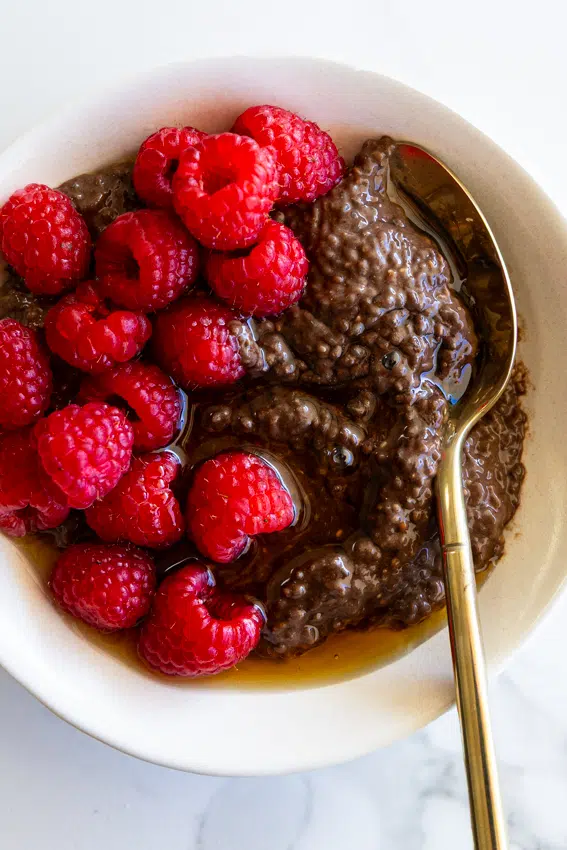
Add 2 tablespoon of cocoa powder and 4 tablespoons of peanut butter powder to the base recipe. Use a high-protein milk in place of regular milk for an extra protein boost, or add a scoop of chocolate protein powder blended with the milk. This version tastes like a chocolate peanut butter dessert and has no business being this high in protein. The chia seeds bring fiber alongside the protein, which is a combination most high-protein breakfasts miss entirely. This is the variation I featured in my Protein Series and it’s become one of my most-made breakfasts served with a handful of raspberries for an extra boost of fibre. This version comes in at 216 Calories with 16.9g of Protein, 9.9g of fibre and 9.1g of carbohydrates per serving.
Vanilla Cinnamon
Add a generous splash of vanilla extract (or vanilla paste for those beautiful flecks) and half a teaspoon of ground cinnamon to the base recipe. This is the warm, cozy version that pairs perfectly with stewed apples, sliced banana or a drizzle of maple syrup. Simple and classic.
Berry
Blend a handful of fresh or frozen berries (blueberries, raspberries, strawberries or a mix) with the milk before adding the chia seeds. The fruit colors the pudding a gorgeous pink or purple and adds natural sweetness. Top with more fresh berries when serving.
Mango
Blend half a ripe mango (fresh or frozen) with the milk before adding the chia seeds. The pudding turns a beautiful golden yellow and tastes tropical and naturally sweet. Top with fresh mango cubes and toasted coconut.
Coconut
Use full-fat coconut milk as your liquid and add a tablespoon of shredded coconut to the mix. Top with toasted coconut flakes, fresh mango and a squeeze of lime for a tropical version. The full-fat coconut milk makes the pudding especially rich and creamy.
Stewed Apple
Make the vanilla cinnamon base and top with a generous spoonful of my easy stewed apples and their cinnamon syrup. The warm, spiced apples against the cold, creamy pudding is an incredible contrast. This version is especially good in fall and winter.
Serving Suggestions
Chia pudding is delicious on its own but the right toppings make it feel special:
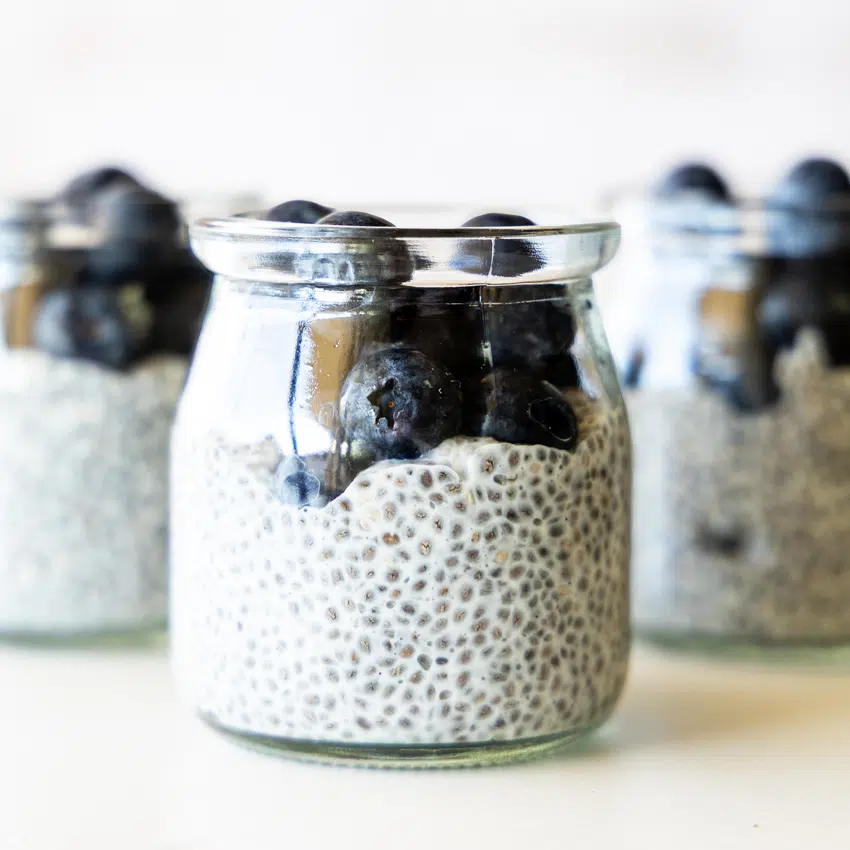
- Fresh fruit. Blueberries, raspberries, sliced strawberries, banana, mango, peaches. Basically any fruit you love works. The freshness and sweetness of the fruit contrasts the subtle, earthy pudding perfectly. My easy berry sauce is also a great option.
- Stewed apples. My easy stewed apples with their cinnamon-spiced syrup are one of my favorite toppings. The warm spiced apples on cold chia pudding is comfort food at its best.
- Nut butter. A spoonful of almond butter, cashew butter or peanut butter adds richness, healthy fats and extra protein. Drizzle it on top or swirl it through the pudding.
- Greek yogurt. A dollop of thick Greek yogurt adds creaminess, tang and a protein boost. Layer it in the jar with the pudding and fruit for a parfait-style breakfast.
- Granola or nuts. A sprinkle of granola, toasted almonds, walnuts or pecans adds crunch and makes the pudding feel more substantial.
- Honey or maple syrup. A light drizzle of either one adds sweetness on top if you kept the base lightly sweetened.
- Toasted coconut. Especially good on the coconut and mango variations. Toast shredded coconut in a dry pan until golden and sprinkle over the top for a nutty, tropical crunch.
Ingredients
- 2 cups milk
- ½ cup chia seeds
- 1 tsp vanilla extract
- 2-3 tsp sweetener to taste
- pinch salt
Instructions
- Stir together the chia seeds, milk, vanilla, sweetener and salt in a medium mixing bowl.
- Allow to stand for 5 minutes for the chia seeds to gel then whisk again, breaking up any clumps.
- Cover then place in the fridge and allow to set overnight until the chia pudding is thick and creamy.
Notes
- This ratio of liquid to chia seeds delivers a thicker chia pudding which is what I prefer. If you want a looser texture, add another 1/2 cup of milk.
- For an extra boost of protein, substitute half cup of milk with half a cup of Greek yogurt.
- Sweetener options include: maple syrup, honey, date syrup, brown sugar, xylitol, coconut sugar, etc.
Nutrition
Frequently Asked Questions
The standard ratio is 1 part chia seeds to 4 parts liquid. This gives you a thick, spoonable pudding. For a thinner consistency, reduce to 2 tablespoons. For a very thick, mousse-like pudding, go for a 1:3 ratio. Adjust to your preference after your first batch.
The most common reason is not whisking a second time. When chia seeds first hit liquid, they start gelling immediately and clump together. The fix is simple: whisk once, wait 5 minutes, then whisk again to break up the clumps. That second whisk is what gives you a smooth, even pudding.
Technically yes but the result is significantly less creamy and flavorful. Milk (dairy or plant-based) gives chia pudding its rich, dessert-like quality. If you use water, you’ll need to compensate with more sweetener and flavorings. I’d only recommend water if you have no other option.
Very. Chia seeds are one of the best plant-based sources of fiber, omega-3 fatty acids and protein. Two tablespoons contain roughly 10 grams of fiber (about a third of the daily recommendation), 4 grams of protein and 5 grams of omega-3s. The pudding is also naturally gluten-free and can easily be made dairy-free and vegan. The healthiness of the overall dish depends on what milk and sweetener you use, but even a full-fat, sweetened version is a nutritious breakfast.
Yes. Blend a scoop of protein powder with the milk before adding the chia seeds. This ensures it’s fully dissolved and doesn’t leave clumps in the pudding. Chocolate and vanilla protein powder work best. The chocolate peanut butter variation above is specifically designed as a high-protein option if that’s your goal.
Add more chia seeds (1 extra tablespoon per cup of liquid) and give it more time in the fridge. If the pudding is already made and too thin, stir in an extra teaspoon of chia seeds and refrigerate for another 30 to 60 minutes. Using a thicker milk (coconut, cashew) also gives you a thicker result.
Yes. Most kids enjoy the pudding-like texture, especially the sweeter variations like chocolate peanut butter or berry. The fiber and omega-3 content make it a genuinely nutritious breakfast for growing kids. Let them choose their own toppings to make it more engaging. The only note is that kids should drink plenty of water when eating chia seeds regularly due to the high fiber content.