
High Protein Breakfasts
Most breakfasts have about 10 grams of protein. Toast, cereal, oatmeal, a piece of fruit. They’re fine in the moment but by mid-morning you’re starving and reaching for whatever’s closest. These six breakfasts are all significantly higher in protein than what most people eat in the morning, ranging from 17 to 27 grams per serving depending on the recipe.
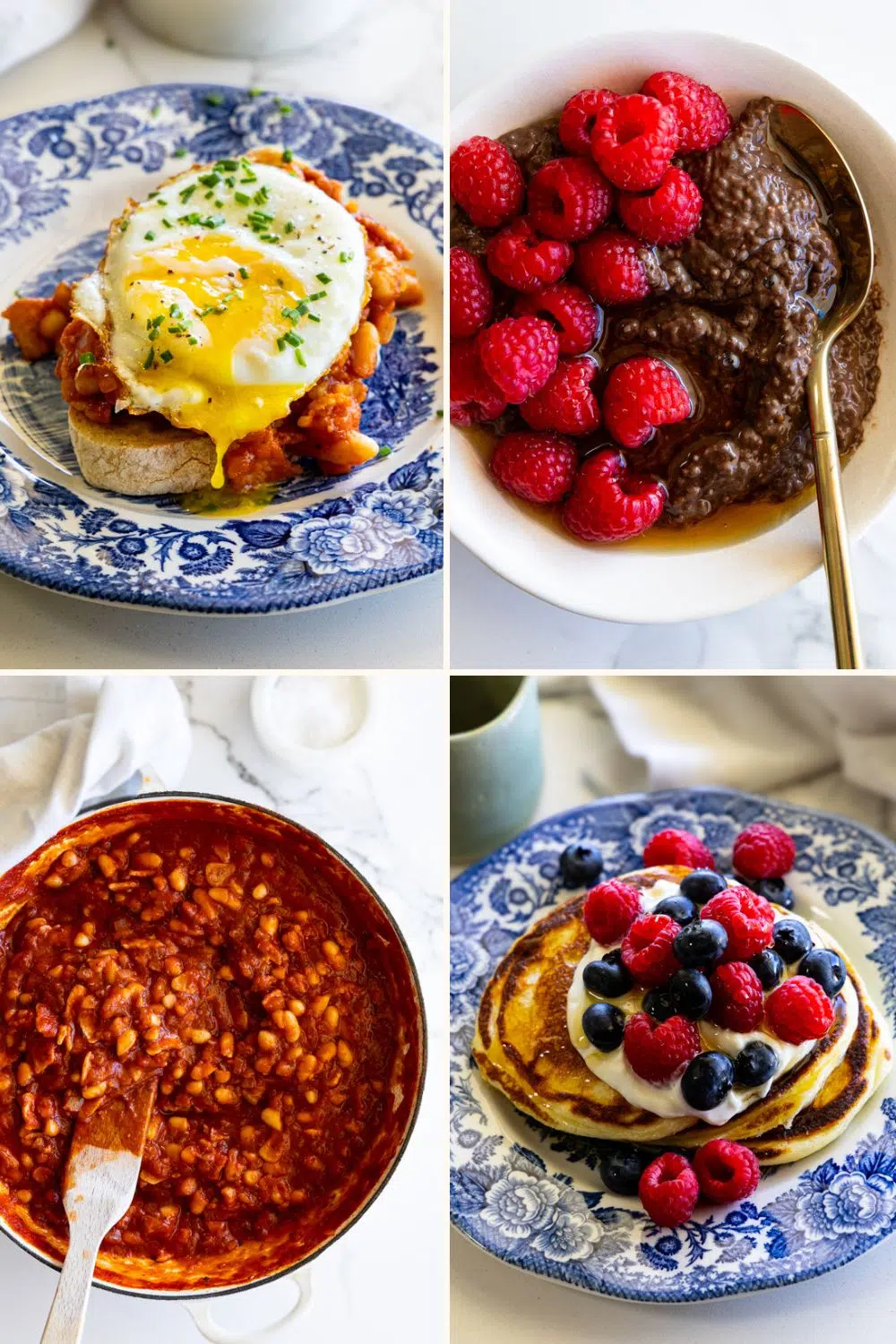
This is Part 1 of my Protein Series, a collection of higher-protein recipes for people who want to eat well without making it their whole personality. No protein powder, no macro calculators, no gym-bro energy. Just real food, whole ingredients and meals that taste good first and happen to be packed with more protein than you’d expect. Starting with the most important meal of the day.
Why Protein at Breakfast Matters
This isn’t a nutrition lecture, in fact quite the opposite. I’m not a huge breakfast eater and facing a plate full of eggs is not enticing to me, at all. I actually prefer a much lighter breakfast but if I can boost the protein just a few grams, that’s good enough for me.
- Protein keeps you full. It takes longer to digest than carbohydrates, which means a high-protein breakfast sustains you through the morning without the energy crash or the 10am hunger that sends you to the vending machine or the pantry.
- Most people front-load carbs and back-load protein. A typical breakfast is carb-heavy (toast, cereal, pancakes, bagels) while dinner tends to be protein-heavy (chicken, steak, fish). Spreading protein more evenly across the day is better for sustained energy, muscle maintenance and satiety. You don’t need to obsess over it. Just adding a bit more protein at breakfast makes a noticeable difference.
- You don’t need supplements to do it. Every recipe in this post uses whole-food ingredients: eggs, cottage cheese, Greek yogurt, beans, chia seeds. No protein powders (although feel free to add a scoop to the chia pudding), no shakes, no bars. Real food that you’d find in any grocery store.
- Fiber matters too. Protein gets all the attention but fiber is just as important and most people aren’t getting nearly enough. Several of these recipes are high in both protein and fiber, which is the combination that keeps you genuinely satisfied rather than just temporarily full. Remember that you can easily add fibre to the egg-heavy recipes by adding a quarter of an avocado, sautéed mushrooms, spinach or grilled tomatoes.
If you’re looking for easy ways to boost your protein intake while still eating delicious food, check out our High Protein Recipe Guide.
The 6 High Protein Breakfasts
Cowboy Beans with Eggs
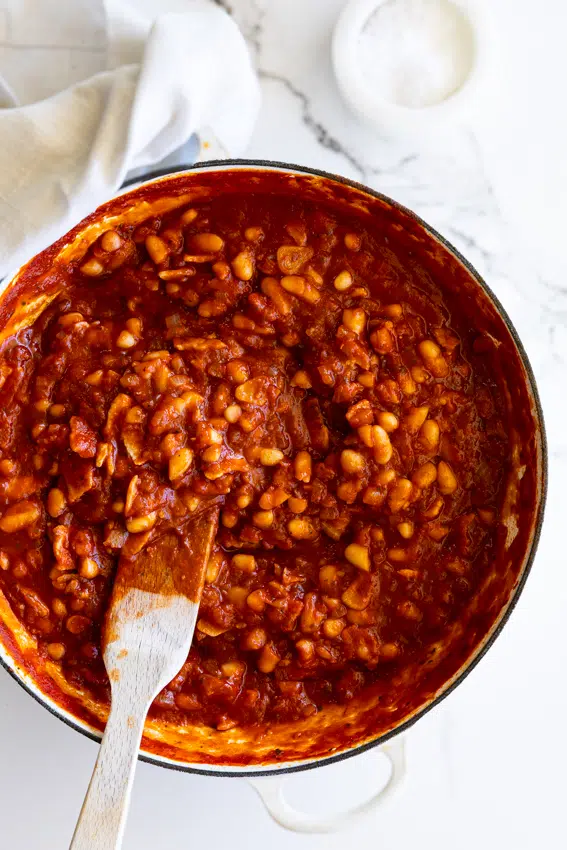
Cannellini beans in a smoky, garlicky tomato sauce with reduced-fat bacon, served with eggs on top and crusty bread. This is not a dainty breakfast. It’s hearty, warming and packed with both protein and fiber from the beans. The sauce can be made ahead so morning assembly is just reheating and frying an egg. If you’ve tried my original cowboy beans, this is the lighter, higher-protein version from the second recipe card on that post.
Why it works: The beans provide a significant hit of both protein and fiber. The eggs add more protein on top (6g of protein per egg). Together they keep you full for hours without the mid-morning crash.
Per serving (no eggs): 354 calories | 26,4g protein | 11.4g fiber
Cottage Cheese Pancakes
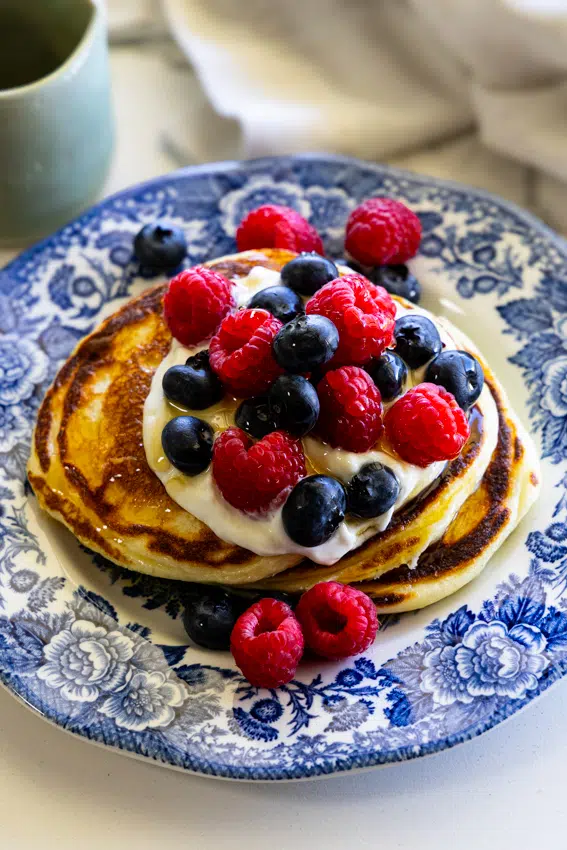
Smooth cottage cheese, eggs, flour, baking powder and salt. That’s it. They soufflé up in the pan and the texture is like the perfect marriage between pancakes and French toast. Light, fluffy, and significantly higher in protein than regular pancakes (for instance my buttermilk pancakes are just over 400 calories per portion with only 12g protein). The cottage cheese disappears completely into the batter so if you’ve got skeptics in the house, they’ll never know.
Why it works: These prove that high-protein breakfasts don’t have to taste like health food. Top with fresh fruit, a dollop of Greek yogurt (even more protein!) and a drizzle of maple syrup and you’d never guess these are one of the best protein-to-deliciousness ratios on the blog.
Per serving: 347 calories | 24g protein | 1.4g fiber
Egg Bites
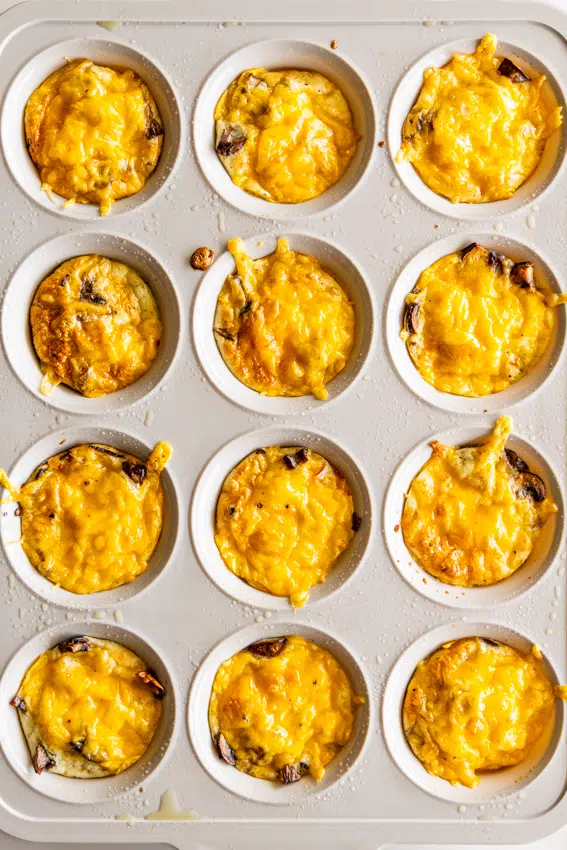
Ham and cheese egg bites made with eggs and cottage cheese, baked in a silicone muffin pan in a water bath. The water bath gives them a silky, almost custard-like texture rather than the rubbery result you get from most baked egg recipes. Five minutes to prep, 15-20 minutes to bake and you’ve got a batch of grab-and-go protein that keeps in the fridge all week. My original recipe (linked below) also includes mushrooms but I made them simply with ham and cheese this round and they were absolutely delicious.
Why it works: Batch cooking at its best. Make a dozen on Sunday and eat them through the week. Cold from the fridge, 30 seconds in the microwave or straight from the pan while still warm. They’re the highest-convenience option on this list.
Per egg bite: 97 calories | 9.4g protein | 0.4g fiber
Chocolate Peanut Butter Chia Pudding
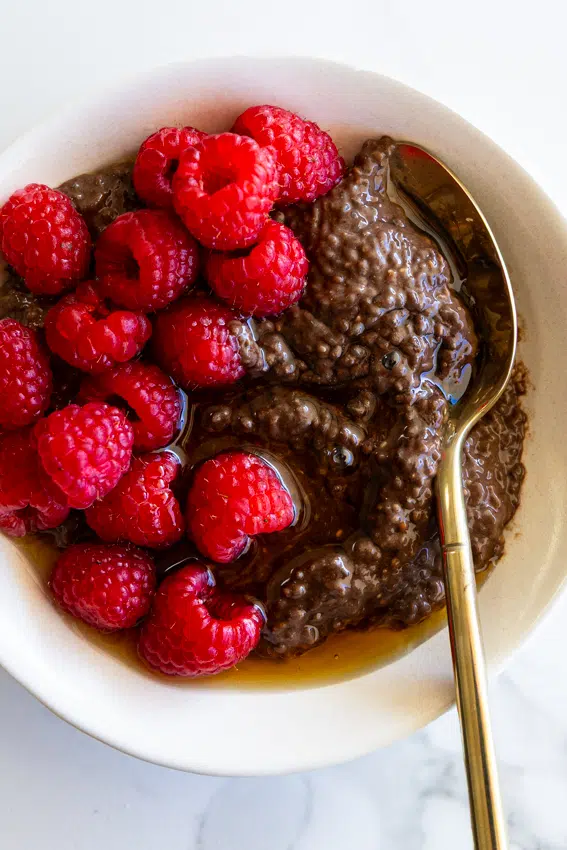
Made with cocoa powder, peanut butter powder and a high-protein milk, this chia pudding tastes like a chocolate peanut butter dessert and has no business being this high in protein. Mix it the night before, let the chia seeds do their thing in the fridge and breakfast is waiting for you in the morning. No cooking, no prep, just grab and eat. The chia seeds bring a solid hit of fiber alongside the protein, which is the combination most high-protein breakfasts miss.
Why it works: It’s completely hands-off. The protein comes from the peanut butter powder, the high-protein milk and the chia seeds themselves. The fiber from the chia seeds keeps you genuinely full rather than just temporarily satisfied.
Per serving: 216 calories | 16.9g protein | 9.9g fiber
Turkish Eggs
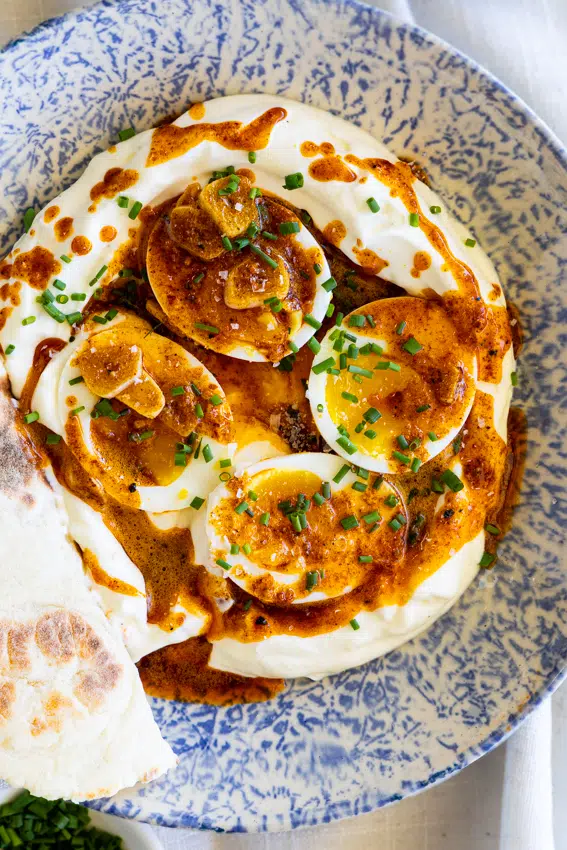
Perfectly cooked eggs served on a bed of low-fat Greek yogurt with a drizzle of butter infused with garlic, smoked paprika and chili flakes. The warm, spiced butter hits the cool, tangy yogurt and something magical happens. This sounds unusual if you haven’t tried it but every single person I’ve served it to has become obsessed. Serve with flatbread for scooping.
Why it works: The protein comes from both the eggs and the Greek yogurt, which makes this one of the highest-protein breakfasts on the list without trying. The combination of warm and cool, spicy and tangy makes it one of the most flavorful too.
Per serving: 379 calories | 27g protein | 1.6g fiber
Cottage Cheese Scrambled Eggs
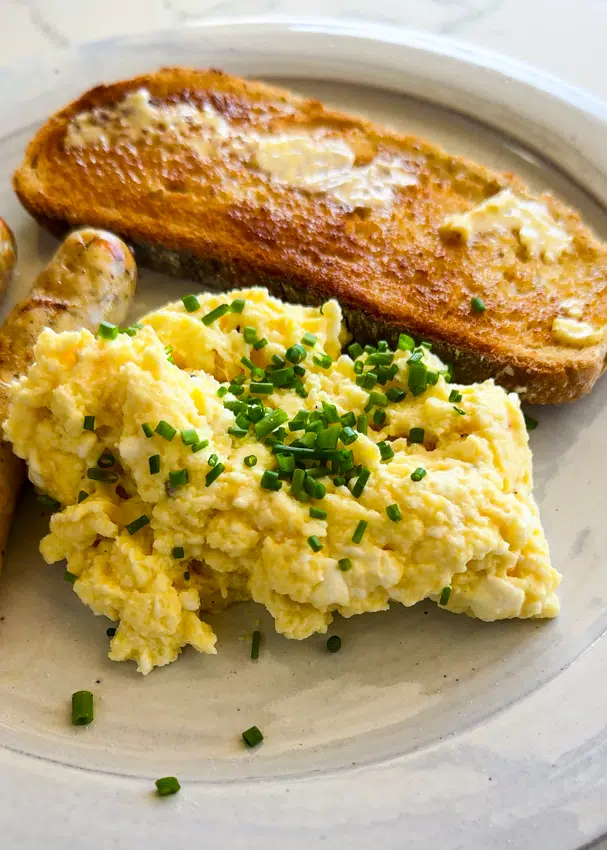
The simplest upgrade on this entire list. Smooth cottage cheese stirred into scrambled eggs before cooking. You can’t taste it, you can’t see it, but the eggs come out noticeably creamier, fluffier and higher in protein than regular scrambled eggs. I use whole eggs and egg whites together for an even bigger protein boost without adding fat. This variation is on my spicy cheesy scrambled eggs post, you’ll find all the info in the recipe card.
Why it works: The cottage cheese disappears into the eggs and adds protein and moisture without changing a thing about the way you make scrambled eggs. Zero extra effort for a meaningfully better breakfast.
Per serving: 205 calories | 23.9g protein | 1g fiber
Tips for Adding More Protein to Breakfast
- Start with what you already eat. You don’t need to overhaul your entire morning routine. Adding cottage cheese to your scrambled eggs, swapping regular milk for high-protein milk in your chia pudding or serving beans alongside your toast are small changes that add up.
- Eggs are your best friend. Two large eggs provide about 12 to 14 grams of protein. Adding eggs to almost any breakfast immediately boosts the protein count. Top your cowboy beans with one. Add a fried egg to your avocado toast. Scramble them with cottage cheese.
- Greek yogurt over regular yogurt. A serving of full-fat Greek yogurt has roughly double the protein of regular yogurt. Use it as a base for chia pudding, a topping for pancakes or the foundation for Turkish eggs. It’s also delicious with my low-carb granola.
- Beans at breakfast aren’t weird. Beans on toast is a British staple for good reason. Beans are high in both protein and fiber and make breakfast significantly more filling. The cowboy beans in this list are proof that beans at breakfast can be genuinely delicious, not just functional.
- Don’t rely on protein powder. Every recipe in this post proves you don’t need supplements to hit a good amount of protein at breakfast. Whole-food protein (eggs, cottage cheese, yogurt, beans) is more satisfying, more nutritious and tastes better. Save the powder for smoothies if you use it at all.
- Prep on Sunday, eat all week. The chia pudding, cowboy beans and egg bites are all make-ahead recipes. Twenty minutes of prep on Sunday gives you grab-and-go high-protein breakfasts every morning without touching a pan.
Frequently Asked Questions
There’s no single right answer but most nutritionists suggest aiming for 25 to 35 grams of protein at breakfast to support satiety and sustained energy through the morning. The exact amount that’s right for you depends on your body weight, activity level and overall diet.
No. Eggs, cottage cheese, Greek yogurt and beans are all excellent protein sources that most people already have in their kitchen. Protein powder is fine if you like it but it’s not necessary.
The cottage cheese scrambled eggs take about 5 minutes from fridge to plate. For zero-effort mornings, the chocolate peanut butter chia pudding is made the night before and just needs to be grabbed from the fridge. The egg bites are also excellent for busy mornings since they’re made ahead and eaten cold or reheated in 30 seconds.
The chia pudding (made the night before), the cowboy beans (made ahead and reheated), and the egg bites (batch cooked and kept in the fridge for up to 5 days). Between these three, you can have a high-protein breakfast ready every morning without any morning cooking.
High-protein breakfasts are widely recommended for weight management because protein keeps you fuller for longer, reduces mid-morning snacking and helps maintain muscle mass. These recipes are designed to be satisfying and nutrient-dense rather than restrictive. They’re not “diet food.” They’re real food that happens to support healthy eating goals.
Absolutely. The cottage cheese pancakes, scrambled eggs and egg bites are all kid-friendly. The cowboy beans are great for kids who enjoy savory breakfasts. The Turkish eggs might be adventurous for younger kids but teenagers tend to love them. The chia pudding works for kids who enjoy pudding-like textures. Adjust the spice levels where relevant (skip the chili flakes on the Turkish eggs for younger ones).
Yes. This is Part 1 of The Protein Series covering breakfasts. Part 2 (Lunches), Part 3 (Dinners) and Part 4 (Snacks and Sides) are coming. Each part follows the same approach: over 30 grams of protein per recipe, whole-food ingredients, no supplements and meals that taste good first.
More in The Protein Series
Part 1: High Protein Breakfasts — You’re here.
Part 2: One Chicken Prep, 3 High Protein Lunches — Fajita bowls, caesar wraps and sweet potato grain salad.
Part 3: Quick High Protein Lunch Ideas — 4 Super quick and easy high protein lunch ideas.
Part 4: High Protein Dinners — Coming soon.
Part 5: High Protein Snacks and Sides — Coming soon.
Fantastic post, with some really great ideas for protein-rich breakfasts! Love that you have a video to go with it too. Thanks Alida!
You’re so welcome!