
Perfect Roast Duck Recipe | Orange Glazed with Garlic and Herbs
If you’ve never tried making roast duck at home, you’re in for a treat! This roast duck recipe delivers restaurant-quality results with incredibly crispy skin, tender juicy meat, and a gorgeous orange honey glaze that takes it over the top.
While duck might seem intimidating, it’s actually surprisingly straightforward to cook. With aromatic garlic, fresh thyme and sage, plus a sweet-tangy glaze, this orange glazed roast duck will become your new favorite special occasion meal.
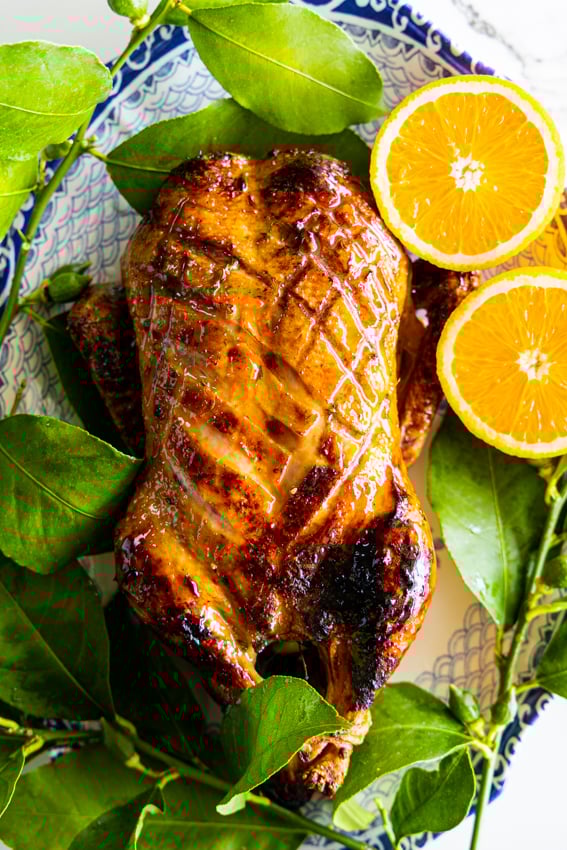
Why You’ll Love This Roast Duck Recipe
Ingredients for Perfect Roast Duck
Here’s what makes this roast duck recipe so delicious. The combination of aromatic herbs inside the cavity and the sweet-tangy glaze creates incredible depth of flavor!
For the Duck:
- Whole duck.
- Fresh garlic cloves.
- Fresh thyme sprigs.
- Fresh sage leaves.
- Salt and black pepper.
- Optional: lemon for cavity
For the Orange Honey Glaze:
- Fresh orange juice.
- Honey.
- Fresh thyme.
- Salt and black pepper.
What Does Duck Taste Like?
Roast duck has a rich, slightly gamey flavor that’s deeper and more complex than chicken or turkey. The meat is darker and more flavorful, similar to beef but with its own unique character. Duck has naturally higher fat content, which keeps the meat incredibly moist and gives you that coveted crispy skin when roasted properly.
The orange honey glaze in this recipe balances the richness beautifully with bright citrus notes and a touch of sweetness.


Expert Tips for Perfect Roast Duck
- Dry the Skin Thoroughly: This is the single most important step for crispy skin. Pat it dry multiple times if needed.
- Don’t Skip the Scoring: Scoring allows fat to render properly, resulting in crispier skin and less greasy meat.
- Save the Duck Fat: That rendered fat is culinary gold! Strain it and store in the refrigerator for up to 3 months. Use it for the most incredible roasted potatoes you’ve ever had.
- Use a Roasting Rack: Elevating the duck allows air circulation and fat drainage, preventing soggy skin on the bottom.
- Be Patient with Temperature: Starting hot and finishing at lower temperature ensures crispy skin without overcooking the meat.
- Watch the Glaze: The honey in the glaze can burn if applied too early. Wait until the last 20-30 minutes of cooking.
Make-Ahead Tips
- Day Before: Remove duck from packaging and pat dry. Place uncovered on a plate in the refrigerator overnight. This air-drying helps achieve crispier skin.
- Morning Of: Remove from fridge 30 minutes before cooking. Prepare the glaze and store in the refrigerator until ready to use.
- During Cooking: Prepare your side dishes while the duck roasts. The low-and-slow cooking gives you plenty of time!
How to Carve Roast Duck
Carving duck is similar to carving chicken, but with a few differences:
- Remove the legs by cutting through the joint where the thigh meets the body
- Separate the thighs from the drumsticks
- Remove the wings
- Slice the breast meat off the bone in thin slices
- Arrange on a serving platter and drizzle with pan juices or extra glaze
Don’t worry about perfect presentation—the crispy skin and gorgeous glaze make everything look amazing!
Serving Suggestions
Complete your meal with these delicious accompaniments:
- Roasted root vegetables: The sweetness of carrots and sweet potatoes is delicious with rich roasted duck.
- Crispy roast potatoes: Cooked in duck fat for extra flavor.
- Green beans or asparagus: Light and fresh to balance the richness. Broccoli is a great choice too.
- Rice: Adds texture and soaks up the delicious juices.
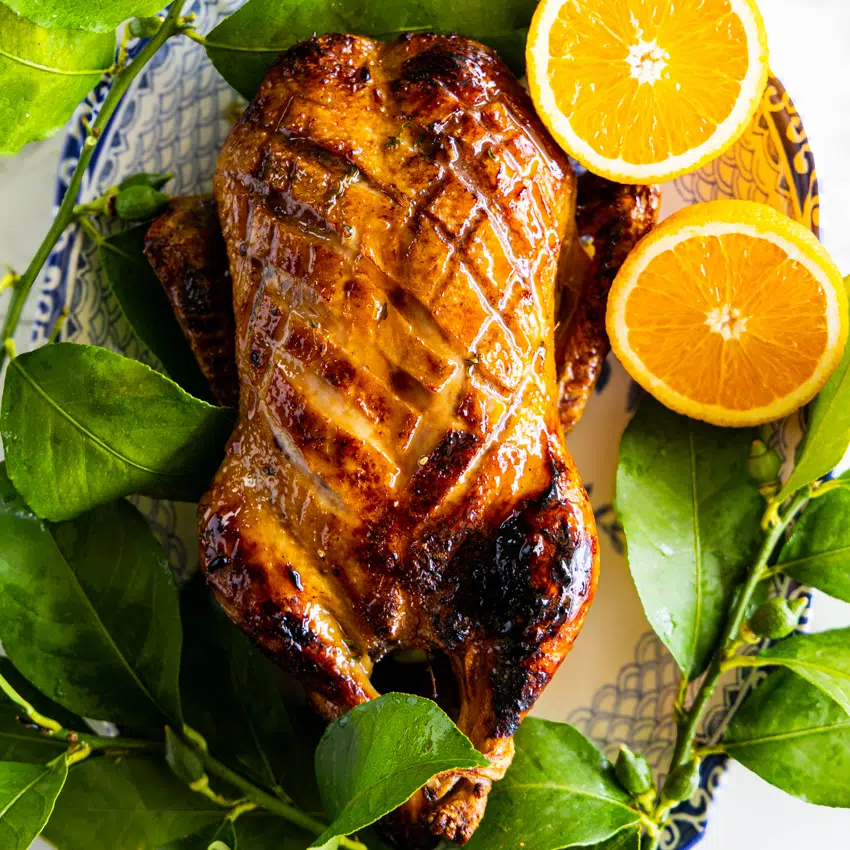
Ingredients
- 3.7 lb / 1.7kg whole duck
- 1½ tsp salt
- 2 garlic cloves smashed
- 8 sprigs fresh thyme
- 8 sage leaves
For the glaze
- ½ cup fresh orange juice
- 1 tsp fresh thyme leaves
- ¼ cup honey
- ½ tsp salt
Instructions
- Preheat the oven to 400°F/200°C (fan assisted) / 425℉/220℃ regular.
- Remove the giblets and neck from the cavity. Pat completely dry with paper towels.
- Use a sharp knife to score the skin over the breast meat in a crosshatch/diamond pattern, cutting through the fat layer but not into the meat. Turn the duck over and poke the skin on the back of the duck with the tip of the knife.
- Rub salt all over the duck, inside and out. Stuff the cavity of the duck with garlic cloves, thyme, and sage. You can also add lemon halves for extra flavor.
- Place duck, breast-side down on a wire rack placed over a roasting pan.
- Place in the preheated oven and roast for 35 minutes.
- Drain excess fat from the bottom of the pan.
- Turn the duck over and roast for another 35 minutes.
- Combine the glaze ingredients in a small saucepan and simmer over medium-high heat for 10 minutes.
- Brush the glaze over the duck and roast for another 10-20 minutes until the internal temperature reaches 145℉/62℃ on a meat thermometer.
- Remove from the oven and allow to rest for 10 minutes, then carve and serve.
Nutrition
FAQ
Not at all! While it seems fancy, roast duck is actually quite straightforward. The key steps are drying the skin well, scoring it, and managing oven temperature. Follow the recipe and you’ll have perfect results.
Crispy skin requires three things: dry skin (pat it thoroughly), proper scoring to release fat, and high initial heat. Make sure to prick the skin and drain fat during cooking. However, using a glaze will result in sticky skin that isn’t shatteringly crisp.
t’s better to use aromatics (garlic, herbs, citrus) rather than traditional stuffing. Duck fat renders significantly during cooking, which would make bread stuffing soggy and greasy.
Duck fat is a prized cooking ingredient! Strain and save it for roasting the most incredible crispy potatoes, frying eggs, making confit, or sautéing vegetables. It stores for months in the refrigerator.
Duck is best served fresh, but you can roast it a few hours ahead and reheat at 350°F for 10-15 minutes before serving.