
Easy Onion Jam
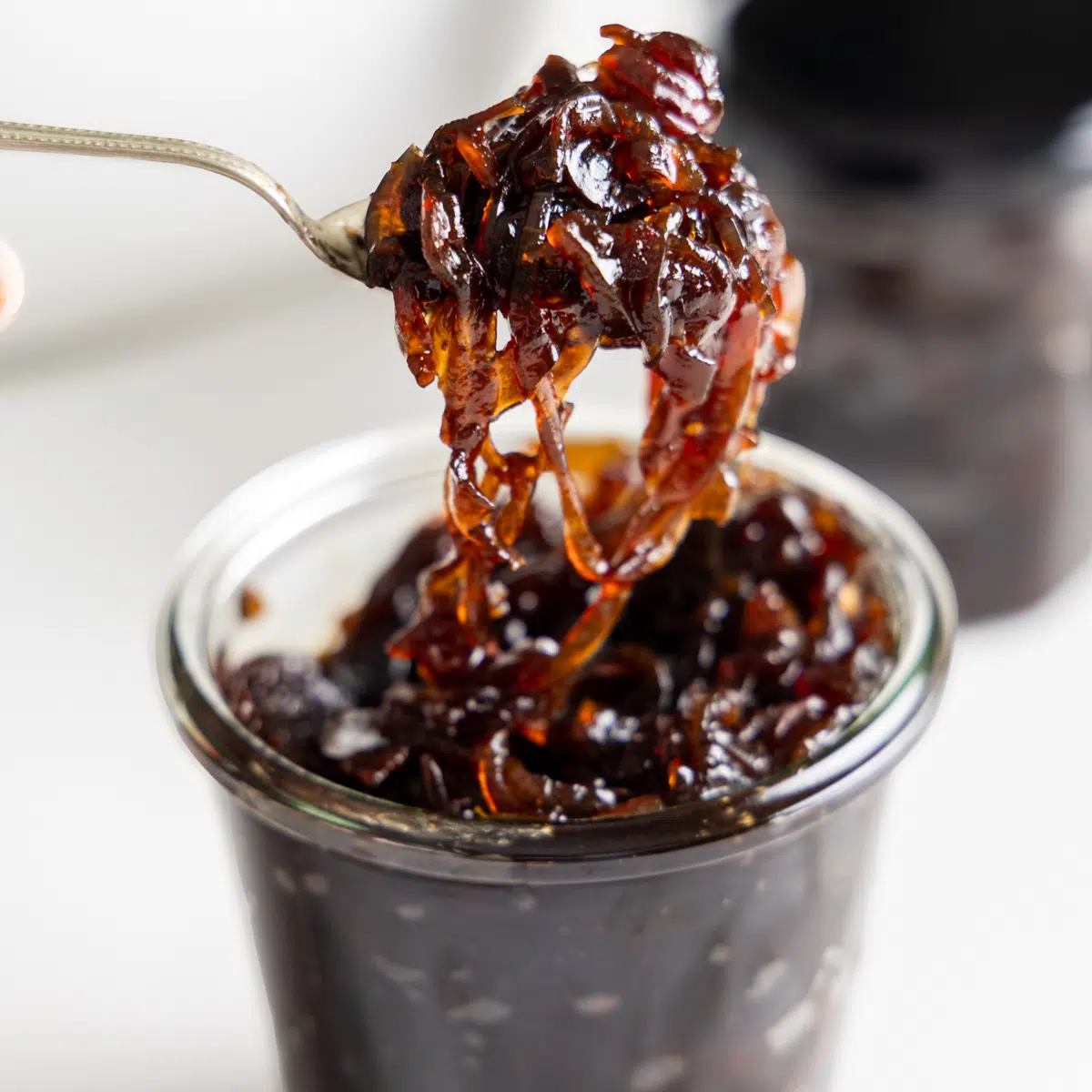
This onion jam is sticky, dark, sweet and absolutely addictive. It takes a little patience but almost no actual effort. You slice a bunch of onions, let them cook low and slow with butter, brown sugar and balsamic vinegar and two hours later you’ve got jars of the most incredible condiment that goes with everything.
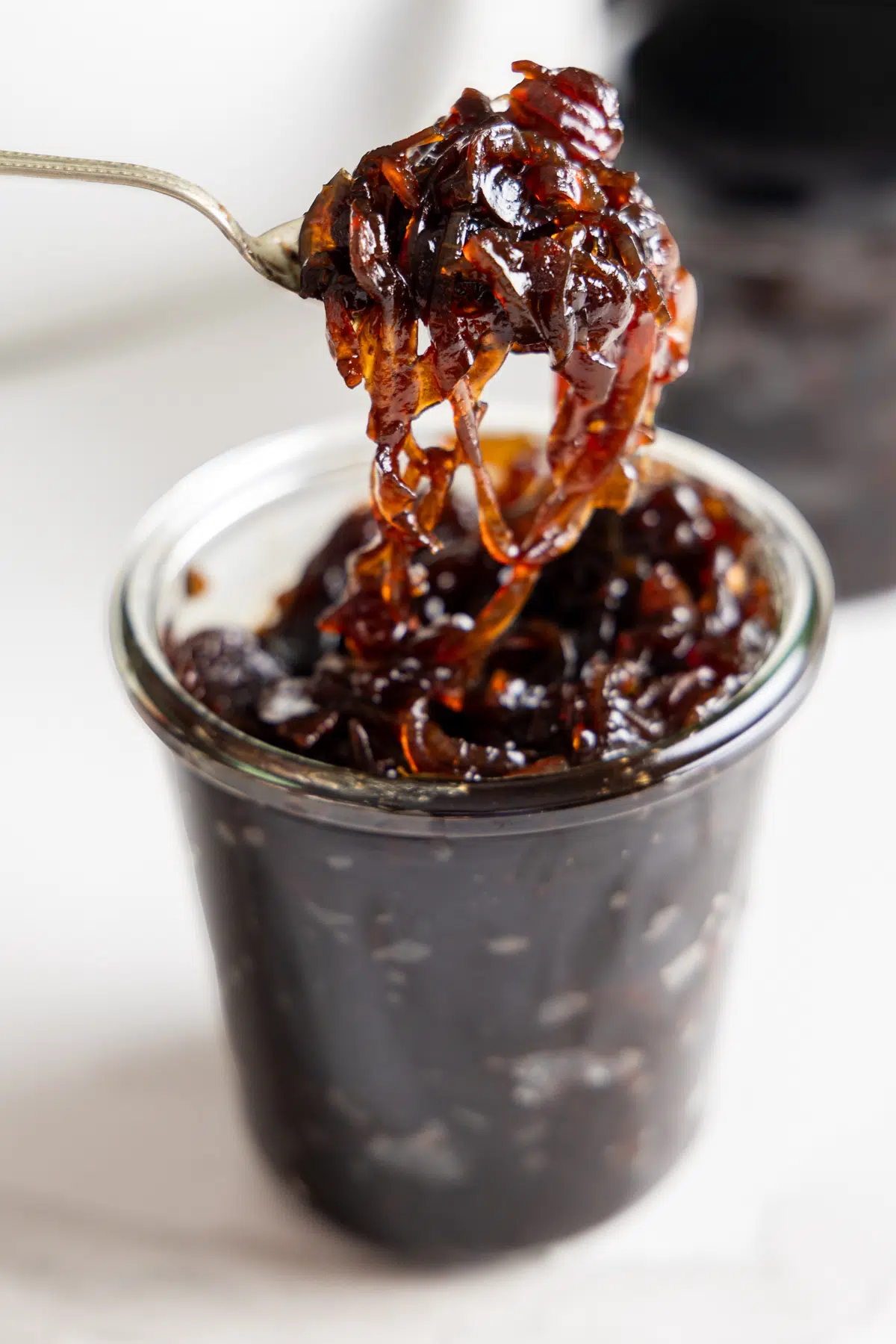
It’s the kind of thing that truly elevates everything it touches. Add it to a cheese board, pile it n burgers or add a spoonful next to rich roasted meats like Christmas ham or roast lamb.
It makes a phenomenal homemade gift (especially as this recipes makes at least 6 x 200ml jars of jam) and you can make it far in advance. It keeps at least a month in the fridge and I actually think the flavor gets better with time.
Why This Recipe Works
A long, sow simmer breaks down the onions’ natural sugars so you don’t need any pectin or thickener. The onions do all the work themselves. Both Balsamic and red wine vinegar cuts through the sweetness and gives the jam a tangy depth that keeps it form tasting one-dimensional. Fresh thyme adds a herbaceousness depth.
Ingredients and Substitutions
- Onions. Use red onions/purple onions (depending on what it’s called in your region). You’ll need around 2kg, thinly sliced. It’s a lot of onions but they cook down dramatically. Slice them as evenly as you can, I prefer using a mandolin for this as the job gets done quicker.
- Butter. I always use salted butter. You can use olive oil too if you prefer.
- Brown sugar. Adds richness and helps to start the caramelization of the onions.
- Balsamic vinegar. This adds both color and flavor.
- Red wine vinegar. Adds tang and cuts through the sweetness.
- Fresh thyme.
- Salt and pepper.
Swaps and variations
Stir in a handful of cooked crisp bacon pieces at the end for a bacon onion jam that is delicious on burgers. Swap the balsamic for apple cider vinegar for a lighter version. Add a smashed garlic clove or a pinch of chili flakes in the last 30 minutes for extra depth and a little heat.
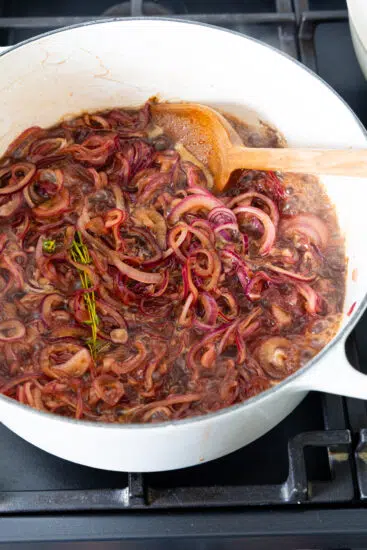
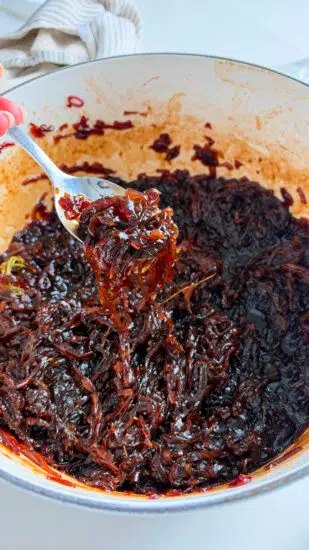
How To Make Onion Jam
- Slice the onions: Have them through the root, peel them and slice into half moons. In the video you’ll see I use a mandolin and kept the onions whole, you could do this but I would recommend halving them first. Half moons cook down quicker. Even slices matter because thick pieces will still be chunky when the thin ones have broken down. Take your time with this step.
- Cook low and slow: Melt the butter (or oil) in a large heavy-bottomed pot or Dutch oven over medium heat. Add the sliced onions and stir to coat them in the butter. Once they start to soften (about 10 minutes), reduce the heat to low, stir in the brown sugar and let them cook uncovered for about 1.5 to 2 hours. Stir every 10 to 15 minutes to prevent them catching on the bottom. The onions will slowly turn golden, then amber, then a deep caramel brown. Once all the liquid as cooked off, the jam will be ready. Don’t rush this by turning up the heat or they’ll burn instead of breaking down and caramelizing.
- Know when it’s done: The jam should coat the back of a spoon and hold a line when you drag your finger through it. If it’s still too thin and runny, keep simmering uncovered. If it’s too thick, stir in a splash of water to loosen it. It will thicken slightly more as it cools.
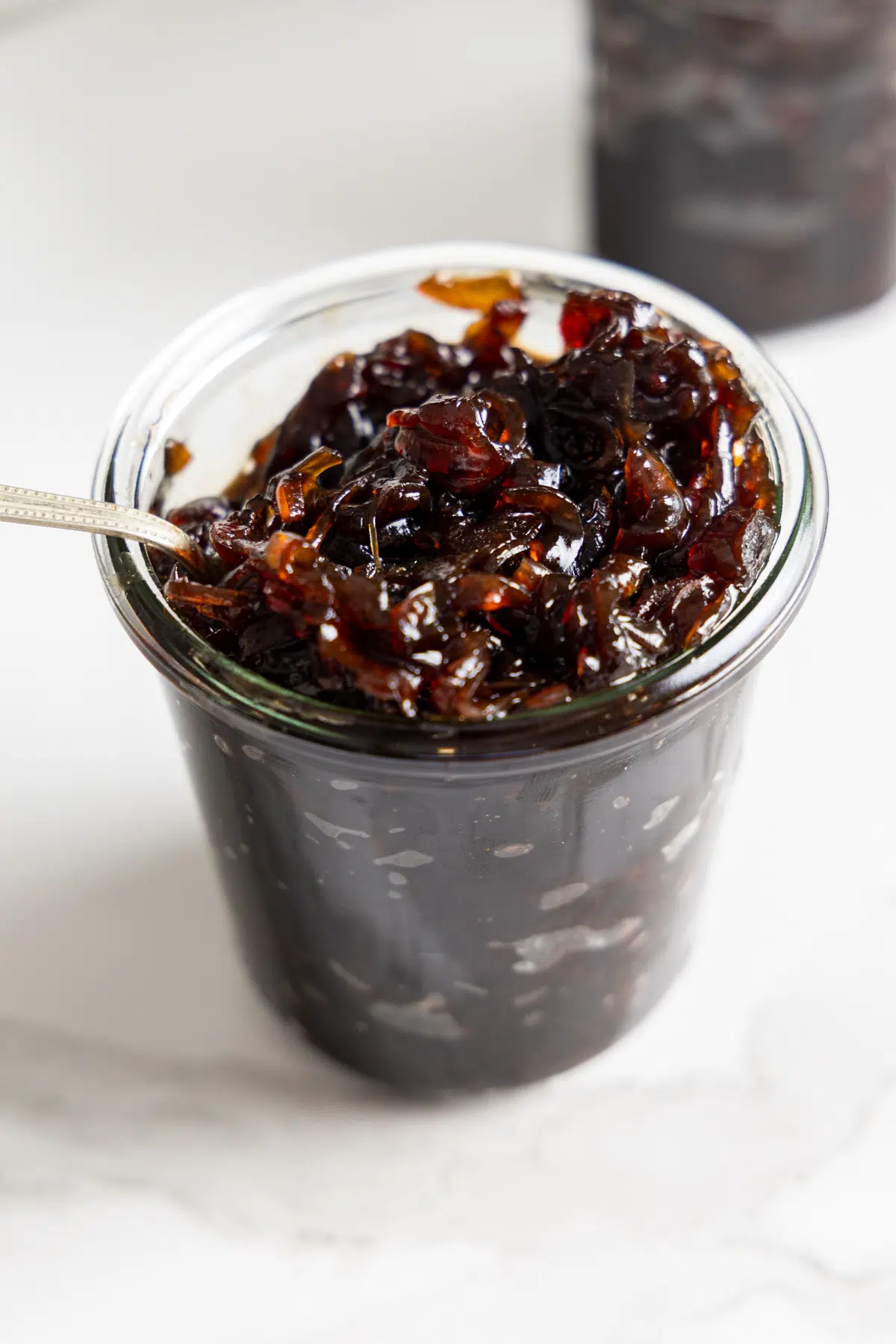
- Jar and cool: I am not canning my jam (it will live in the fridge) so I skipped the sterilization step but do that if you are planning on keeping the jam at room temperature for months. I simply poured freshly boiled water into my jars and over my lids, carefully emptied them and then filled them up with the jam. Immediately cap them with the lid and then let them sit until they were cool enough to go into the fridge.
Storage and Make-Ahead
Store in a clean, airtight jar in the fridge for up to 3 to 4 weeks. For longer storage, sterilize your jars following proper canning methods then add the jam, and follow canning procedure.
Ingredients
- 2 kg (4lb) red onions sliced
- 2 cups brown sugar
- 3 tbsp butter or olive oil
- ¾ cup Balsamic vinegar
- ⅓ cup red wine vinegar
- 2 cups water
- 2 tbsp salt
- 1 tsp pepper
- 5 sprigs fresh thyme
Instructions
- Melt the butter in a large heavy-bottomed pot or Dutch oven over medium heat.
- Add the sliced onions and stir to coat in the butter. Cook for about 10 minutes, stirring occasionally until the onions begin to soften. Reduce the heat to low and stir in the brown sugar, vinegars, thyme, salt and pepper.
- Cook uncovered for 1.5 to 2 hours, stirring every 10 to 15 minutes, until the onions are deeply caramelized and dark amber in color.
- Taste and adjust seasoning if necessary then remove from the heat and let cool slightly before transferring to a clean jar.
Nutrition
Frequently Asked Questions
About 3 to 4 weeks in a clean, airtight jar. Make sure you use a clean spoon every time you dip into it and it’ll last a full month without any issues.
Yes, It freezes well for up to 3 months. Use a freezer-safe container and leave a little headroom for expansion. Thaw overnight in the fridge and stir before serving.
Essentially yes. The names are used interchangeably. The technique and ingredients are the same.
It’s mostly onions, which are packed with antioxidants and fiber. The butter and sugar add calories but you’re using a spoonful at a time as a condiment, not eating it by the bowlful. As condiments go, it’s a much better choice than most store-bought sauces and chutneys that are loaded with preservatives and sugars.
It probably needs more time. Keep it on the heat uncovered and let it reduce further. The liquid should cook off until the jam coats a spoon and holds its shape. If you’ve been cooking for 2 hours and it’s still thin, turn the heat up just slightly to speed up the evaporation but stir frequently so it doesn’t burn. Remember it will thicken more as it cools.
You can, but the texture won’t be quite the same. Cook on low for 8 to 10 hour with the lid slightly ajar so moisture can escape. You’ll miss out on the deep caramelization you get on the stove top but it’s a good hands-off option if you don’t want to stir every 15 minutes.