
Butter Chicken Curry Recipe (Murgh Makhani)
This butter chicken (murgh makhani) is the recipe I make when I want something that fills the house with the most incredible aroma and has everyone coming back for seconds. It’s rich, creamy, deeply spiced and the kind of meal that makes you wonder why you ever order takeout. It takes time and I’m not going to pretend otherwise, but every minute of that time earns its place in the finished dish.
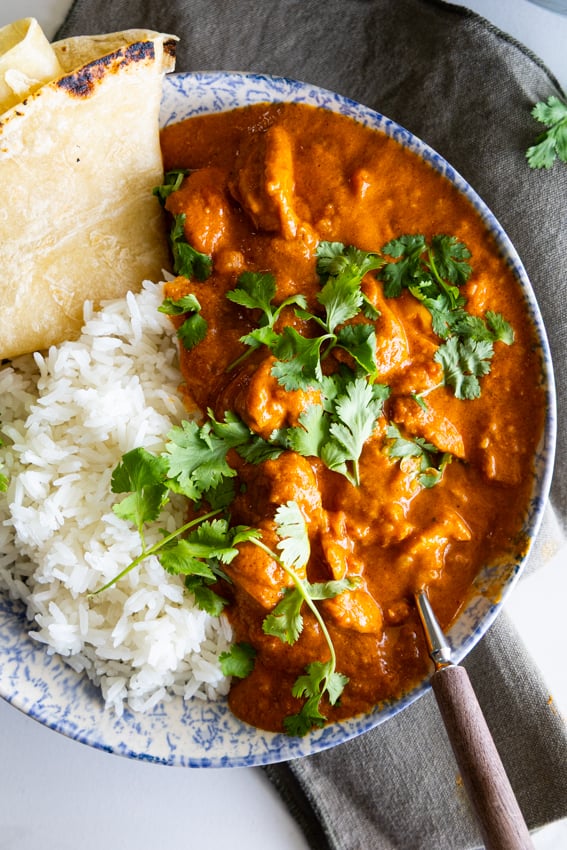
The chicken marinates in a spiced yogurt mixture that tenderizes the meat until it practically melts in the sauce. Then the sauce is built slowly with onions, garlic, ginger, a generous amount of spices, tomatoes and finally butter and cream to bring it all together into something velvety, warming and deeply comforting.
It’s also one of the best freezer meals I make. The flavor actually improves after a day or two because the spices continue to develop, which means it’s just as good (if not better) defrosted and reheated on a busy weeknight. Make a big batch, portion into containers and your future self has butter chicken on demand. This recipe is part of my Chicken Freezer Recipes post if you want to build a full freezer session around it.
What is Butter Chicken?
Butter chicken (also known as murgh makhani) is a North Indian curry that was created in Delhi in the 1950s at the famous Moti Mahal restaurant. The story goes that the chefs needed a way to use up leftover tandoori chicken, so they simmered it in a rich, creamy tomato sauce with butter and spices. The result was so good it became one of the most popular curries in the world.
And yes, butter chicken is a curry. It’s a mild, creamy, tomato-based curry that’s aromatic rather than fiery. If you’ve been hesitant to try making curry at home because you associate it with intense heat, this is the perfect place to start. The spices add warmth, depth and fragrance rather than burn, and the cream and butter smooth everything into a velvety sauce that’s comforting rather than challenging.
Ingredients and Substitutions
- Chicken. I used boneless skinless chicken thighs but boneless chicken breasts will also work, although they won’t cook up quite as tender as thighs.
- Yogurt. I used plain Greek yogurt but you could use low fat too.
- Spices: I keep things simple with the spices to suit most households and their pantries however butter chicken traditionally has a whole host of spices (discussed below). The spices I use are Garam Masala, ground cardamom, paprika, coriander, cumin, turmeric and a pinch of chilli powder.
- Salt and black pepper.
- Oil and butter. Ghee is also a great option, if you have it.
- Onion.
- Fresh garlic cloves.
- Fresh ginger.
- Tomatoes. I used canned crushed tomatoes but you can use chopped tomatoes, tomato puree (like tomato Passata) or use fresh tomatoes if you prefer.
- Cream. Heavy cream/whipping cream.
- Sugar. I add a pinch of sugar to balance the acidity from the tomatoes but this is optional.
The Spices in Butter Chicken (And What Each One Does)
The spice blend in butter chicken is what gives it that complex, layered flavor that tastes like so much more than the sum of its parts. Here’s what each spice brings to the dish:
- Garam masala is the backbone of the flavor. It’s a warm, aromatic blend that typically includes cinnamon, cardamom, cloves and black pepper. It adds the deep, cozy warmth that makes butter chicken so comforting. Add it at the end of cooking so the flavors stay bright and fragrant rather than cooking out.
- Cardamom adds a floral, almost perfume-like fragrance that lifts the sauce. It’s one of those spices that you can’t quite identify in the finished dish but you’d notice immediately if it were missing. Use whole pods in the sauce and remove before serving, or use ground cardamom for convenience.
- Turmeric adds the golden color and a subtle earthy bitterness that balances the sweetness of the tomatoes and cream. You don’t need much. Half a teaspoon is usually enough. Too much and it can taste medicinal.
- Cumin brings a warm, slightly smoky, savory note. It pairs naturally with coriander and the two together form the base of most Indian spice blends.
- Coriander adds a gentle, citrusy earthiness that rounds out the other spices and keeps the sauce from tasting one-dimensional.
- Chili powder or cayenne provides the heat, which in butter chicken should be gentle and background rather than aggressive. Start with a small amount and build up. This is a mild curry and the heat should never overpower the creaminess.
- Paprika deepens the color of the sauce and adds a mild sweetness. Smoked paprika gives a slightly different flavor that works beautifully here if you have it.
- Fenugreek leaves (kasuri methi). This is the secret ingredient that makes butter chicken taste like restaurant butter chicken. Dried fenugreek leaves add a slightly bitter, maple-like aroma that’s unmistakable in authentic butter chicken. Crush them between your palms before adding to release the oils. If you can find them, don’t skip this. It makes a genuine difference.
The key to getting the best flavor from these spices is blooming them in the pan with the onions, garlic and ginger before adding any liquid. That brief toasting in hot fat activates the essential oils and transforms the spices from dusty and flat to warm, fragrant and complex.
The Yogurt Marinade
The yogurt marinade is what sets this butter chicken apart from versions that just simmer raw chicken in sauce. The yogurt tenderizes the chicken by gently breaking down the proteins on the surface, resulting in meat that’s incredibly soft and tender.
Marinate for at least 2 hours (30 minutes in a pinch but the end result won’t be as delicious) but overnight in the fridge is ideal. The longer the chicken sits in the marinade, the more tender and flavorful it becomes. If you’re planning ahead, prep the marinade and chicken the night before and let it sit in the fridge until you’re ready to cook. This also makes the actual cooking day much faster since the hardest step is already done.
Buttermilk substitution: You can substitute the yogurt marinade with buttermilk for an equally tender result. The acidity in buttermilk works the same way as yogurt to tenderize the chicken. Use enough to fully coat the chicken pieces and marinate for the same amount of time.
How to Make Butter Chicken (Murgh Makhani)
This recipe has three stages: the marinade, the sauce and the slow simmer. None of it is difficult but give yourself about 2 to 3 hours from start to finish, including marinating time.
Marinate the Chicken
Step 1: Make the marinade. Combine yogurt, garam masala, turmeric, cumin, chili powder, salt and a squeeze of lemon juice in a large bowl. Mix until smooth. The yogurt is doing two jobs here: it carries the spices into the meat and it tenderizes the chicken through its natural acidity.
Step 2: Coat the chicken. Add the boneless chicken thighs to the marinade and turn until every piece is well coated. Cover the bowl and refrigerate for at least 2 hours, though overnight is ideal.
Build the Sauce
Step 3: Cook the aromatics. In a large pot set over medium heat, melt the ghee or butter and the diced onions. Cook until softened and lightly golden, about 5 to 7 minutes. Add the garlic, ginger and the remaining spices and cook for another minute until fragrant.
Step 4: Add the Chicken: Add the marinated chicken to the aromatics and stir to coat in the sautéed spices.
Step 5: Add the tomatoes. Pour in the crushed or canned tomatoes and water/stock and stir everything together, scraping up any browned bits from the bottom of the pot. These bits are packed with flavor and become part of the sauce.
Simmer and Finish
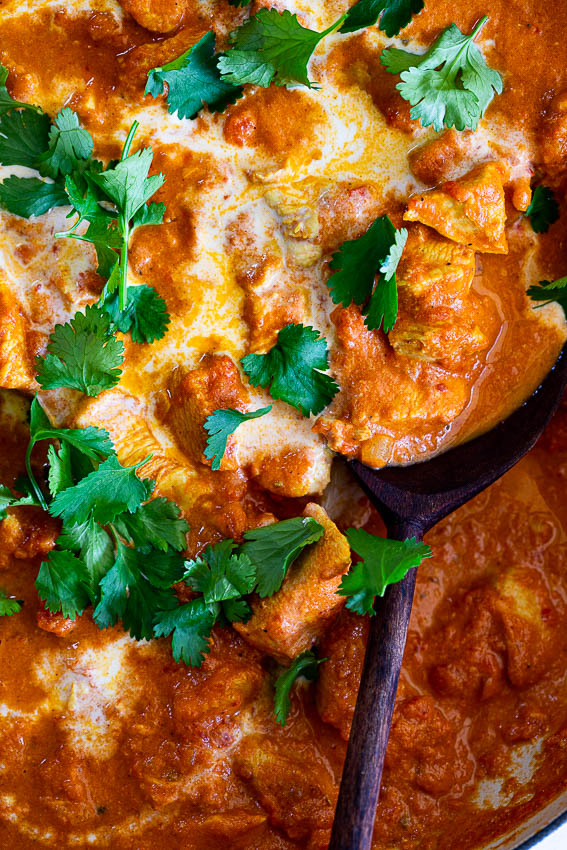
Step 6: Simmer low and slow. Reduce the heat to low, cover and let everything simmer gently for 30-45 minutes until the chicken is cooked through and incredibly tender. The sauce will thicken and the chicken will absorb all those spiced, tomatoey flavors. Stir occasionally to prevent sticking.
Step 7: Add the cream. Remove the lid and cream. Let it simmer uncovered for another 10 minutes so the sauce reaches the consistency you want.
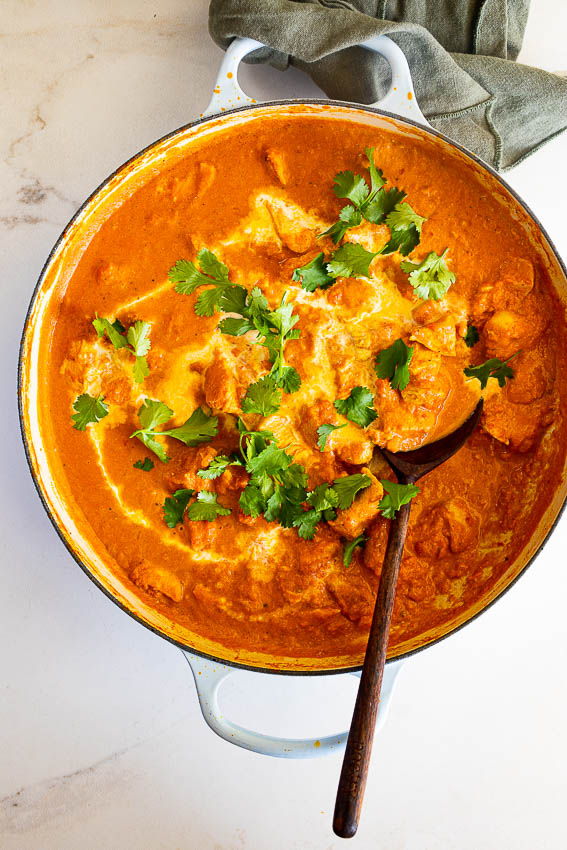
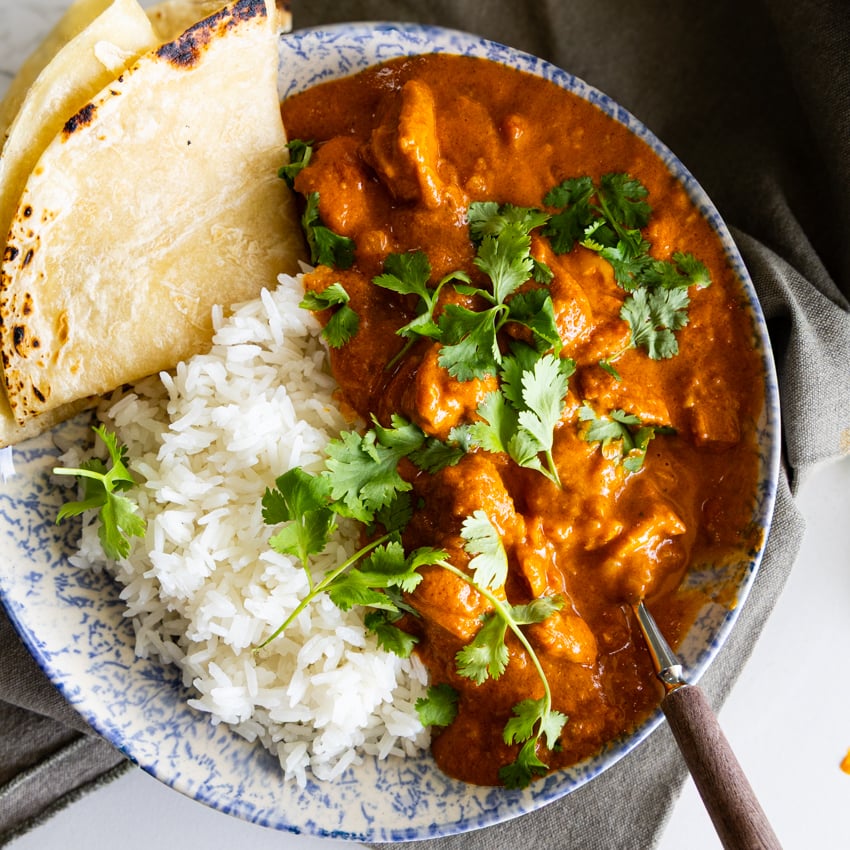
Step 8: Season and serve. Taste the sauce and adjust with salt, a pinch of sugar if the tomatoes are too acidic. Serve over basmati rice or with warm naan and garnish with a drizzle of cream and fresh cilantro.
How to Adjust the Spice Level
For a milder butter chicken: Use a mild Garam Masala without any cayenne or chilli. The remaining spices (garam masala, cumin, coriander, cardamom) provide plenty of warmth and depth without any heat. Adding a little extra cream at the end also mellows the sauce further. This version is great for kids or anyone who prefers a very gentle curry.
For a spicier butter chicken: Add chilli powder or cayenne, add a finely chopped fresh chili to the sauce or stir through a teaspoon of chili paste at the end. You can also add more black pepper for a different kind of heat. Build the spice gradually and taste as you go. Butter chicken should always be warming rather than fiery, but everyone’s threshold is different.
Can I Make Butter Chicken Without Cream?
Yes, though the result will be different. Here are a few alternatives:
- Coconut cream. The closest substitute in terms of richness and texture. It adds a subtle coconut flavor that works well with the spices. Use the same amount as you would cream.
- Cashew cream. Blend soaked raw cashews with water until smooth. This gives you a rich, creamy texture that’s completely dairy-free. It’s the method many Indian restaurants use for vegan versions.
- Full-fat coconut milk. Lighter than coconut cream but still adds body and richness. The sauce won’t be quite as thick so let it reduce a little longer.
- Milk. Regular whole milk or evaporated milk gives you some creaminess but the sauce will be thinner and less rich. Not the best substitute but it works if it’s all you have.
- Greek yogurt (stirred in off the heat). Adds creaminess and a slight tang. Remove the pot from the heat before stirring it in and don’t reheat on high or the yogurt will split.
- For a lighter version without any substitute: Simply leave the cream out entirely and let the tomato-based sauce be the star. It won’t be traditional butter chicken but you’ll still have a delicious, well-spiced tomato curry. Reduce the sauce a little longer to concentrate the flavor and compensate for the missing richness.
How to Store and Reheat Butter Chicken
- Fridge. Store in an airtight container for up to 3 to 4 days. The flavors develop and deepen overnight so leftovers often taste even better the next day.
- Reheating. Warm gently on the stove over medium-low heat, stirring occasionally. Add a splash of water or cream if the sauce has thickened too much. Avoid reheating on high heat as the cream can split and the sauce can become oily. The microwave works in a pinch but the stove gives you more control.
- Freezing. Butter chicken freezes beautifully for up to 3 months. Portion into containers and label with the date. The spices actually continue to develop during freezing so it can taste even more flavorful after thawing. Defrost overnight in the fridge and reheat gently on the stove. Don’t add fresh garnishes (cilantro, cream drizzle) before freezing. Add those when you reheat.
- Meal prep. This is one of the best curry recipes for meal prepping. Portion into containers with rice and you’ve got grab-and-go lunches for the week.
What to Serve with Butter Chicken
Butter chicken is rich, creamy and saucy, so the sides should either soak up that sauce or add freshness to balance the richness.
- Basmati rice. The classic and my top recommendation. Fluffy, fragrant basmati absorbs the sauce beautifully and keeps things simple. Plain steamed rice lets the curry be the star but my curry rice is a lovely upgrade.
- Naan. Warm naan is perfect for tearing and scooping up the sauce. Store-bought naan warmed in a dry pan or under the broiler for a minute works perfectly. If you’re feeling ambitious, homemade naan is a game changer and my recipe delivers soft, pillow naan just begging to mop up that sauce.
- Roti or chapati. A lighter, thinner alternative to naan. Less indulgent but just as good for wrapping around pieces of chicken and mopping up sauce.
- Cucumber raita. Cool, tangy and refreshing. Grated cucumber, yogurt, a pinch of salt and a squeeze of lemon. Takes 2 minutes to throw together and the cool creaminess against the warm, spiced curry is an essential contrast.
- Mango chutney. A spoonful of sweet mango chutney on the side adds a fruity sweetness that plays beautifully off the spiced tomato sauce. It’s a small addition that makes the whole meal feel more complete.
- Poppadoms. Crispy, thin and perfect for scooping. They add a crunchy textural contrast to the soft, creamy curry.
- Simple salad. A quick chopped salad of cucumber, tomato, red onion and fresh cilantro with a squeeze of lemon. Something fresh and acidic to cut through the richness between bites.
For more curry recipes, try my Coconut Curry Chicken Thighs, Easy Weeknight Chicken Curry, Thai Coconut Fish Curry or Lamb Curry.
Video
Ingredients
For the marinade
- 1 kg (2lbs) boneless chicken thighs cut into bite-sized chunks
- 1 cup Plain yoghurt
- 2 tbsp Garam Masala
- 2 tsp ground cardamom
- 2 tsp ground cumin
- 2 tsp ground coriander
- 2 tsp paprika
- 1 tsp salt
For the butter chicken curry
- 3 tbsp butter/ghee
- 2 onions chopped
- 6 garlic cloves
- Thumb size piece ginger grated
- 800 g (28oz) canned tomatoes
- 1 cup cream
- 2 tsp sugar
- 1-2 tbsp butter (optional but delivers an incredibly delicious curry)
- salt and black pepper to taste
Instructions
- Slice the chicken into 2cm/1 inch cubes.
- Add the chicken to a medium bowl then add the yogurt and half of the spices.
- Mix well then cover with plastic wrap and allow to marinate for at least 2 hours but ideally up to 24 hours in the fridge.
- In a large pot set over medium-high heat, add ghee or oil of your choice.
- Add onions and cook until soft and golden.
- Add the garlic, ginger and remaining spices and cook for 30 seconds then add the chicken and marinade.
- Pour in the tomatoes then reduce the heat, partially cover and allow to simmer for 30-45 minutes until the chicken is tender.
- Pour in the cream and cook for another 10 minutes.
- Once cooked, stir in butter then season to taste (optional).
- Serve with your choice of side dishes.
Nutrition
Frequently Asked Questions
Yes. Butter chicken is a mild, creamy, tomato-based North Indian curry. The word “curry” simply refers to a spiced sauce-based dish, and butter chicken is one of the most popular curries in the world. Don’t let the name confuse you. The “butter” refers to the generous amount of butter used in the sauce, not a separate cooking method.
Traditional butter chicken is mild. The spices add warmth, depth and fragrance rather than heat. It’s one of the gentlest curries you can make and a great entry point if you’re new to Indian cooking. You can easily adjust the heat by increasing or decreasing the chili powder and cayenne.
You can, but thighs are strongly recommended. Breast is leaner and can dry out during the longer cooking time, especially if you’re freezing and reheating. Thighs have slightly more fat and connective tissue which keeps them tender and juicy through every stage. If you do use breast, cut it into larger pieces and watch the cooking time carefully.
The most likely missing ingredient is kasuri methi (dried fenugreek leaves). This is the spice that gives restaurant butter chicken its distinctive aroma. Also, restaurants use significantly more butter and cream than most home recipes call for. Don’t be shy with both. Finally, the yogurt marinade is essential. Skipping it or shortening the marinating time results in less tender, less flavorful chicken.
Yes and it’s actually better the next day. Make the full recipe, cool and refrigerate. Reheat gently on the stove the next day. The spices develop and the flavors deepen overnight. This makes it perfect for entertaining because the hardest work is done the day before.
Yes. Buttermilk works as a direct substitute for the yogurt marinade. The acidity tenderizes the chicken in the same way. Use enough to coat the chicken pieces fully and marinate for the same amount of time (30 minutes minimum, overnight for best results).
Three things: butter, cream and the yogurt marinade. The butter adds richness and a nutty depth. The cream makes the sauce velvety and smooth. And the yogurt marinade ensures the chicken itself is tender and flavorful rather than just relying on the sauce for all the taste. Together they create that signature luxurious quality that makes butter chicken so crave-worthy.
It’s not a low-calorie dish due to the butter and cream, but it’s a good source of protein from the chicken and the spices (turmeric, ginger, garlic) have well-documented health benefits. For a lighter version, reduce the butter and use coconut milk instead of cream. It won’t be traditional butter chicken but it’ll still be delicious and significantly lighter.
Alida – I would like to check with In the instructions it states to add the chicken and marinade to the garlic, ginger and spice. Would that be the marinade that the raw chicken was in? I was taught not to use marinade that the raw meat was in so that is way I am asking
Thank You
The marinated chicken, with the marinade, goes into the pot and then cooks. So you don’t have to worry about the raw meat being in the marinated. The whole lot will cook making it perfectly safe to eat.
Alida, If I could I would give this recipe more than 5 stars! My hubby and I really enjoyed this super flavorful curry dish. It is the kind of dish I could serve to my less “adventuresome” friends and they would enjoy it. We love curry and we like spicy so I might adjust the heat up a bit for us. But made per your recipe I could serve to my young grandchildren without hesitation.
Hubby asked me specifically to thank you for the recipe…he liked it that much.
Thank you Alida and have a lovely day!
I am so pleased to hear that Jennifer. I always add a bit more spice for us as well as we like spicy food but as Butter Chicken isn’t traditionally spicy, I think this recipe works perfectly for a variety of palettes.
Delicious…..I made butter chicken pie👌Thank you so much for every recipe.
Regards from South Africa🇿🇦
Making this family favourite almost weekly because it is sooo good!
Love hearing that!
Grill chicken before adding to sauce
You could do that, yes.
I made the Butter Chicken and it is divine. Thank you for an awesome recipe. ?
re your Butter Chicken Curry recipe – I note that for the marinade only half of the listed spices are to be added to the yoghurt. At what stage are the half of the spices used?
Updated, my apologies. You cook the remaining spices with the ginger and garlic.