
Easy Basil Pesto
Homemade basil pesto is one of those recipes that makes you wonder why you ever bothered with the store-bought version. It takes about five minutes, uses a handful of fresh ingredients and tastes so much brighter and more vibrant than anything you’ll find on a shelf. Once you make it yourself, there’s really no going back.
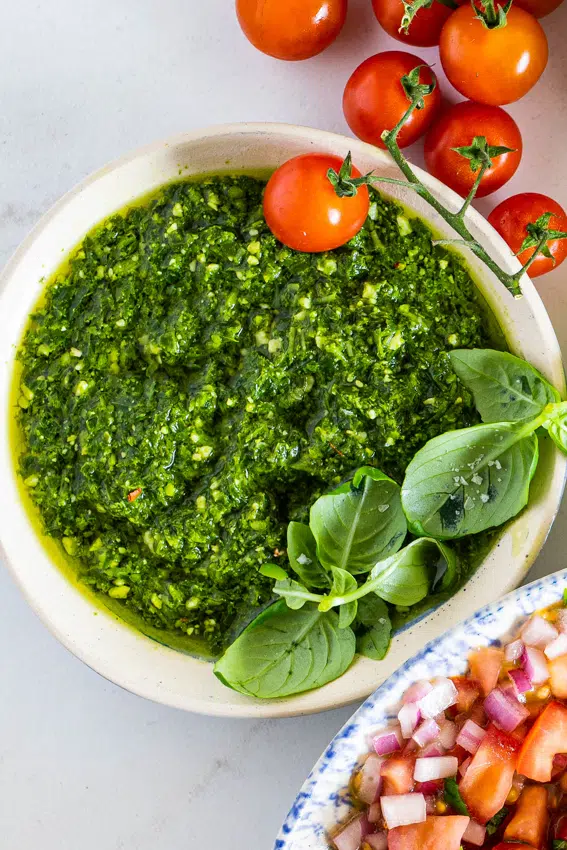
This easy basil pesto recipe is the one I come back to again and again. It’s classic, unfussy and works beautifully on pasta, sandwiches, grilled chicken, roasted vegetables and about a hundred other things. If you’ve got a food processor and five minutes, you’re good to go.
What is Basil Pesto?
Basil pesto (or pesto alla Genovese, if you want to get fancy about it) is a vibrant Italian sauce that originated in Genoa, Italy. The word “pesto” comes from the Italian “pestare,” which means to pound or crush. Traditionally, it was made by hand using a mortar and pestle, but these days a food processor does the heavy lifting, if you’re lazy like me. Feel free to use a mortar and pestle for a traditional approach.
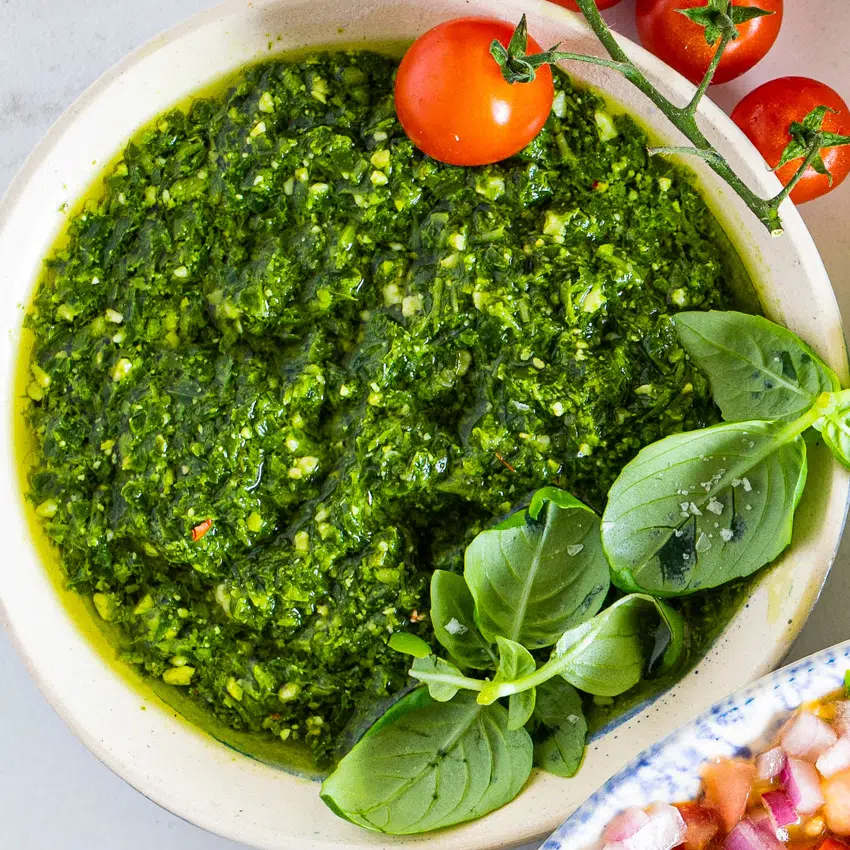
A classic basil pesto is made with fresh basil leaves, garlic, pine nuts, Parmesan cheese and extra virgin olive oil. It’s simple, it’s fresh and it’s one of the most versatile sauces you’ll ever make.
Why Homemade Basil Pesto is Better
Look, I’m not here to judge anyone’s grocery shopping habits. But once you compare homemade basil pesto to store-bought, the difference is hard to ignore. Homemade pesto is brighter in color, fresher in flavor and you can adjust everything to your taste. Want more garlic? Go for it. Prefer it a little nuttier? Add extra pine nuts. The point is, you’re in control.
Store-bought pesto also tends to be heavier on the oil and salt to extend its shelf life, which can mute those beautiful herby flavors.
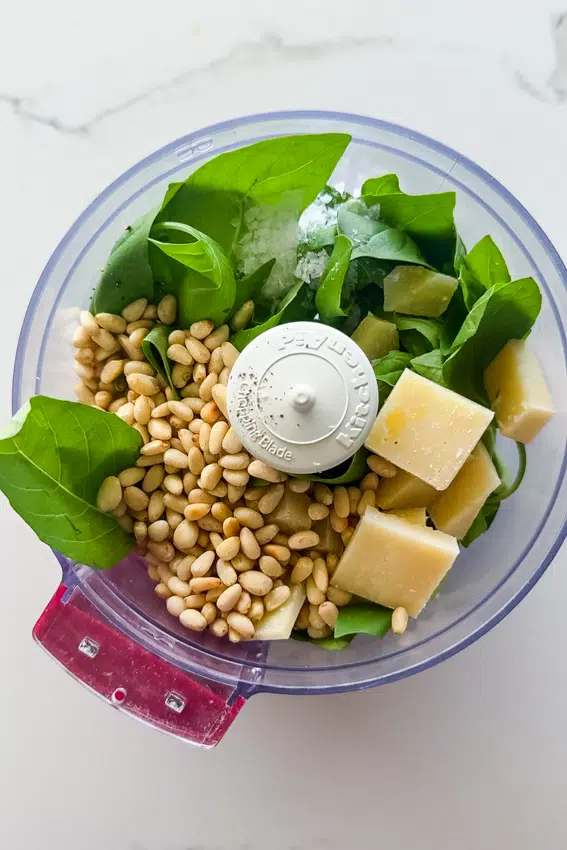
Ingredient and Substitutions
Here’s what goes into this easy basil pesto recipe, along with a few tips to get the best results:
- Fresh basil leaves. This is the star of the show, so you want it to be as fresh as possible. Look for bright green leaves with no dark spots or wilting. Give them a good wash and pat them completely dry before using. Wet basil can make your pesto watery and dull the flavor. Sweet basil (also called Genovese basil) is the traditional choice, but really any fresh basil will work.
- Pine nuts. Pine nuts give basil pesto its classic creamy, slightly buttery flavor. Toasting them before adding them to the food processor brings out even more depth. Just toss them in a dry skillet over medium heat for a couple of minutes until they’re golden and fragrant. Keep a close eye on them because they go from toasted to burned in about 10 seconds.
- Parmesan cheese. Always use freshly grated Parmesan (Parmigiano-Reggiano) for the best flavor. Pre-grated Parmesan from a shaker just doesn’t have the same punch. If you want a slightly sharper, saltier pesto, Pecorino Romano is a fantastic substitute.
- Garlic. Fresh garlic is a must. I use two cloves, which gives a nice flavor without being overpowering. If you love garlic, add a third. If you’re more sensitive to it, start with one and taste as you go.
- Extra virgin olive oil. Since the olive oil isn’t being cooked, its flavor really shines through here. Use a good quality one that you enjoy the taste of. It doesn’t need to be the most expensive bottle on the shelf, but this isn’t the time for the bargain brand either. Avocado oil is a good substitute but won’t add the flavor olive oil does.
- Lemon juice. A small squeeze of fresh lemon juice is my secret weapon. It brightens the whole pesto.
- Salt and pepper. Season to taste. Keep in mind that Parmesan is already quite salty, so start with a small amount and adjust after everything is blended.
Substitutions and Variations
One of the best things about basil pesto is how forgiving it is. Here are some easy swaps:
- Nuts. Pine nuts can be pricey and sometimes hard to find. Walnuts are the most popular substitute and give a slightly earthier flavor. Almonds and pistachios both work beautifully too. For a nut-free version, try raw pumpkin seeds (pepitas) or sunflower seeds.
- Cheese. Pecorino Romano, Grana Padano or Asiago all work well in place of Parmesan. For a dairy-free version, nutritional yeast adds a similar savory, cheesy flavor. You can also simply leave the cheese out entirely.
- Greens. If you can’t find enough basil or want to stretch it further, swap half the basil for baby spinach, arugula or kale. Spinach gives a milder flavor, arugula adds a peppery bite and kale makes a heartier pesto.
How to Make Basil Pesto
Making homemade basil pesto really couldn’t be simpler.
Step 1: Add the pine nuts to a pan set over medium heat and allow to toast for a few minutes until lightly golden brown.
Step 2: Add the toasted pine nuts and garlic to a food processor and pulse until they’re coarsely chopped. This gives your pesto great texture instead of turning everything into a paste right away. Add the fresh basil leaves, salt and pepper and pulse again until the basil is broken down and everything starts to come together.
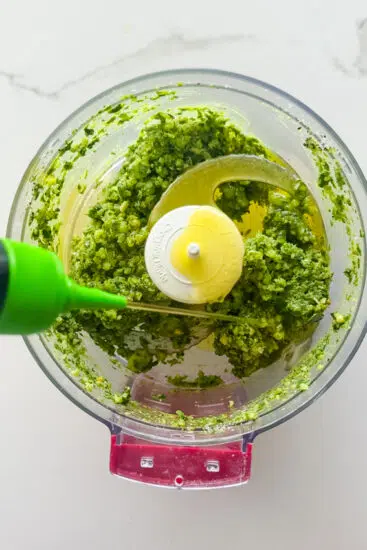
Step 3: With the food processor running, slowly drizzle in the olive oil through the feed tube. This gradual addition helps emulsify everything into a smooth, cohesive sauce.
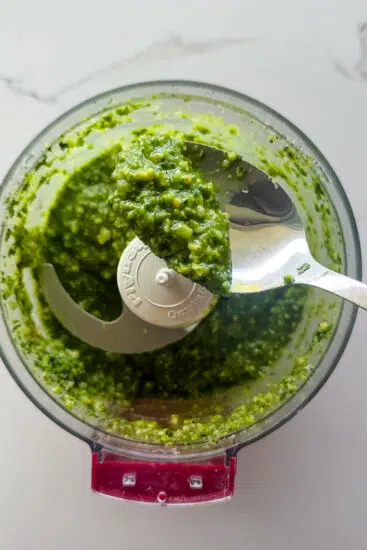
Step 4: Add the Parmesan cheese and lemon juice and pulse a few more times until just combined. Taste and adjust the seasoning. If you prefer a thinner pesto, drizzle in a little more olive oil.
That’s it. Five minutes, one food processor and you’ve got a batch of basil pesto that’ll make every meal better.
How to Store Basil Pesto
- In the fridge. Transfer your basil pesto to an airtight container or jar. Pour a thin layer of olive oil over the top to seal out the air and prevent the pesto from turning brown. It will keep in the fridge for up to a week.
- In the freezer. Basil pesto freezes beautifully and this is honestly the best way to preserve a big batch. Spoon it into ice cube trays and freeze until solid, then pop the cubes out and transfer them to a freezer bag. This way you can grab one or two cubes whenever you need them. Frozen pesto will keep for up to 3 months. To thaw, just move it to the fridge overnight or let it sit at room temperature for about 30 minutes.
Tip: If your pesto turns a little brown on top, don’t panic. It’s just oxidation from contact with air and won’t affect the taste. The olive oil layer helps prevent this, but even if it happens, just stir it back in.
What to Serve with Basil Pesto
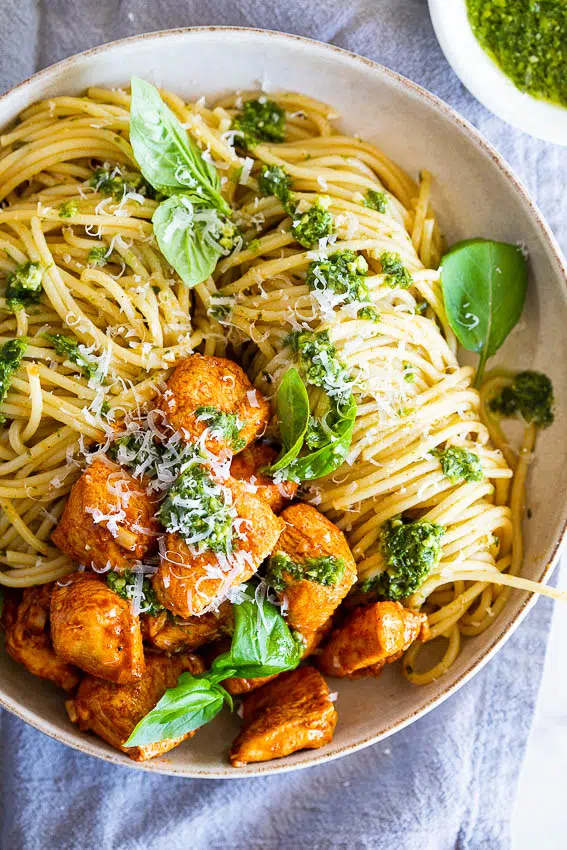
Basil pesto is one of the most versatile sauces in your kitchen. Here are some of my favorite ways to use it:
Toss it with hot pasta (penne, fusilli and spaghetti all work great). Spread it on sandwiches or wraps instead of mayo. Use it as a pizza sauce for a white pizza with mozzarella and cherry tomatoes. Drizzle it over grilled chicken, fish or steak. Stir it into scrambled eggs or spread it on toast for breakfast. Mix it into salad dressings for an herby vinaigrette. Spoon it over roasted vegetables like zucchini, eggplant or potatoes. Use it as a dip for crusty bread or focaccia or layer it in a vegetarian lasagna.
Ingredients
- ½ cup pine nuts (approximately 75g)
- 2 garlic cloves peeled
- 4 cups basil leaves washed and dried
- ¼-½ cup Parmesan cheese
- ½-¾ cup olive oil
- squeeze of fresh lemon juice
- salt and black pepper to taste
Instructions
- Add the pine nuts to a pan set over medium heat and allow to toast for a few minutes until lightly golden brown.
- Add the toasted pine nuts and garlic to a food processor and pulse until they're coarsely chopped.
- Add the fresh basil leaves, salt and pepper and pulse again until the basil is broken down.
- With the food processor running, slowly drizzle in the olive oil through the feed tube.
- Add the Parmesan cheese and lemon juice and pulse a few more times until just combined. Taste and adjust the seasoning. If you prefer a thinner pesto, drizzle in a little more olive oil.
Nutrition
Frequently Asked Questions
Classic basil pesto is made from fresh basil leaves, garlic, pine nuts, Parmesan cheese and extra virgin olive oil. Some recipes also include a squeeze of lemon juice to brighten the flavor and help keep the color vibrant.
Absolutely. Walnuts are the most common substitute and work just as well. Almonds, pistachios, cashews, pumpkin seeds and sunflower seeds are all great alternatives too.
Yes! A blender works well. You can also use an immersion blender or, if you’re feeling traditional, a mortar and pestle. A mortar and pestle actually produces a slightly different texture that many people prefer because the ingredients are crushed rather than cut.
Stored in an airtight container with a layer of olive oil on top, homemade basil pesto will last up to a week in the fridge. In the freezer, it keeps for up to 3 months.
Pesto turns brown when the basil is exposed to air (oxidation). To prevent this, press plastic wrap directly onto the surface of the pesto before sealing the container, or pour a thin layer of olive oil on top. A squeeze of lemon juice in the recipe also helps slow down browning.
I wouldn’t recommend it. Fresh basil is really the whole point of basil pesto. Dried basil has a very different flavor and won’t give you the same bright, fresh taste. If fresh basil isn’t available, you’re better off using a different green like spinach or arugula.
Basil pesto is made from whole, unprocessed ingredients and contains healthy fats from olive oil and pine nuts. Basil also provides vitamins A and K. That said, pesto is calorie-dense because of the oil, nuts and cheese, so a little goes a long way. For a lighter option, you can reduce the oil slightly or swap some of the basil for spinach.
Sweet basil, also known as Genovese basil or Italian large leaf basil, is the traditional choice and gives pesto its classic flavor. It’s the variety most commonly sold in grocery stores. Other varieties like Thai basil or lemon basil will work but will give the pesto a noticeably different flavor.