
Freezer Soups and Sauces
This is the session that ties the whole Freezer Series together. The beef session stocked the freezer with dinners. The chicken session gave you meals from one big batch. The breakfast and snacks session covered mornings and lunchboxes. This one fills in the gaps with soups and sauces, which are honestly the most practical things you can have in your freezer.
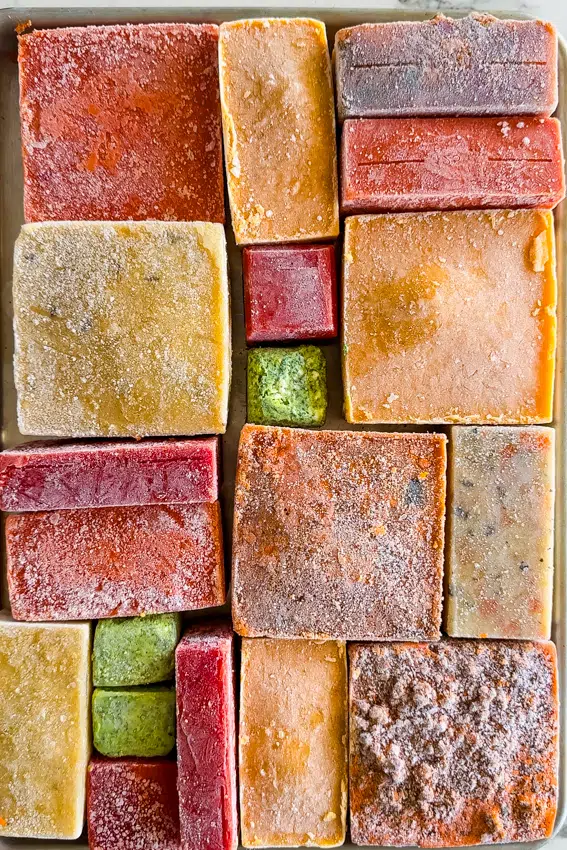
A freezer full of homemade soups and sauces means you’re never more than 15 minutes away from a real meal. The soups are complete meals on their own. The sauces are building blocks that turn pasta, pizza, chicken and about a dozen other things into dinner with almost no effort. Seven recipes, one session and a freezer that’s ready for anything.
Who is This For
If you’ve been following the series, you already know the answer. But this session is especially useful for a few situations:
- Quick lunches. Soup is the ultimate freezer-to-lunch solution. Pull a container out in the morning, let it thaw during the day and reheat in 5 minutes. No meal planning required.
- Sick days. When someone in the house is under the weather, homemade chicken noodle soup from the freezer is the closest thing to a hug in food form. Having it ready to go means you can actually take care of people instead of scrambling to cook.
- Weeknight dinner shortcuts. A bag of frozen tomato sauce or basil pesto turns a box of pasta into a homemade dinner in the time it takes to boil water. That’s faster than ordering takeout.
- Taking food to someone. Frozen soup in a labeled container with reheating instructions is one of the most thoughtful things you can drop off for a friend who’s going through a tough time. It’s practical, it reheats easily and it tastes like someone cared.
What You’ll Make
This session covers four soups and three sauces. Unlike the beef and chicken sessions, these aren’t all built from one shared protein. Each recipe is independent, which means you can make them in any order and skip anything that doesn’t suit your family. That said, if you’re doing the full session in one go, the cooking order below will help you get through everything efficiently.
Soups
Sauces
- Creamy Tomato Sauce
- Pizza Sauce (no-cook)
- Basil Pesto
The Cooking Order
Seven recipes sounds like a lot but most of these are hands-off simmering time. Running things in parallel is the key. Here’s how I’d work through the session:
- Prep all the veg. All the soups use onion or leeks, carrots and celery and the mexican chicken soup and vegetable soup uses a lot of the same veg. I would spend 10-15 minutes just chopping vegetables so that they all get prepped at the same time.
- Start the creamy chicken noodle soup first. This takes the longest because you’re cooking the chicken and building the soup base. Get it on the stove early and let it simmer while you work on everything else. For a shortcut, use a rotisserie chicken and good quality chicken stock.
- Get the Mexican chicken soup going next. If you’re using a separate pot, start this about 15 minutes after the chicken noodle soup. It simmers for a similar amount of time and the two soups can cook side by side.
- Roast the butternut for the soup. While the two chicken soups are simmering, get the butternut in the oven. Roasting takes about 40 minutes and is completely hands-off but I use this time to build the flavor base of the soup. Once it’s soft, blend it into soup and you’re done.
- Make the vegetable soup. This is a great one to get on the stove at the same time you start the butternut soup. It’s flexible, forgiving and uses whatever vegetables you have on hand.
- Make the creamy tomato sauce. This simmers for about 30 minutes and can share stove space with the soups if you have the burners.
- Make the basil pesto. Five minutes in the food processor. Do this while something else is simmering and it’s done before you’ve had time to think about it.
- Make the pizza sauce last. This is a no-cook sauce. Just blend or stir the ingredients together, portion and freeze. Save it for the end because it takes almost no time and doesn’t need the stove at all.
Soups
Creamy Chicken Noodle Soup
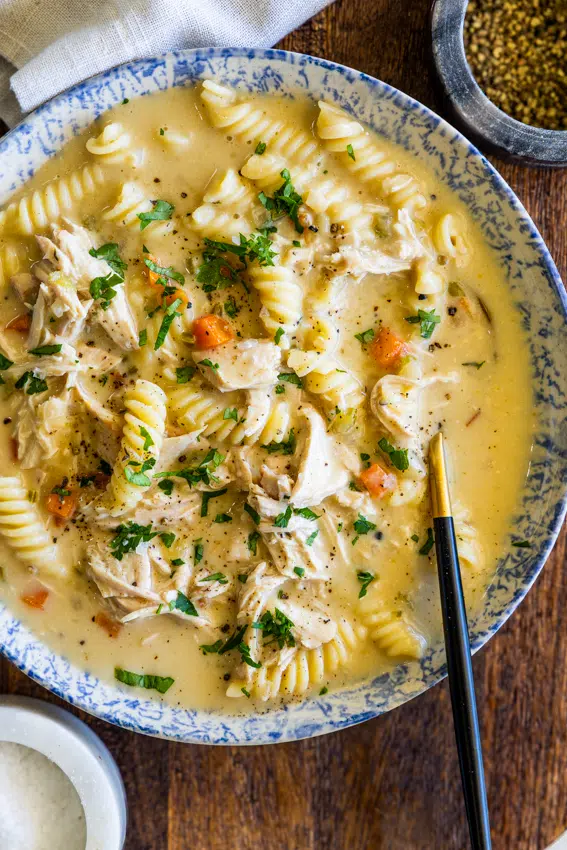
Rich, creamy and the soup everyone asks for when it’s cold outside or someone’s not feeling well. This is comfort food in its purest form. The base is loaded with chicken, carrots, celery and onion in a creamy broth that’s warming without being heavy.
The one important freezer rule: leave the noodles out. Freeze the soup without them and cook fresh noodles when you reheat. Pasta turns to mush in the freezer and nobody wants that. Just cook your noodles, ladle the hot soup over them and you’ve got a bowl that tastes freshly made.
To freeze: Cool completely, then portion into freezer-safe containers or flat zip-lock bags. Leave about an inch of headroom because liquids expand as they freeze. Keeps for up to 3 months.
To reheat: Thaw overnight in the fridge or defrost in the microwave. Reheat in a pot over medium heat until hot. Cook your noodles separately and add them to the bowl before serving.
Mexican Chicken Soup
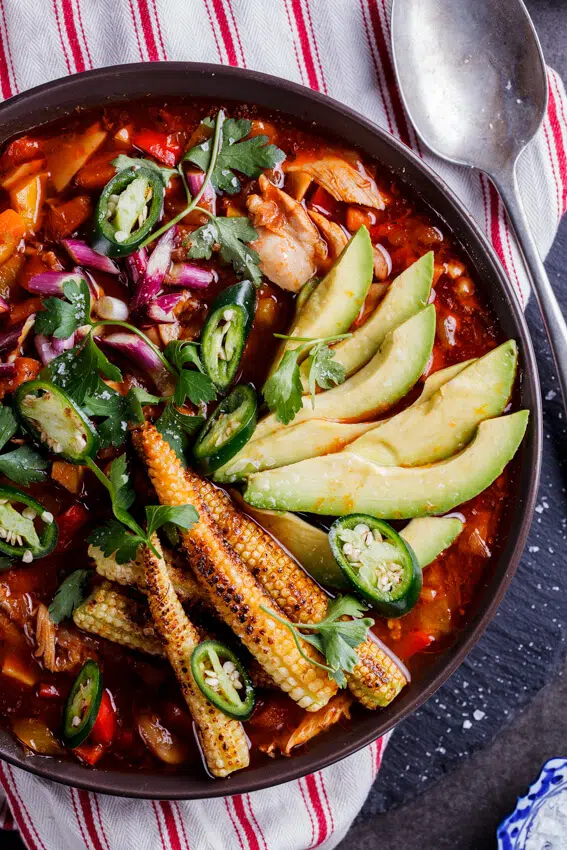
Spiced, hearty and loaded with flavor. This is the soup that doesn’t taste like health food even though it basically is. It’s warmly spiced with cumin, chili and paprika and packed with beans, corn, tomatoes and shredded chicken.
This one honestly tastes even better the next day (and from the freezer) because the spices keep developing over time. Top it with avocado, sour cream, a squeeze of lime and crushed tortilla chips (or charred baby corn like I have) when you serve it and it feels like a completely fresh meal every time.
To freeze: Cool completely and portion into containers. This soup freezes beautifully because it’s broth-based with sturdy ingredients that hold up well. Keeps for up to 3 months.
To reheat: Thaw in the fridge overnight. Reheat in a pot over medium heat. Add fresh toppings just before serving.
Roasted Butternut Soup
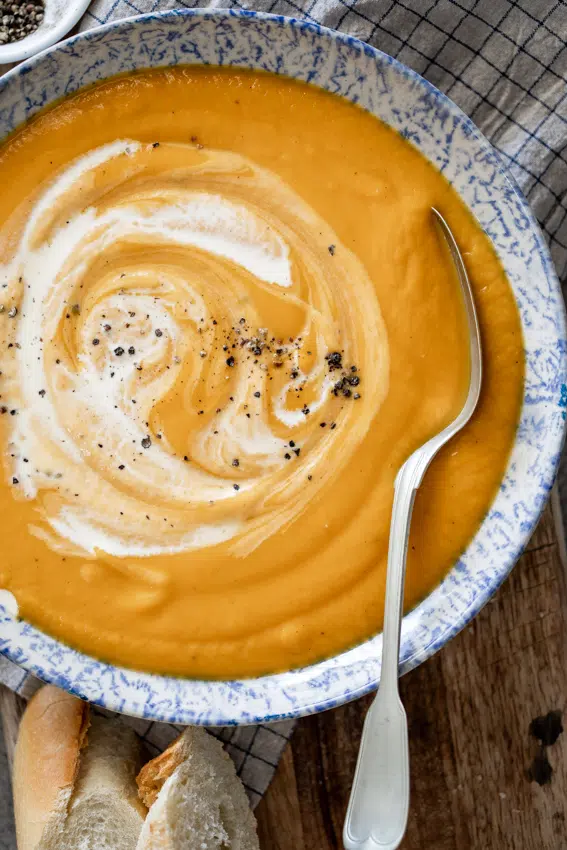
I roast the butternut first, which is the step that makes all the difference. Roasting concentrates the natural sweetness and adds a caramelized depth you just don’t get from boiling. Blend it until silky smooth, season simply and you’ve got a soup that tastes like autumn in a bowl.
This is the soup I reach for most often because it goes from freezer to bowl in about 10 minutes. It reheats perfectly, the texture stays velvety and it’s one of those meals where a bowl of soup and some crusty bread is a completely satisfying dinner.
To freeze: Cool completely and portion into containers or flat bags. Keeps for up to 3 months.
To reheat: Thaw in the fridge or run the container under warm water to loosen it, then reheat in a pot. Stir in a splash of cream or stock if it’s thicker than you’d like after reheating.
Vegetable Soup
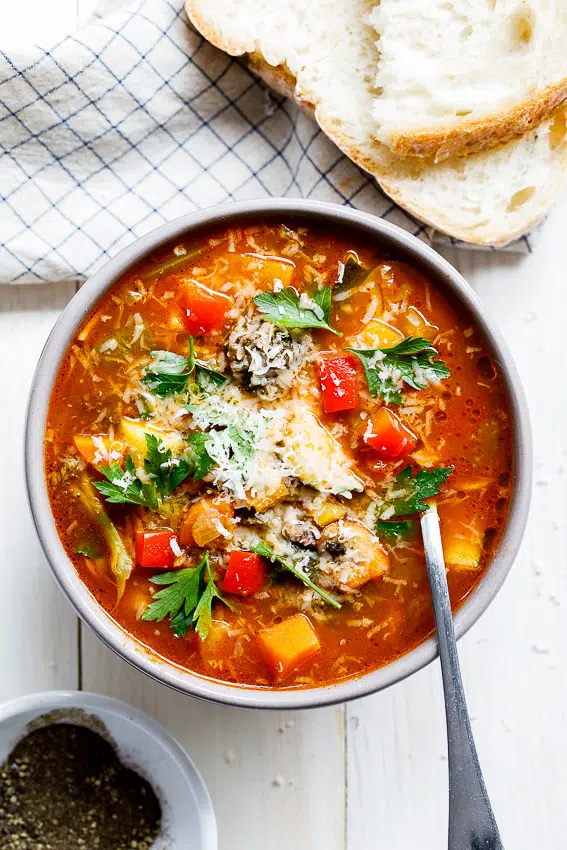
This is the clean-out-the-fridge soup. Carrots, celery, zucchini, butternut, green beans, tomatoes and whatever else you have on hand, all simmered in a simple, well-seasoned broth. I even added a can of chickpeas to this version. It’s hearty, nutritious and the recipe that proves you don’t need meat to make a satisfying soup.
It’s a great one to have on standby for quick lunches and it’s the most flexible recipe in this session. Use whatever vegetables are in season, whatever you need to use up and don’t stress about exact quantities. Vegetable soup is forgiving like that.
To freeze: Cool completely and portion into containers.
To reheat: Thaw in the fridge overnight. Reheat in a pot over medium heat, adding a splash of stock or water if it’s reduced too much.
Sauces
Creamy Tomato Sauce
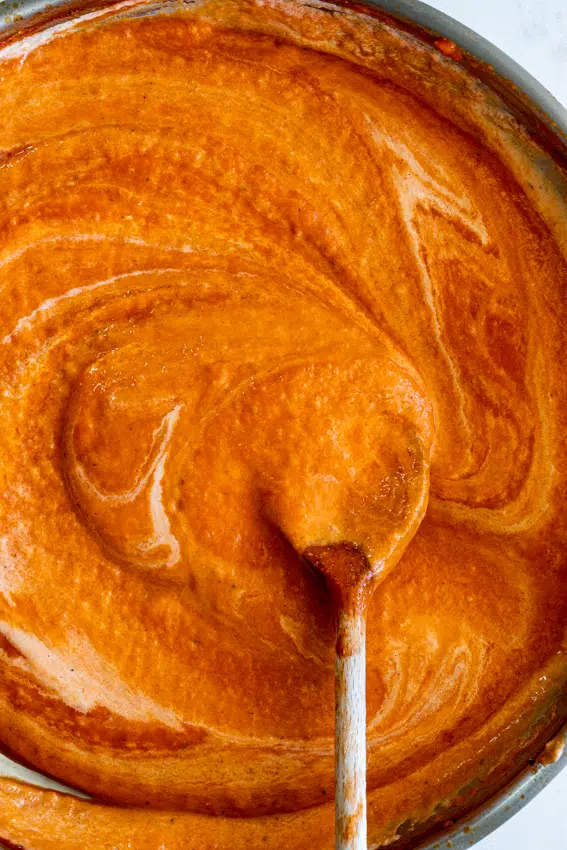
A big batch of homemade creamy tomato sauce is one of the most useful things you can have in your freezer. This is the base for pasta, baked dishes, chicken parmesan, meatball subs and dozens of other meals. It’s richer and smoother than a regular tomato sauce, with just enough cream to make it feel luxurious without being heavy.
What to make with it: Toss with any pasta for an instant dinner. Use as a base for pasta bake or eggplant parmesan. Stir in cooked meatballs for spaghetti and meatballs. Use as a dipping sauce for garlic bread.
To freeze: Cool completely and pour into zip-lock bags or in silicone cubes. Freeze the bags flat on a baking tray, then stack them upright like files once frozen. This saves a huge amount of freezer space compared to round containers. Keeps for up to 3 months.
Pizza Sauce (No-Cook)
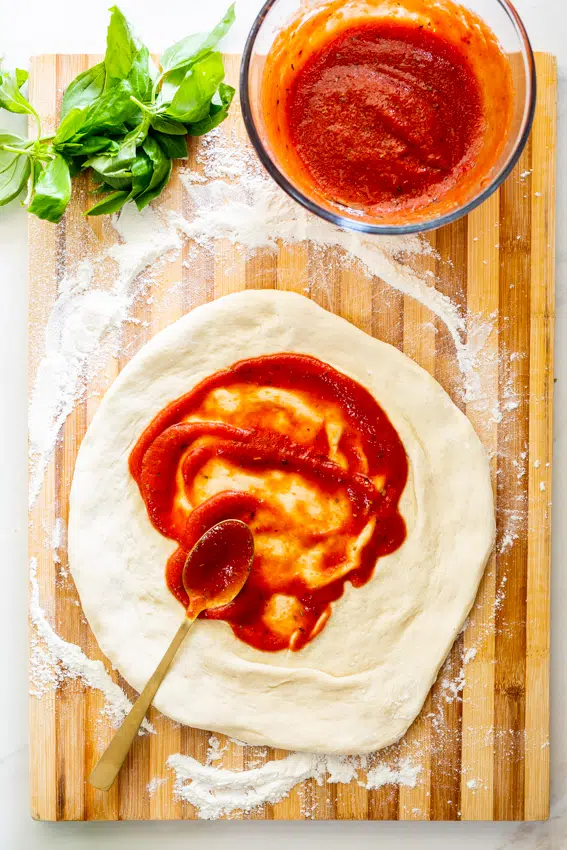
This might be the easiest recipe in the entire Freezer Series. No cooking required. Just blend or stir together canned tomatoes, garlic, olive oil, oregano, basil and a pinch of sugar and you’re done. It takes about two minutes and the flavor is significantly better than anything in a jar.
Having frozen pizza sauce on hand means homemade pizza night goes from a project to a weeknight reality. We love also love it on Naan Pizza and Pizza Toast for easy lunches. It’s also great as a dipping sauce for breadsticks, calzones or mozzarella sticks.
To freeze: Portion into small containers or ice cube trays (one or two cubes is usually enough for a personal pizza). Once frozen in trays, pop the cubes out and transfer to a freezer bag. Keeps for up to 3 months.
Basil Pesto
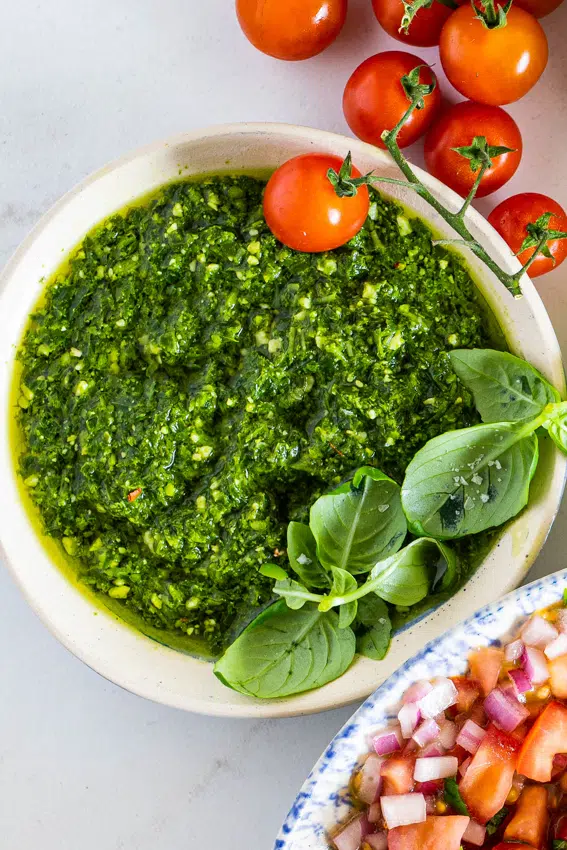
Five minutes in the food processor and you’ve got a sauce that instantly elevates everything it touches. Fresh basil, garlic, pine nuts, Parmesan and olive oil blended into a vibrant green sauce that’s light years better than store-bought.
Having frozen pesto on hand is a game changer. Toss it with hot pasta for the fastest dinner imaginable. Spread it on sandwiches. Drizzle it over grilled chicken or roasted vegetables. Stir it into scrambled eggs. Use it as a pizza base or a salad dressing. The possibilities are honestly endless and you’ll find yourself reaching for it constantly.
To freeze: Spoon the pesto into ice cube trays and freeze until solid. Pop the cubes out and transfer to a freezer bag. Each cube is roughly a tablespoon, so you can grab exactly what you need without defrosting a whole batch. Keeps for up to 3 months. A thin layer of olive oil over each cube before freezing helps prevent the basil from browning.
General Freezer Tips for Soups and Sauces
- Cool everything completely before freezing. Putting hot food in the freezer raises the temperature inside and can partially thaw other items. Let everything cool to room temperature, then transfer to the fridge for an hour before moving to the freezer.
- Leave headroom in containers. Liquids expand as they freeze. If you fill a container right to the top, the lid will pop off or the container will crack. Leave about an inch of space.
- Freeze flat when possible. Soups and sauces in zip-lock bags freeze best when laid flat on a baking tray. Once frozen, stack them upright like files in a drawer. This saves an enormous amount of freezer space and they defrost much faster because of the thin, flat shape. I like freezing soups in 1-cup measure silicone cubes (like Souper Cubes) to make lunchtime as easy as possible: Just grab one cube, toss into a saucepan and heat!
- Label everything. Write the recipe name and the date on every container and bag. You think you’ll remember what’s in that unlabeled container. You won’t. A permanent marker on a zip-lock bag takes 5 seconds and saves a lot of guesswork. Frozen tomato sauce and frozen butternut soup look very similar once they’re frozen flat in a bag.
- Freeze sauces in small portions. Ice cube trays are your best friend for pesto and pizza sauce. Freeze in trays, pop the cubes into a bag and grab one or two at a time. This is far more practical than freezing a large batch in one container and having to defrost the whole thing.
- Use within 3 months for best quality. Everything in this session will keep safely in the freezer for up to 3 months. Beyond that the quality starts to decline, though it’s still safe to eat.
- Defrost in the fridge overnight. The safest and most even way to defrost is moving the container from the freezer to the fridge the night before. For flat bags, you can also defrost in a bowl of cold water in about 30 minutes if you forgot to plan ahead. But to be honest, I never defrost the soups – I pop them straight into a saucepan or the microwave and heat up before serving.
Frequently Asked Questions
Absolutely. Homemade soup is one of the best things you can freeze. Broth-based soups freeze especially well and often taste even better after reheating because the flavors have had time to develop. Just make sure to cool the soup completely before portioning and freezing and leave headroom in your containers for expansion.
Frozen homemade soup will keep for up to 3 months in the freezer while maintaining the best quality. It’s still safe to eat beyond that but the flavor and texture will start to decline. Always label with the date so you know exactly when it was frozen.
It’s best to freeze soup without noodles or pasta. Cooked pasta absorbs liquid and turns mushy in the freezer. Instead, freeze the soup base on its own and cook fresh noodles when you’re ready to serve. Just cook the noodles, add them to the bowl and ladle the hot soup over them.
You can, but potatoes can become slightly grainy or mealy after being frozen and thawed. If texture is important to you, leave the potatoes out and add freshly cooked potatoes when you reheat the soup. Alternatively, blended soups with potato (like a creamy potato soup) tend to freeze better than soups with potato chunks.
Cream-based soups can sometimes separate or become grainy after freezing but this isn’t an issue I have often. For the best results if you’re worried, freeze the soup without the cream and stir it in when you reheat. If the soup has already been made with cream (like the creamy chicken noodle soup in this session), it will still freeze fine. Just give it a good stir while reheating and the texture will come back together.
Thaw in the fridge overnight, then reheat in a pot over medium heat, stirring occasionally. You can also reheat from frozen by placing the container in a pot of warm water to loosen it, then heating in a pot over low heat with a lid on, stirring as it thaws. Add a splash of stock or water if it’s reduced too much.
Tomato sauce freezes beautifully and is one of the best things to batch cook and freeze. Pour cooled sauce into zip-lock bags and freeze them flat. They stack neatly, defrost quickly and one bag is usually the perfect amount for a family pasta dinner.
Yes, pesto freezes extremely well. The best method is spooning it into ice cube trays, freezing until solid and then transferring the cubes to a freezer bag. Each cube is about a tablespoon, so you can grab exactly the amount you need. A thin layer of olive oil over each cube before freezing helps prevent browning.
Freezer-safe zip-lock bags are the most space-efficient option because you can freeze them flat and stack them. Hard-sided freezer-safe containers work well too and are reusable, but they take up more room. Avoid glass containers unless they’re specifically labeled as freezer-safe because regular glass can crack when liquids expand during freezing.
Yes, and it’s actually the preferred method for many people. Fill the bag, squeeze out as much air as possible, seal it and lay it flat on a baking tray to freeze. Once frozen, store the bags upright like files in a drawer. They take up far less space than round containers and defrost faster because of the thin, flat shape.
More in The Freezer Series
Part 1: Freezer Meals with Ground Beef – Bolognese, taco meat, burger patties and meatballs.
Part 2: Chicken Freezer Recipes – Shredded chicken, chicken pie, taquitos, baked meatballs and butter chicken curry.
Part 3: Make Ahead Freezer Breakfasts, Snacks and Staples – Banana oat pancakes, banana bread, cookies, smoothie packs, chicken tenders and more.