
Easy Homemade Chicken Stock
This chicken stock costs nothing to make. It’s made entirely from things you would have thrown in the bin: rotisserie chicken bones, vegetable scraps you’ve saved throughout the month, a few herbs that are past their prime and some garlic cloves. All of it goes into a big pot with water and simmers low and slow for as long as you can leave it until you’re left with a rich, deeply flavorful stock that’s better than anything you’ll buy in a carton or a cube.
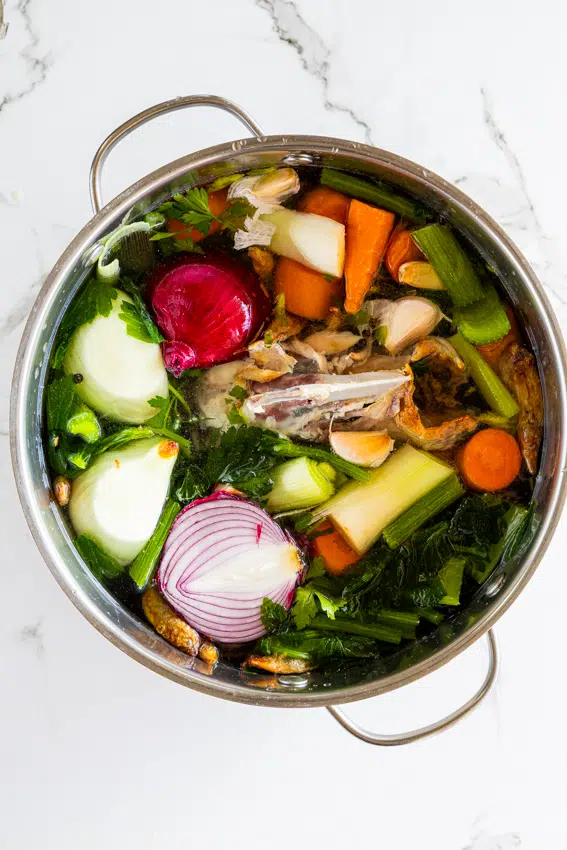
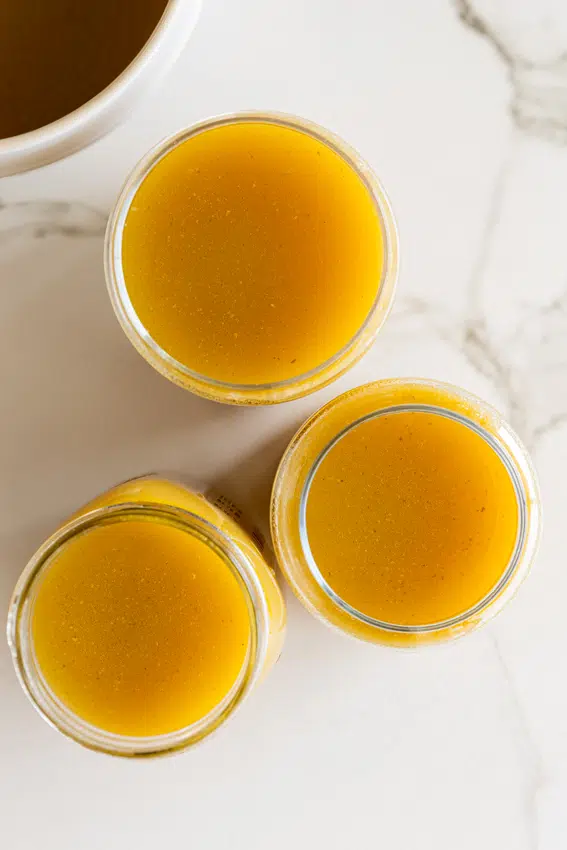
I make a batch every month or so whenever my freezer bags of bones and scraps are full. The whole process is almost entirely hands-off. You dump everything in the pot, fill with water, bring to a simmer and walk away. The stove does the work while you do everything else. By the time it’s done, you’ve got liters of golden, gelatinous stock that makes every soup, sauce, risotto, curry and gravy you cook taste noticeably better. Once you start making your own stock, the store-bought versions feel thin and lifeless by comparison.
Why Homemade Stock Is Worth It
- It’s free. The bones are leftover from rotisserie chickens you’ve already eaten. The vegetable scraps are trimmings you saved instead of throwing away. The herbs are whatever’s wilting in the fridge. The only ingredients you’re actually buying are water, salt and peppercorns.
- It tastes better. Homemade stock has a depth, richness and body that store-bought stock can’t match. The long, slow simmer extracts collagen from the bones which gives the stock a gelatinous quality that thickens sauces, enriches soups and adds a silky body that cubes and cartons simply don’t have.
- It’s zero waste. Every bone, every onion end, every carrot peel and every herb stem that would have gone in the bin gets a second life as stock. You’re not just saving money, you’re using food more completely.
- It makes everything else taste better. This is the part people underestimate. The difference between a soup made with water and a soup made with homemade stock is enormous. The stock adds a savory backbone to everything it touches: soups, sauces, risottos, gravies, curries, braises and even just cooking rice in stock instead of water changes the flavor completely.
The key to making stock regularly without any effort is having a system for saving scraps. Here’s mine:
The Bones Bag
Every time I use a rotisserie chicken (or roast a chicken at home), the carcass goes straight into a large zip-lock bag in the freezer. Don’t pick it clean. The bits of meat, the cartilage, the skin, the joints, all of it adds flavor. I usually wait until I have 2 to 3 carcasses before I make a batch of stock. More bones means a richer, more gelatinous result. You could also add chicken wing tips, whole chicken wings or chicken feet for a super collagen-rich stock. For the most flavor, air fry or roast it at high heat until golden brown, then add to the pot.
The Vegetable Scraps Bag
A second bag in the freezer for vegetable trimmings. Every time I cook, the scraps go in:
Good scraps to save: Onion ends and skins (the papery outer skin adds golden color), carrot peels and ends, celery trimmings and leaves, leek tops, mushroom stems, fennel fronds, corn cobs, herb stems (parsley, thyme, rosemary, sage, bay leaves). I also add any sad-looking veg in the fridge. Whole carrots, celery, turnips, etc. that are looking worse for wear. Same goes for onions and the last of the garlic cloves.
Scraps to avoid: Brassicas (broccoli, cauliflower, cabbage, Brussels sprouts) as they make the stock bitter and sulfurous. Beet trimmings (they turn everything pink). Anything rotten or slimy. Potato peels (they make the stock cloudy and starchy). Very strong peppers or chilies unless you want a spiced stock.
When both bags are full, it’s stock day.
Ingredients
- Rotisserie chicken bones/carcasses. 2 to 3 carcasses for a large batch. The more bones, the richer and more gelatinous the stock. Save the bones from roasted or rotisserie chickens. Raw bones work too but roasted bones give a deeper, more developed flavor. You could use a whole chicken too but this would technically be chicken broth instead of chicken stock (broth is made with meat and bones).
- Frozen vegetable scraps. Whatever you’ve saved. Onion, carrot and celery scraps form the classic base (essentially a free mirepoix) but any of the “good scraps” listed above add flavor and depth.
- Whole garlic cloves. A few unpeeled cloves thrown in whole. They add a mellow, sweet garlic flavor that infuses the stock during the long simmer. No need to peel or chop.
- Fresh herbs. Parsley and thyme are my go-to combination. Sage adds a warm, earthy note when I have it. Rosemary works but use sparingly as it can be overpowering over a long simmer. Use whatever herbs you have, including the stems which have just as much flavor as the leaves. Wilting herbs that are past their prime for eating are perfect for stock.
- Salt. Season the stock generously. Under-seasoned stock makes everything you use it in taste flat. You can always adjust when you use the stock in a recipe but starting with a well-seasoned base makes a difference.
- Whole black peppercorns. A generous handful. Whole peppercorns add a slow, steady warmth over the long simmer without making the stock taste sharp or biting the way ground pepper can.
- Cold water. Enough to cover everything in the pot by about 2 inches. Starting with cold water and bringing it slowly to a simmer extracts more flavor and collagen from the bones than dumping them into already-boiling water.
Optional additions: - Bay leaves. 2 to 3 bay leaves add a subtle herbal depth.
- Apple cider vinegar. A tablespoon added at the beginning helps extract minerals and collagen from the bones. You won’t taste it in the finished stock but it makes the stock more nutritious and more gelatinous.
How to Make Chicken Stock
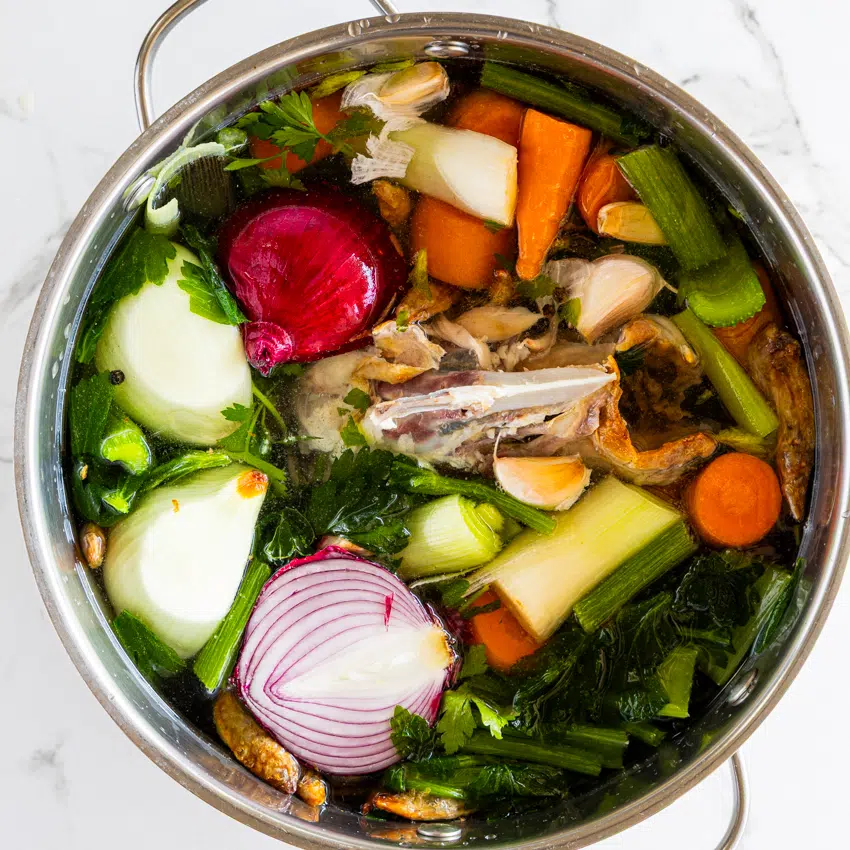
Step 1: Dump everything in. Place the frozen chicken bones, frozen vegetable scraps, garlic cloves, herbs, salt and peppercorns into a large stockpot. You don’t need to thaw anything. Straight from the freezer into the pot. This is where you would add any chicken wing tips, whole wings or chicken feet.
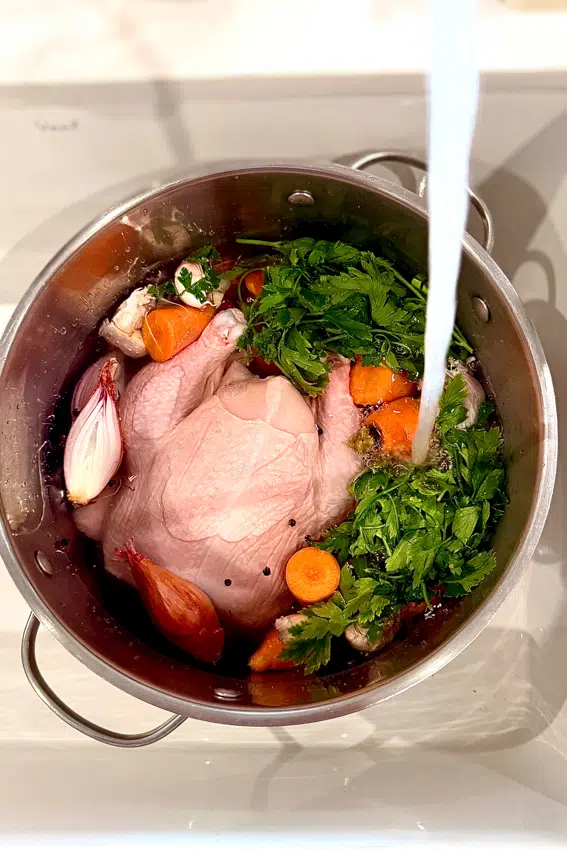
Step 2: Add cold water. Fill the pot with cold water until everything is covered by about 2 inches. Don’t overfill as the liquid reduces during the long simmer and you want a concentrated stock, not a watery one.
Step 3: Bring to a simmer. Place the pot over medium heat and bring to a gentle simmer. You want a lazy, gentle bubble with wisps of steam rising from the surface. A rolling boil will result in a slightly cloudier stock, which isn’t an issue. It just won’t be a clear stock.
Step 4: Skim (optional). In the first 30 minutes, some foam and scum may rise to the surface. Skim it off with a spoon if you want a clearer stock. This is optional. It doesn’t affect the flavor, only the clarity.
Step 5: Simmer low and slow. Reduce the heat to the lowest setting, partially cover the pot and let it simmer for 12 to 15 hours, ideally. The longer you let it go, the richer and more gelatinous the stock becomes. The minimum for a good stock is about 4 to 6 hours. Eight hours is great. Twelve to 15 is where the magic happens. The bones start to crumble, the collagen fully dissolves and the stock develops a body and richness that short-simmered stock can’t achieve.
Step 6: Cool completely. Turn off the heat and let the stock cool in the pot until it’s comfortable to handle. Don’t try to strain or pour boiling stock.
Step 7: Strain. Pour the stock through a large sieve or colander into a clean pot or large bowl, catching the bones, vegetables and aromatics. Discard the solids. They’ve given everything they have to the stock.
Step 8: Fine strain. Pass the stock through a fine mesh sieve (or a regular sieve lined with cheesecloth) into a large jug or bowl. This second strain catches the fine sediment and particles that the first strain missed and gives you a cleaner, clearer stock.
Step 9: Freeze. Pour the strained stock into souper cubes for individual portions or into flat zip-lock bags. Flat bags freeze quickly, stack like files in the freezer and defrost much faster than round containers. Label with the date.
How Long to Simmer Stock
The simmering time makes a genuine difference to the quality of the stock:
- 4 to 6 hours: A decent stock with good flavor. The bones have released some collagen and the vegetables and herbs have infused. This is the minimum for a worthwhile result.
- 8 to 10 hours: A rich, flavorful stock with noticeable body. The collagen extraction is well underway and the stock will have a slight thickness when cooled.
- 12 to 15 hours: The gold standard. The bones are starting to crumble, the collagen is fully dissolved and the stock sets into a jelly when refrigerated. This is the stock that makes professional-quality soups and sauces. The difference between a 6-hour stock and a 15-hour stock is dramatic.
If you don’t want to leave the stove on overnight, you have two options. Make the stock during the day while you’re home and awake. Or use a slow cooker, which is designed to run safely for extended periods. The slow cooker on low for 12 to 24 hours produces an excellent stock with the same results as the stovetop method.
How to Store Chicken Stock
❄️ Fridge. Strained stock keeps in the fridge for up to 5 days in an airtight container. The fat cap that forms on top helps seal it and extend its freshness. If you’re not going to use it within 5 days, freeze it.
❄️ Freezer. Stock freezes beautifully for up to 6 months. For the best results:
- Souper cubes or ice cube trays give you individual portions (about 1 cup or a few tablespoons) that you can grab as needed. Perfect for deglazing, adding to sauces or recipes that need a small amount.
- Flat zip-lock bags are best for larger quantities. Lay them flat to freeze, then stack upright like files. They defrost faster than round containers and take up much less space.
- Label everything with the date. Stock that’s been in the freezer for 6 months is safe but the flavor starts to dull. Aim to use it within 3 to 4 months for the best quality.
- Defrosting. Overnight in the fridge is the safest method. For faster defrosting, place a sealed bag or container in a bowl of cold water. Frozen stock can also go directly into a pot on the stove over low heat and melt as it heats.
What to Use Chicken Stock For
Once you have homemade stock in the freezer, you’ll find yourself reaching for it constantly:
- Soups. Every soup on my blog starts with stock. Creamy chicken noodle soup, roasted butternut soup, Mexican chicken soup, vegetable soup and rotisserie chicken mushroom soup are all dramatically better with homemade stock.
- Risotto. Stock is the main liquid in risotto and using homemade versus store-bought is one of the biggest upgrades you can make. The gelatin in homemade stock gives risotto its signature creamy body. Mushroom risotto, Butternut Squash Risotto and Chicken Mushroom Risotto are some of our faves.
- Cooking rice. Replace the water with stock when cooking rice. The rice absorbs the flavor and becomes a side dish on its own rather than a bland afterthought.
- Gravies and pan sauces. Deglaze a pan with stock instead of water and you’ve got an instant sauce with depth and body.
- Braising. Use stock as the braising liquid for chicken, beef or vegetables. It enriches the braising liquid which becomes the sauce.
- Curries and stews. Adding stock instead of water to curries and stews adds a savory backbone that deepens the overall flavor.
- Freezing in ice cube trays. For smaller amounts, freeze stock in ice cube trays, then transfer the frozen cubes to a bag. Pop one or two into a pan when you need a splash of stock for deglazing, sautéing or adding to a sauce.
Ingredients
- 2 to 3 rotisserie chicken carcasses frozen is fine
- 4 to 6 cups frozen vegetable scraps onion ends, carrot peels, celery trimmings, leek tops, mushroom stems
- 4 to 5 whole garlic cloves unpeeled
- A large handful of fresh parsley
- 4 to 5 sprigs fresh thyme
- 2 to 3 bay leaves
- 1 tablespoon whole black peppercorns
- 1 tablespoon salt adjust to taste
- Cold water enough to cover everything + more for topping up as needed
Optional
- chicken wing tips, whole wings or chicken feet
Instructions
- If using, roast or air fry the chicken wing tips, whole chicken wings or chicken feet at high heat (200°C/400°F) for 20-30 minutes until golden brown.
- Place the chicken carcasses (and roasted bones, if using), frozen vegetable scraps, garlic cloves, herbs, peppercorns and salt into a large stockpot. No need to thaw anything.
- Fill with cold water until everything is covered by about 2 inches/5cm. Don't overfill.
- Bring to a gentle simmer over medium heat. Do not let it boil. Skim any foam from the surface in the first 30 minutes if desired.
- Reduce heat to the lowest setting. Partially cover and simmer for 12 to 15 hours. The longer the simmer, the richer and more gelatinous the stock.
- Remove from heat and cool completely in the pot.
- Strain through a large sieve or colander into a clean pot, discarding the solids.
- Pass the stock through a fine mesh sieve a second time to remove any sediment and fine particles.
- Pour into souper cubes, ice cube trays or flat zip-lock bags. Label with the date and freeze.