
How To Make Easy Pan Sauce
Every time you cook protein in a hot pan, you’re left with browned bits stuck to the bottom. That’s called fond and it’s pure concentrated flavor that most people wash straight down the drain. With a splash of liquid and a few simple ingredients, you can turn that fond into a restaurant-quality sauce in less than 10 minutes.
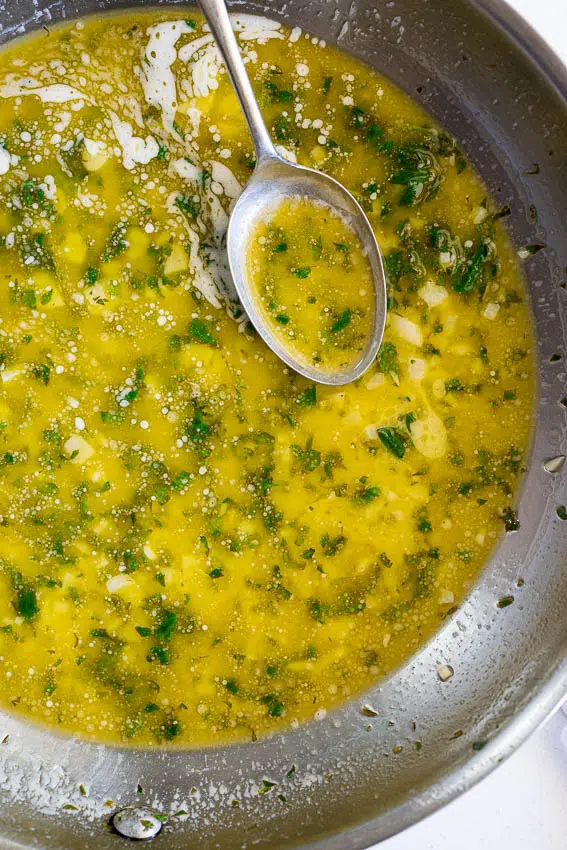
Once you understand the basic technique, pan sauces are endlessly adaptable. The method is always the same: deglaze the pan with liquid, scrape up the fond, build the flavour and finish the sauce. Change the ingredients and you get a completely different result every time. Here are five of my favorite pan sauces that work across a variety of proteins and will make your weeknight dinners feel like something special.
What is a Pan Sauce?
A pan sauce is a quick sauce made directly in the same pan you cooked your protein in. After you’ve seared chicken, steak, shrimp, pork or fish, the pan is left with caramelised browned bits stuck to the bottom. These bits are called fond (from the French word for “base” or “foundation”) and they’re packed with savoury, meaty flavour.
To make a pan sauce, you add liquid to the hot pan (wine, stock, cream or even just lemon juice), which loosens and dissolves the fond. This is called deglazing. From there, you build the sauce by adding butter, cream, mustard, herbs or whatever flavorings you like, and let it reduce until it thickens into something glossy and delicious. The whole process takes 5-10 minutes and uses just one pan.
The Basic Pan Sauce Technique
No matter which of the five sauces below you’re making, the technique follows the same steps:
Step 1: Cook your protein and set it aside. Whether it’s chicken, steak, shrimp or pork, cook it in a hot pan with a little oil until done. Transfer the protein to a plate and tent loosely with foil to keep warm. Leave the pan on the heat with all the fond intact.
Step 2: Deglaze the pan. Add your liquid (wine, stock, lemon juice or brandy) to the hot pan. It will sizzle and steam. Use a wooden spoon or spatula to scrape up all the browned bits from the bottom. This is where most of the flavor in your sauce comes from.
Step 3: Build the sauce. Add your remaining ingredients (cream, butter, mustard, mushrooms, capers, whatever the recipe calls for) and let the sauce simmer for 5 minutes until it reduces and thickens slightly. It should coat the back of a spoon.
Step 4: Season and serve. Taste the sauce, adjust the seasoning with salt and pepper and spoon it directly over your protein. Serve immediately.
5 Easy Pan Sauces
1. Creamy Dijon Sauce
Best with: Chicken, pork chops, pasta
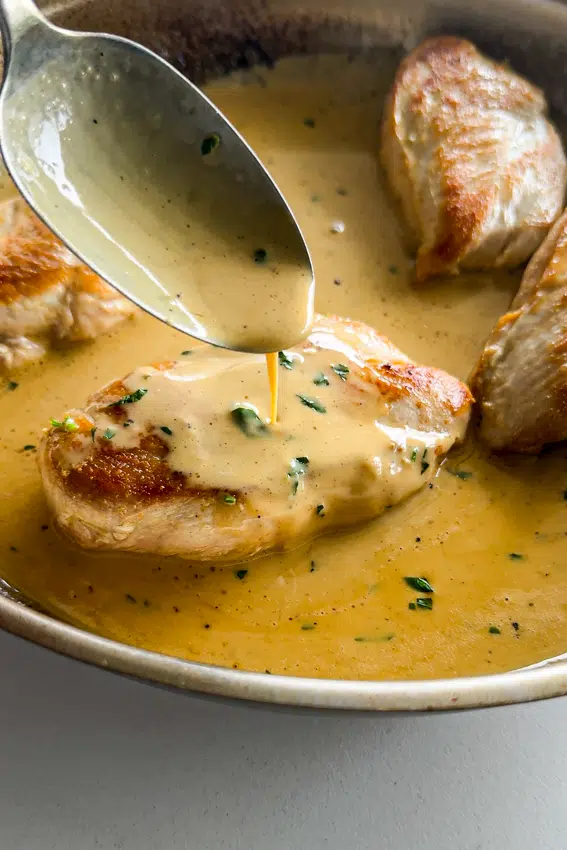
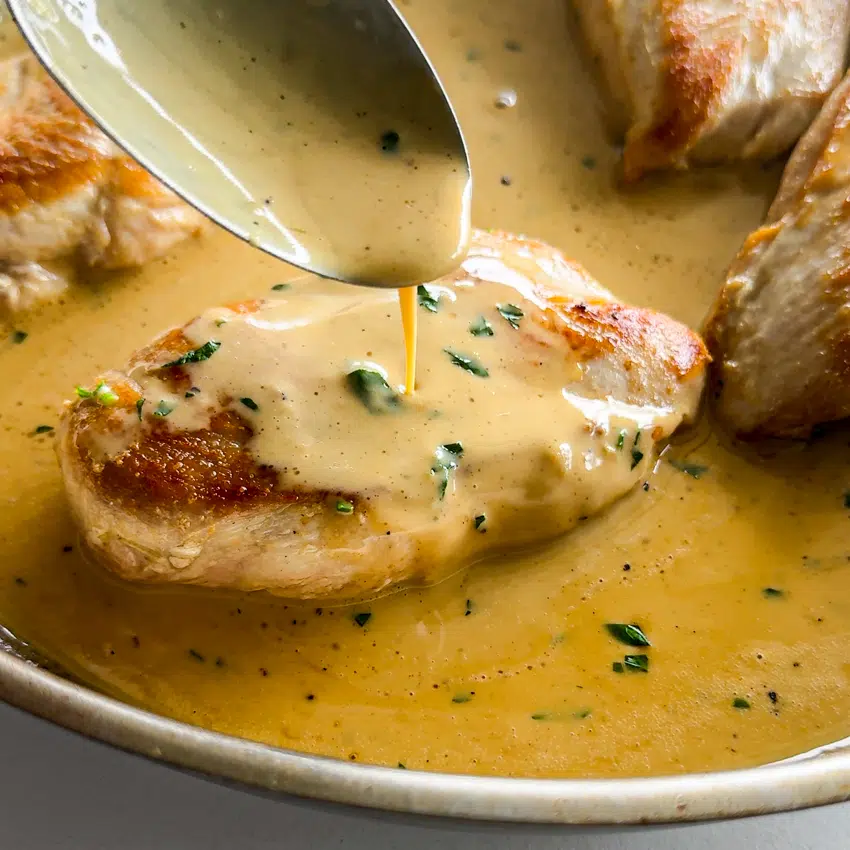
After cooking your chicken, keep the pan on medium heat and add a splash of white wine. Let it bubble for about 30 seconds while you scrape up the fond. Stir in a tablespoon of dijon mustard and a splash of cream. Let it simmer for a minute or two until it thickens slightly, then season with salt and pepper. The mustard gives this sauce a tangy bite that cuts through the richness of the cream, making it feel lighter than it looks. It’s one of the fastest ways to make a simple chicken breast taste like something from a French bistro.
2. Garlic Butter Sauce
Best with: Shrimp, fish, chicken, pasta
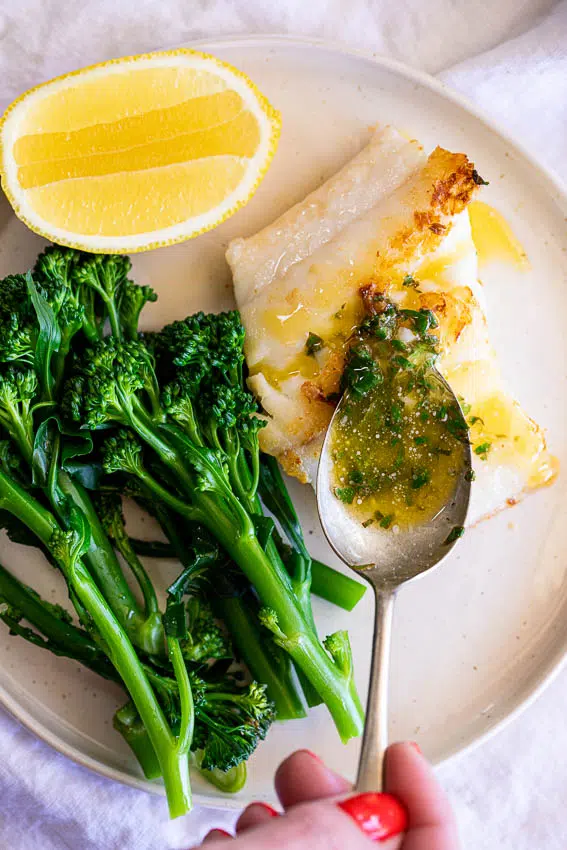
Once your shrimp are cooked, lower the heat and add a generous knob of butter with thinly sliced garlic. Let the garlic turn golden and fragrant (about a minute), then add a squeeze of fresh lemon juice, chopped parsley and a pinch of chilli flakes (optional). Swirl the pan until everything comes together into a glossy, buttery sauce. This is the simplest sauce on the list and one of the most versatile. It works with almost anything and comes together in under 2 minutes.
3. Creamy Pepper Sauce
Best with: Steak, pork, chicken
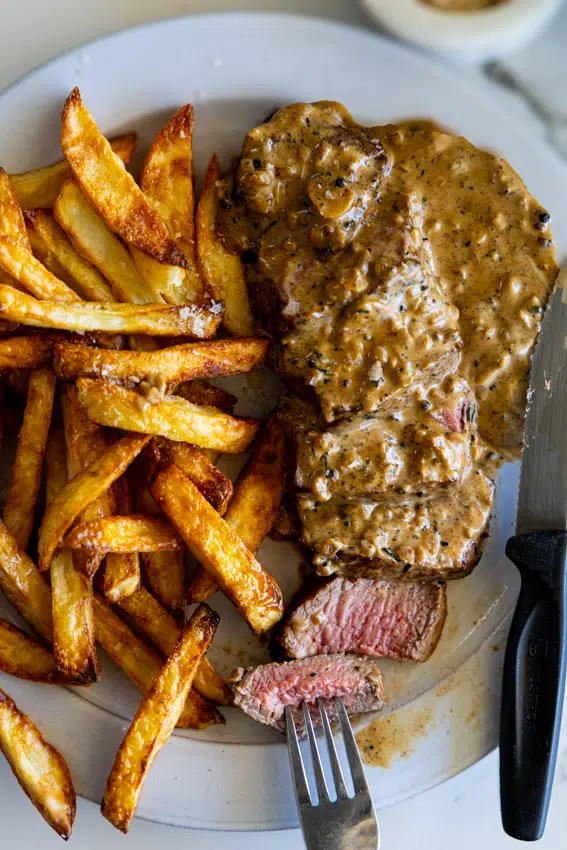
This is a steak au poivre style sauce. With the pan still hot from the steak, sauté chopped onion and sliced garlic add a splash of beef stock. Let it reduce for about 30 seconds, then stir in cream, a teaspoon of dijon mustard and a generous amount of cracked black pepper. Simmer for 1 to 2 minutes until the sauce thickens into something rich and velvety. The peppery heat against the creamy sauce is a classic combination for a reason. It turns a simple pan-fried steak into a proper restaurant meal.
4. Lemon Caper Sauce
Best with: Chicken, fish, veal
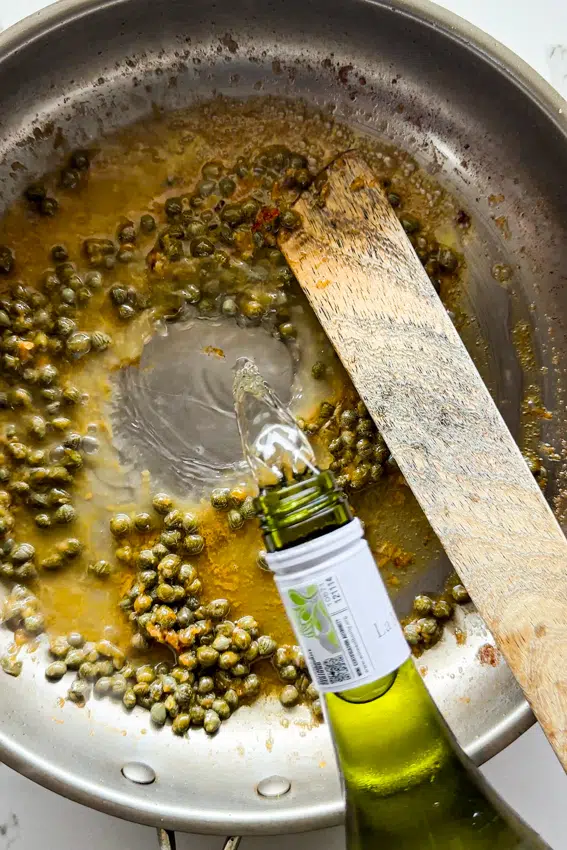
This is essentially a piccata sauce. After cooking your chicken, add a knob of butter and minced garlic to the pan then stir in the capers. Add lemon zest and a good glue of wine. Allow to reduce then add parsley and season to taste. The brightness of the lemon and the salty tang of the capers make this sauce incredibly fresh and punchy. It’s one of the best sauces for keeping things feeling light.
5. Creamy Mushroom Sauce
Best with: Chicken, steak, pork, mashed potatoes
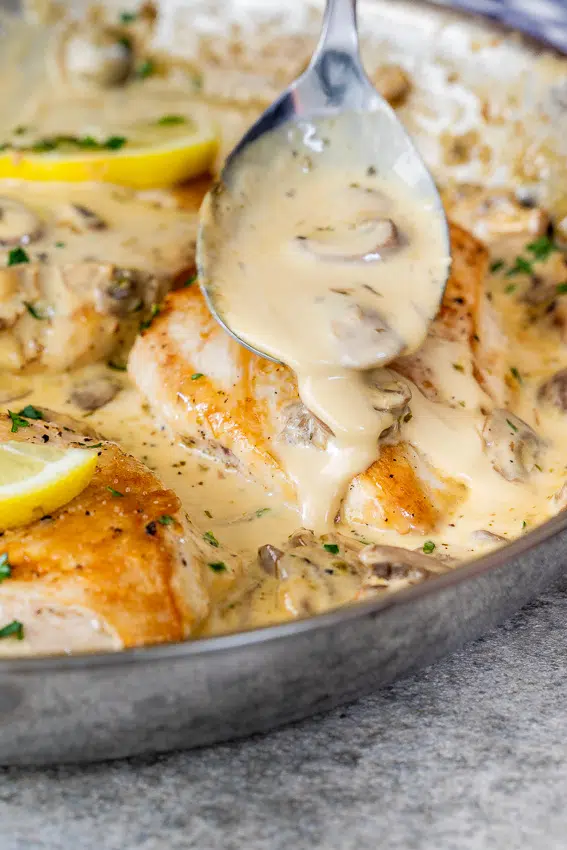
With the pan on medium heat, add sliced mushrooms and cook until golden brown and any moisture has evaporated (about 4 to 5 minutes). Add a clove of minced garlic and dried oregano and cook for another 30 seconds. Pour in cream, then let it simmer until it thickens into a rich, velvety sauce. Season to taste. This is pure comfort food. It takes a few minutes longer than the other sauces because you want the mushrooms properly browned, but the result is worth the wait.
Tips for Perfect Pan Sauces
- Don’t clean the pan. This sounds obvious, but the instinct to wipe the pan between cooking the protein and making the sauce is strong. Resist it. That fond is the entire foundation of your sauce.
- Control your heat. Medium heat is the sweet spot for most pan sauces. Too high and the fond can burn before you get the liquid in, turning the sauce bitter. Too low and the sauce won’t reduce properly.
- Taste before serving. Pan sauces often need a final adjustment of salt, pepper or acid (a squeeze of lemon or a splash of vinegar) to really come alive. Always taste and adjust before spooning it over your protein.
- Let the sauce reduce. Patience is key. The sauce needs to simmer long enough to reduce and thicken. If it still looks thin and watery, give it another minute. It should coat the back of a spoon when it’s ready.
- Deglaze with intention. Choose your deglazing liquid based on the sauce you’re building. White wine adds acidity and brightness. Stock adds body and savouriness. Brandy adds warmth and depth. Even plain water works in a pinch as the real flavor is coming from the fond.
Ingredients
For the Dijon Cream Sauce
- 1 tbsp butter
- 2 garlic cloves minced
- ½ cup chicken stock wine can be used too
- 1 tbsp dijon mustard
- 1 cup heavy cream
- 1 tsp lemon juice
- salt and black pepper to taste
For the Lemon Caper Sauce
- 1 tbsp butter
- 2 garlic cloves minced
- ¼ cup capers in brine – if using salted capers, rinse them before using
- zest of 1 lemon
- ½ cup white wine
- 2-3 tsp lemon juice
- 2 tbsp chopped parsley
- salt and pepper to taste
Garlic butter sauce
Creamy Pepper Sauce
Creamy Mushroom Sauce
Instructions
For the Dijon Cream Sauce
- After cooking your chicken, keep the pan on medium heat and saute minced garlic in a knob of butter.
- Deglaze with chicken stock or wine.
- Scrape up all those browned bits then add a tablespoon of dijon mustard, a splash of cream, and stir it all together until it thickens slightly. x
- Season with a squeeze of lemon, salt and pepper.
For the Lemon Caper Sauce
- After cooking chicken breasts, add a generous knob of butter and some garlic to the pan.
- Add the capers and lemon zest and cook for a few seconds then deglaze with white wine.
- Add a good squeeze of lemon juice and some chopped parsley, then season to taste.
For the Pepper Sauce
- Follow recipe instructions.
For the Garlic Butter Sauce
- Follow recipe instructions.
For the Creamy Mushroom Sauce
- Follow Recipe Instructions.
Notes
- Pan: Use stainless steel for the best fond development. Non-stick pans won’t give you the browned bits you need.
- Heat: Medium heat for both cooking the protein and building the sauce. Too high and the fond burns.
- Deglazing liquid: White wine, stock, lemon juice or brandy depending on the sauce. Have it measured and ready before you start.
- Timing: Make the sauce while the protein rests. Most sauces are ready in 5-10
Frequently Asked Questions
Fond is the layer of caramelized, browned bits that stick to the bottom of your pan after searing meat, chicken or fish. It’s essentially concentrated protein and natural sugars that have caramelised during cooking, and it’s packed with deep, savoury flavour. When you add liquid to the hot pan and scrape these bits up (deglazing), they dissolve into the liquid and become the flavour base of your sauce.
Deglazing is the process of adding liquid (wine, stock, lemon juice, or spirits) to a hot pan to dissolve and lift the fond from the bottom. The liquid sizzles and steams on contact, loosening the browned bits so they incorporate into your sauce. It’s a fundamental technique in professional kitchens and the first step in making any pan sauce.
Absolutely. Chicken or beef stock, lemon juice, or even water all work as deglazing liquids. The alcohol in wine or brandy adds a specific depth and complexity, but you can make a great pan sauce without it. Stock is the most versatile substitute and adds body to the sauce. A splash of vinegar can replicate some of the acidity that wine provides.
The most likely cause is burnt fond. If you cook your protein over very high heat or leave the pan on the heat too long after removing the protein, the fond can go from caramelised and flavourful to burnt and bitter. The fix is to deglaze the pan relatively quickly after removing the protein, and to keep the heat at medium rather than high. If the fond looks black rather than dark brown, it’s better to start with a clean pan and build flavour from your other ingredients instead.
The simplest method is reduction. Let the sauce simmer until enough liquid evaporates and it naturally thickens. Cream-based sauces thicken as the cream reduces. For non-cream sauces, swirling in a knob of cold butter at the end adds body and a glossy finish. You can also add a small amount of cornstarch mixed with cold water (a slurry) if you need a thicker result quickly, though this changes the texture slightly compared to a naturally reduced sauce.
A stainless steel skillet or frying pan is ideal. Stainless steel develops fond much better than non-stick, which is designed to prevent sticking. You need that fond for flavour. Cast iron also works well, though avoid deglazing with acidic liquids (wine, lemon juice) in cast iron for extended periods as the acid can react with the seasoning.
Most pan sauces are ready in 2 to 4 minutes once you start deglazing. The creamy mushroom sauce takes a little longer (about 7 to 8 minutes total) because you need to brown the mushrooms first. The speed is one of the best things about pan sauces. Your protein rests while the sauce comes together, and everything is ready at the same time.
Pan sauces are best made and served immediately. They’re designed to be a quick, last-minute addition to your cooking. Making them ahead defeats the purpose and the texture changes as they cool (cream sauces thicken too much, butter sauces can separate). The good news is they’re so fast that there’s no real need to make them ahead. Just have your ingredients measured and ready beside the stove.
You have some great recipes on here. Thank you for sharing!
I found you from Instagram
So happy to have you! 🙂