
How To Meal Plan
Meal planning sounds like something organized people do. The kind of people who label their spice jars and have a cleaning schedule on the fridge. The reality is that meal planning not only saves you time, it also saves you money and reduces waste. Once you start, you’ll wonder why you haven’t been doing it from the start!
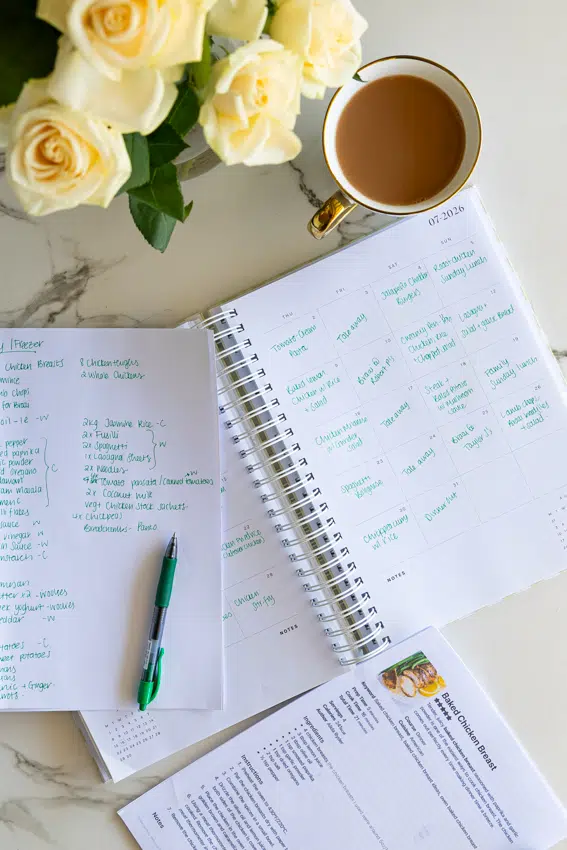
Before I started meal planning, I was spending more at the grocery store, wasting more food and standing in front of the fridge every night with no idea what to cook. That’s the most expensive way to feed a family because it leads to impulse shopping, last-minute takeout and ingredients that go bad before you use them. A plan doesn’t mean your month is rigid and you can never deviate. It means you’ve done the thinking in advance so the rest of the month runs on autopilot. When you feel like pivoting on a Wednesday, you still have a stocked pantry to pivot with.
In this post I’m walking you through a monthly meal plan but the principles work with a weekly plan too. It’s simple, it’s flexible and it works whether you’re feeding a family of four or cooking for one.
Why Monthly Planning Works Better Than Weekly
Most people who meal plan do it week by week. That works fine but monthly planning has a few advantages that make it worth the extra upfront effort.
- You shop in bulk. When you know what you’re eating for the entire month, you can buy pantry staples, dry goods and proteins in bulk at the beginning of the month when they’re cheapest. A 2kg bag of rice is cheaper per kilo/per pound than a 1kg bag. A family pack of chicken is cheaper per kilo/pound than individual portions. Monthly planning lets you take advantage of those savings because you know exactly how much you need.
- Your weekly shops become tiny. If you’ve already bought your proteins, canned goods, pasta, rice and grains for the month, your weekly trip to the store is just fresh produce, dairy and bread. That’s a 15-minute shop instead of an hour-long expedition where you’re wandering the aisles trying to figure out what to cook.
- You waste less food. When you plan the whole month, you can map crossover ingredients across meals so nothing sits unused in the fridge until it goes bad. If you’re buying butternut squash for a curry on Wednesday, you plan a butternut squash soup earlier in the next week that uses the rest. Every ingredient earns its place.
- You can take advantage of monthly specials. Most grocery stores run monthly specials. When you’re planning a full month, you can build meals around what’s on promotion and stock up when prices are low. This works well if you’ve got meals that require chickpeas for instance but you see beans are on sale. Buy the beans instead and use them for those chickpea meals for the month.
- Even if you prefer planning week by week, the monthly buying principles still apply. I’m actually a weekly planner myself. I plan our dinners one week at a time because I like the flexibility. But I still think monthly when it comes to shopping for staples. I know my family eats rice, pasta, canned tomatoes, coconut milk, cheese, chicken, flour, sugar and olive oil every single month regardless of what’s on the weekly menu. So when I see those items on special, I buy in bulk even if I don’t need them this week. The rice goes in the pantry. The chicken goes in the freezer. The canned goods stack on the shelf. By the time I actually need them, I’ve already bought them at the best price. You don’t have to plan a full month of meals to benefit from thinking a month ahead on your staples. The two approaches work beautifully together: plan your meals weekly for flexibility, buy your staples monthly for savings.
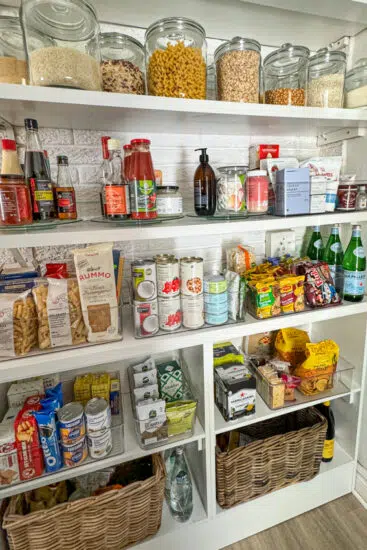
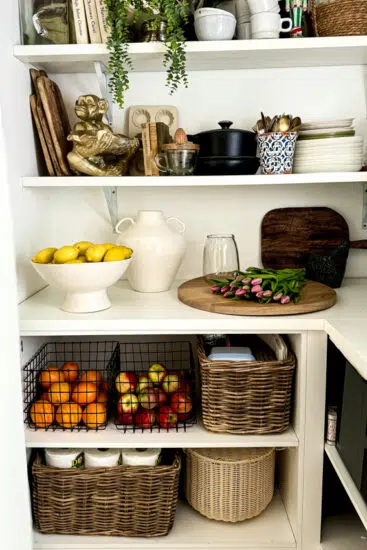
Step 1: Choose 10 to 15 Recipes Your Family Loves
You don’t need 30 unique recipes for 30 days. You need 10 to 15 solid, family-approved recipes that you rotate across the month. Most families eat the same 8 to 12 meals on repeat anyway. The difference is that with a plan, you’re rotating them intentionally rather than defaulting to the same 3 meals when you can’t think of anything else.
- Start with what you know works. The meals your family already loves and asks for. The ones you can cook without checking the recipe. These are your anchors. Don’t try to fill the month with new, untested recipes. That’s how you end up with a meal nobody eats and an unplanned trip for takeout. For us, that means Spaghetti Bolognese, Creamy Tomato Pasta, Chicken Milanese, Butter Chicken Curry, Air Fryer Lamb chops and Baked Chicken Breast.
- Add 2 to 3 new recipes per month. Enough to keep things interesting without overwhelming yourself. Slot the new recipes on nights when you have more time and energy (weekends are usually best) so you’re not attempting something unfamiliar on a busy Tuesday.
- Use the search function on your favorite recipe sites. If you know your family eats chicken breast often, search by that ingredient and you’ll find dozens of options. Simply Delicious has over 1,600 recipes and you can search by ingredient, cuisine or cooking method to find exactly what you need. Print the ones you have chosen.
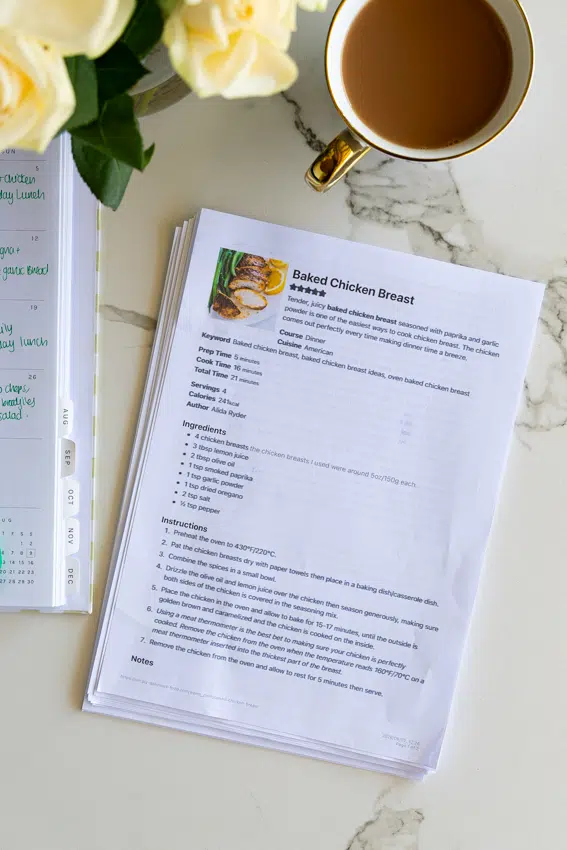
Step 2: Slot Recipes into a Monthly Calendar
Get a monthly planner, a printed calendar or even a notebook with the days written out. Start placing your chosen recipes into specific days, keeping these principles in mind:
- Balance effort across the week. Monday needs something quick because nobody has energy at the start of the week. A stir fry, a pasta or a one-pot meal. Wednesday is usually a soup or something low-effort because it’s the midweek slump. Friday is something fun and easy like burgers, tacos or pizza, if we’re not ordering in. Sunday is a slow cook that ideally creates leftovers.
- Vary your proteins. Don’t schedule three chicken dinners in a row. Alternate between chicken, beef, fish and a vegetarian option. This keeps everyone interested and stops the “we had this last week” complaints.
- Leave gaps. Don’t fill every single day. Leave 1 to 2 nights per week open for takeout, eating out, visiting friends or using up leftovers. A plan that’s too rigid breaks the moment something unexpected happens. A plan with breathing room adapts.
- Put new recipes on low-pressure nights. Weekends or nights when you have extra time. Don’t experiment on a busy Tuesday when you’re tired and the family is hungry.
Step 3: Use Crossover Ingredients
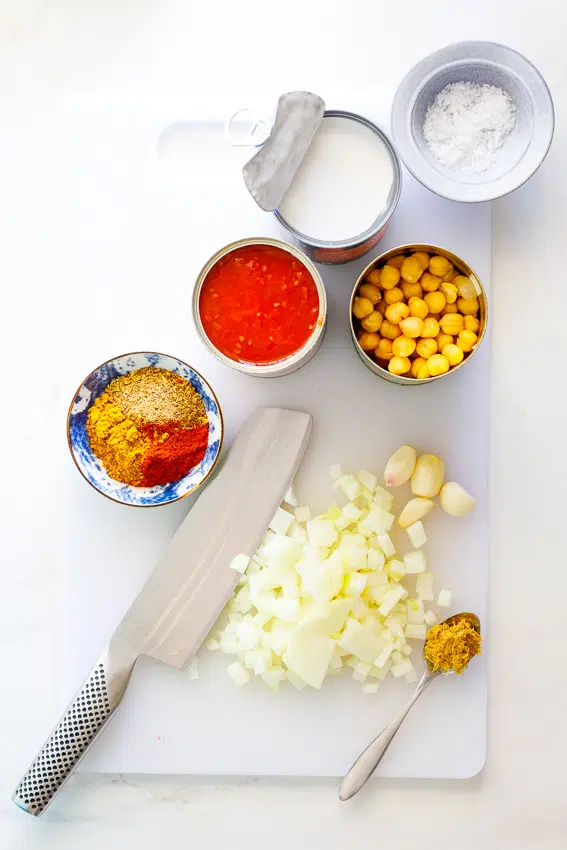
This is the trick that reduces waste to almost zero and keeps your shopping list short. Every ingredient you buy should appear in at least two meals during the month. If something only shows up once, ask yourself whether you really need it or whether you can substitute something you’re already buying.
Examples of crossover ingredients:
- Buying a bag of butternut squash for a curry? Plan a butternut soup earlier in the week that uses the other half.
- Buying a bag of bell peppers for fajita bowls? Use the rest in a pasta bake or a stir fry later in the week.
- Buying fresh herbs for a marinade? Use the remainder in a salad, a sauce or as a garnish on another meal.
- Buying canned tomatoes for a bolognese? Use another can for a tomato soup or a shakshuka.
- Poaching chicken for chicken à la king? Use the poaching liquid as stock for soup later in the week. Use leftover chicken for sandwiches.
When you plan with crossover ingredients in mind, your shopping list gets shorter, your fridge empties more completely and the amount of food you throw away drops dramatically.
Step 4: Check What You Already Have
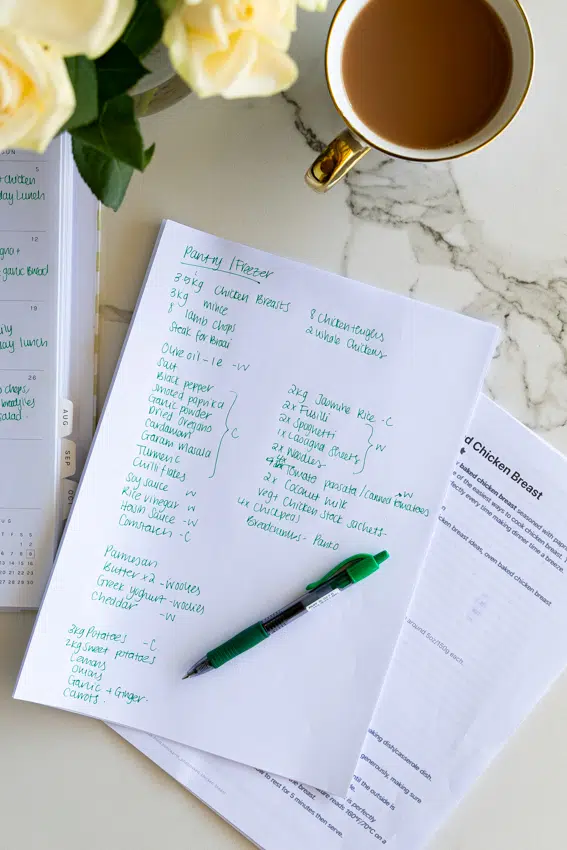
Check your pantry, fridge and freezer for ingredients you already have. I like to have a running ingredient list in my pantry with quantities but just doing a quick stock-take before you write your shopping list will prevent buying unnecessary duplicates and can help you streamline your shopping.
This is also a great time to check if you have ingredients that need using up. If you have plenty of canned tuna, swop out the ham sandwiches for tuna a few times a week to go through that stock.
Step 5: Build Your Shopping List
With your month planned, go through each recipe and write down every ingredient you need. When you reach a duplicate (the same ingredient appearing in multiple recipes), add a tally or increase the quantity rather than writing it again. By the end, you’ll know exactly how many kilos of chicken, how many cans of tomatoes and how many bags of rice you need for the month.
Split the list into two categories:
- Monthly (pantry, freezer and long-life items). Rice, pasta, canned goods, flour, sugar, cooking oil, spices, frozen vegetables and proteins you’ll freeze. All of these can be bought at the beginning of the month along with cleaning supplies and household items. This is your big monthly shop.
- Weekly (fresh items). Vegetables, fruit, dairy, bread and anything with a short shelf life. These get picked up once a week in a quick, focused trip that takes 15 to 20 minutes because you already know exactly what you need.
This two-category approach means your weekly shops are tiny and fast. The heavy lifting is done once at the beginning of the month.
Step 6: Shop the Specials
This is where the monthly plan pays for itself. Most supermarkets publish their specials on their apps or websites at the beginning of each week or month. Before you buy anything, check the specials at 2 to 3 stores and match them against your shopping list.
- How I do it: I go through my consolidated list and mark which store has the best price on each item. Chicken on special at one store, canned goods cheaper at another, rice in bulk at a third. I either place delivery orders or make a quick trip to each. It takes about 10 to 15 minutes of checking but the savings across a full month add up significantly.
- Stock up on staples when they’re on special. If canned tomatoes are half price this week and you know you use 8 cans a month, buy all 8 now. Same with pasta, rice, cooking oil and any non-perishable you use regularly. Buying at the special price and storing for the month is one of the simplest ways to reduce your grocery bill.
The Pantry Staples Worth Keeping Stocked
Regardless of what you’re cooking this month, these items show up in so many recipes that keeping them permanently stocked saves you money and stress:
- Grains and carbs: Rice (buy the larger bag, always), pasta (2 to 3 different shapes), flour.
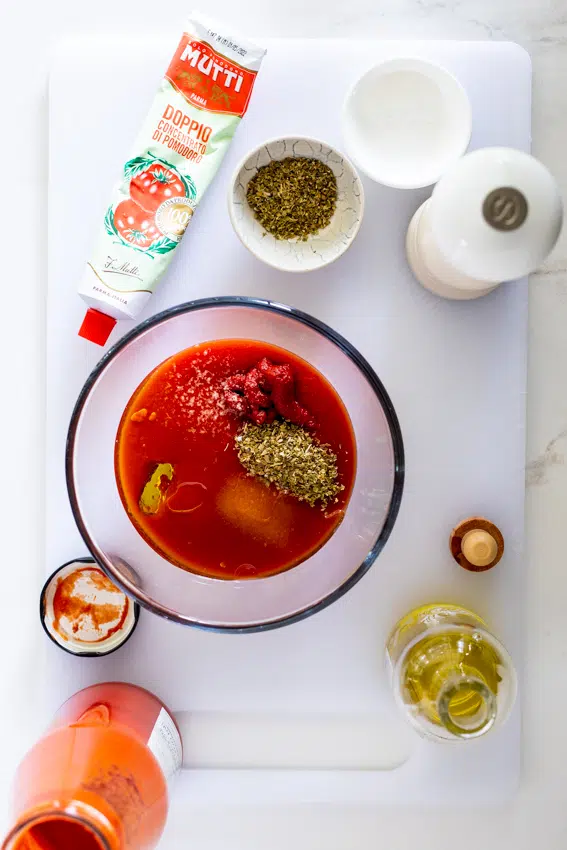
- Canned goods: Canned tomatoes (whole and crushed) along with tomato paste, coconut milk, canned chickpeas, canned beans, tuna.
- Oils and acids: Olive oil, vegetable oil, red wine vinegar, soy sauce.
- Dairy (used monthly regardless): Cheddar, mozzarella, feta, butter, eggs.
- Baking and sweeteners: Sugar, brown sugar, honey.
- Spices: Salt, pepper, garlic powder, onion powder, smoked paprika, cumin, chili powder, dried oregano. A well-stocked spice rack means you can flavor almost anything without buying specialty ingredients.
When these items go on special, buy extra. They all have long shelf lives and you’ll use them eventually. The cost per meal drops every time you buy in bulk at a reduced price.
What If I Don’t Stick to the Plan?
You won’t. Not perfectly, and that’s completely fine. Some nights plans change and you eat out instead. Some nights the kids want cereal for dinner and you just let it happen.
The value of the plan isn’t that you follow it rigidly. It’s that the thinking is done, the shopping is done and the ingredients are in the house. When you deviate on a Wednesday, you’ve got a stocked pantry to deviate with rather than an empty fridge and a takeout menu. And the meal you skipped just moves to another night. Nothing is wasted.
If you like having a weekly plan but sometimes don’t stick to it, the monthly approach actually helps because your pantry is always stocked with staples. Even when you pivot away from what you originally planned, you’ve got rice, pasta, canned tomatoes, spices and a protein in the freezer. That’s enough to improvise almost anything.
Tips for Making Meal Planning a Habit
- Start small. If a full month feels overwhelming, plan two weeks. Once that feels comfortable, extend to a month. The system is the same regardless of the timeframe.
- Reuse plans that work. If a week’s meals were a hit, save that plan and repeat it in a month or two. You don’t need to reinvent the wheel every single time. Most families are happy eating the same 10 to 15 meals on rotation as long as there’s variety within each week.
- Plan at the same time each month. Make it a habit rather than a chore. I sit down on the last Sunday of the month with a coffee and plan the next month. It takes about 30 minutes and it’s genuinely something I look forward to because it takes the mental load of dinner off my plate for the rest of the month.
- Involve your family. Ask everyone for 2 to 3 meals they’d like to eat this month. My kids love doing this so they browse Instagram or TikTok and send me ideas they like. This reduces complaints and gives people ownership. Kids who helped choose the meals are significantly more likely to eat without protest.
- Keep a running list of winners. Every time you make something the family loves, write it down. Over time you’ll build a master list of 30 to 40 proven meals that you can pull from whenever you sit down to plan. This makes the planning process faster every single month.
Free Monthly Meal Plan Template
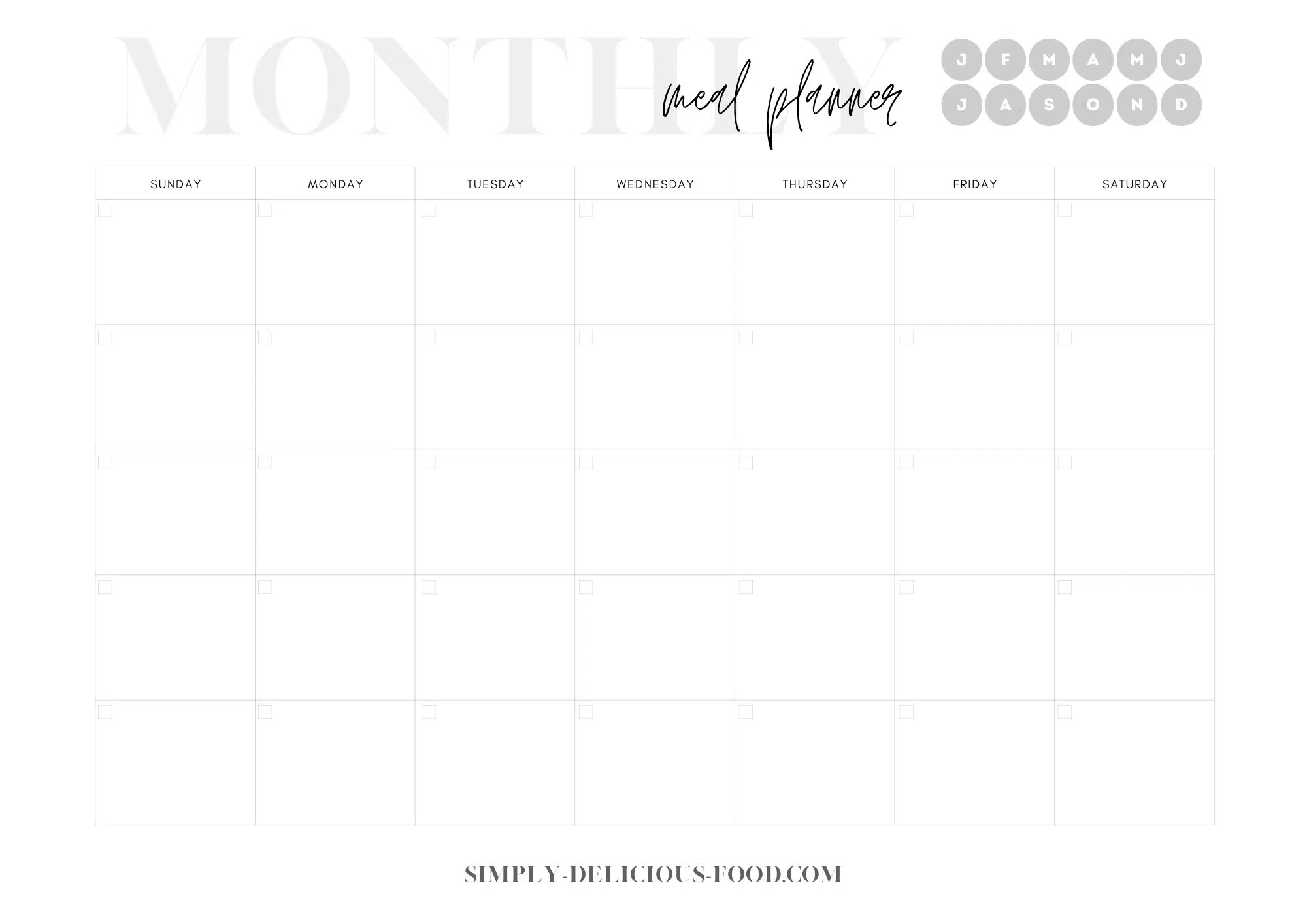
I’ve created a free printable monthly meal planner template as well as a blank grocery list that you can download and use. Circle the month at the top, add your own dates and keep it on your fridge.
I’ve been doing weekly plans for so long, but I’ve never thought to plan for the entire month. It makes so much sense! Thanks for the tips.
You’re so welcome!