
How to Turn Leftover Stew, Curry or Braises into Soup
That container in the fridge with just enough leftover stew for one person but not enough for a full dinner? Don’t throw it away. It’s the start of the best soup you’ll make all week.
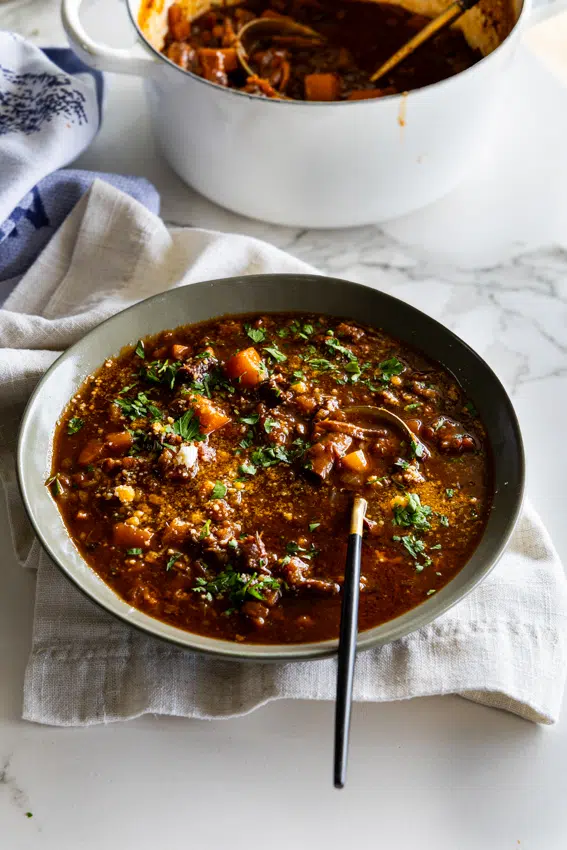
I made slow braised oxtail the other night and there wasn’t quite enough left for another dinner but far too much to toss. So I turned it into soup. The braising liquid, the tender shredded meat, all those hours of built-in flavor from the onions, garlic, herbs and wine. It was already a soup base. It just needed a little stretching.
This technique works with any leftover stew, curry or braise. Beef stew becomes a hearty vegetable beef soup. Leftover curry becomes a warming spiced broth. A braised short rib or oxtail becomes the richest soup you’ve ever tasted. The method is always the same and the beauty of it is that you barely need to do anything because the hard work was done when you cooked the original dish.

Why This Works So Well
The reason leftover stew makes better soup than starting from scratch is that the flavor base is already built. Think about what went into that original dish:
- A mirepoix or sofrito. Onions, carrots, celery (or whatever aromatic base you used) that were sautéed until golden and sweet. That’s 15 to 20 minutes of flavor development that’s already done.
- Herbs and spices. Bay leaves, thyme, rosemary, cumin, garam masala, whatever was in the original recipe. Those flavors have had hours to infuse into the sauce.
- Wine, stock or braising liquid. The liquid that everything simmered in has been reducing and concentrating for the entire cook time. It’s already richer and more complex than any stock you’d start a soup with.
- Browned meat. The Maillard reaction from searing the meat before braising created deep, savory flavor compounds that are now dissolved into the sauce.
All of that happened yesterday. Today, you’re just stretching it into a new meal. You don’t need to build flavor from scratch because it’s already there. That’s why a soup made from leftover stew or braise tastes like it simmered all day when it actually took 20 minutes.
How to Turn Any Leftover Stew into Soup
The technique is the same regardless of what you’re starting with.
Step 1: Sauté fresh vegetables. Heat a splash of oil in a large pot over medium heat. Add diced onion, carrot and celery (or whatever vegetables you have) and cook until softened, about 5 to 7 minutes. This is where a bag of prepped soup vegetables from the grocery store is a game changer. Most stores sell them ready to go and it cuts the prep to basically nothing.
Step 2: Shred the meat. Pull apart whatever meat is left in the stew using two forks. Shredded meat distributes more evenly through the soup and makes every spoonful satisfying rather than having one big chunk in an otherwise brothy bowl.
Step 3: Add the leftover stew. Tip the entire container of leftover stew, sauce and all, into the pot with the sautéed vegetables. Every drop of that sauce is concentrated flavor. Don’t leave anything behind.
Step 4: Add stock. Pour in enough stock (chicken, beef or vegetable depending on what you’re working with) to turn the thick stew consistency into a soup. How much stock depends on how much leftover you’re starting with and how brothy you want the soup. Start with 2 to 3 cups and add more as needed. You can always thin it further but you can’t un-dilute it.
Step 5: Simmer. Let everything simmer gently for 15 to 20 minutes until the fresh vegetables are tender and the flavors have come together.
Step 6: Season and serve. Taste the soup and adjust. You probably won’t need much seasoning because the original stew was already well-seasoned. Maybe a crack of pepper, a squeeze of lemon to brighten it up and a pinch of salt if it needs it. That’s it. Serve with crusty bread and enjoy the fact that you just turned almost-waste into a full meal.
Specific Leftover-to-Soup Ideas
Here are some of the best stew-to-soup transformations, with links to the original recipes where applicable:
Leftover Oxtail → Rich Oxtail Soup
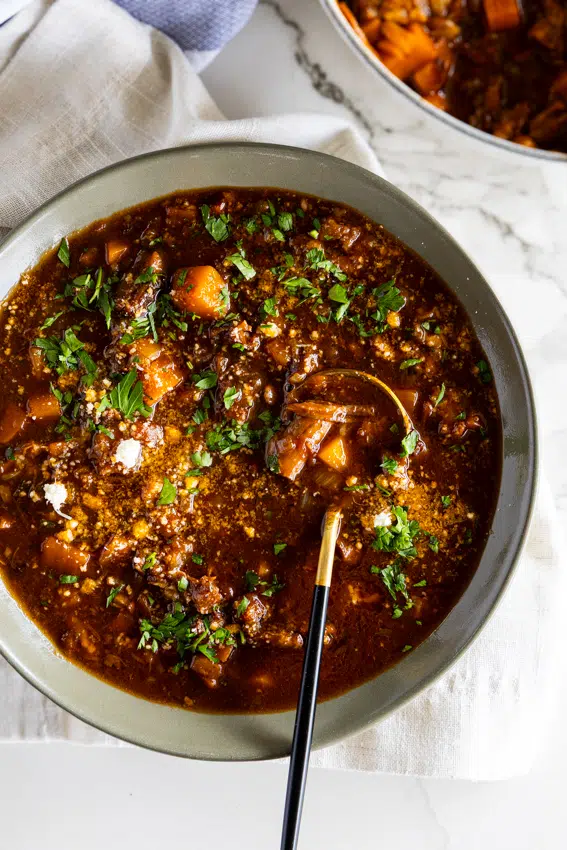
Leftover slow braised oxtail makes one of the richest, most deeply flavorful soups you’ll ever taste. Shred the tender meat off the bones, add it back to the braising liquid with fresh vegetables and stock. The gelatin from the bones gives the soup an incredible body and silkiness. Add a handful of barley, lentils or small pasta for substance.
Leftover Beef Stew → Vegetable Beef Soup
Any beef stew becomes a hearty vegetable beef soup with the addition of stock, extra vegetables and a can of diced tomatoes if you want. The stew’s gravy becomes the soup base and it’s already more flavorful than most soup recipes start with.
Leftover Curry → Spiced Broth
Leftover butter chicken, lamb curry or weeknight chicken curry becomes a warming spiced soup with the addition of stock or coconut milk. Add fresh spinach, chickpeas or rice noodles to stretch it into a full meal. The spices in the curry actually develop further when simmered again, so the soup often tastes even more complex than the original.
Leftover Bolognese → Lasagna Soup
Leftover bolognese becomes irresistible lasagna soup. Add beef stock, a splash of cream and simmer broken lasagna sheets or pasta of your choice until al dente. Serve with a sprinkle of mozzarella cheese.
Leftover Beef Ragu → Rich Beef and Pasta Soup
Leftover beef ragu stretched with stock, with some fresh greens stirred through and small pasta or gnocchi added, becomes a deeply savory, restaurant-quality soup in about 15 minutes.
Leftover Lamb Stew → Lamb and Root Vegetable Soup
Leftover slow braised lamb shanks or any lamb braise becomes an incredible soup with the addition of root vegetables (carrots, parsnips, potatoes), stock and a squeeze of lemon. The lamb fat and braising juices give the broth a richness that’s hard to replicate from scratch.
How to Store Leftover Soup
- Fridge. The finished soup keeps in an airtight container for up to 3 to 4 days. Like the original stew, it often tastes even better the next day as the flavors continue to develop.
- Freezer. Leftover soup freezes well for up to 3 months. Portion into containers or flat zip-lock bags. If you’ve added pasta or rice to the soup, be aware that they’ll absorb liquid during freezing and become softer when reheated. For the best freezer results, leave pasta and grains out and add them fresh when you reheat.
- Reheating. Warm gently on the stove over medium-low heat. Add a splash of stock if the soup has thickened during storage. Taste and adjust the seasoning after reheating as flavors can mellow slightly.
Serving Suggestions
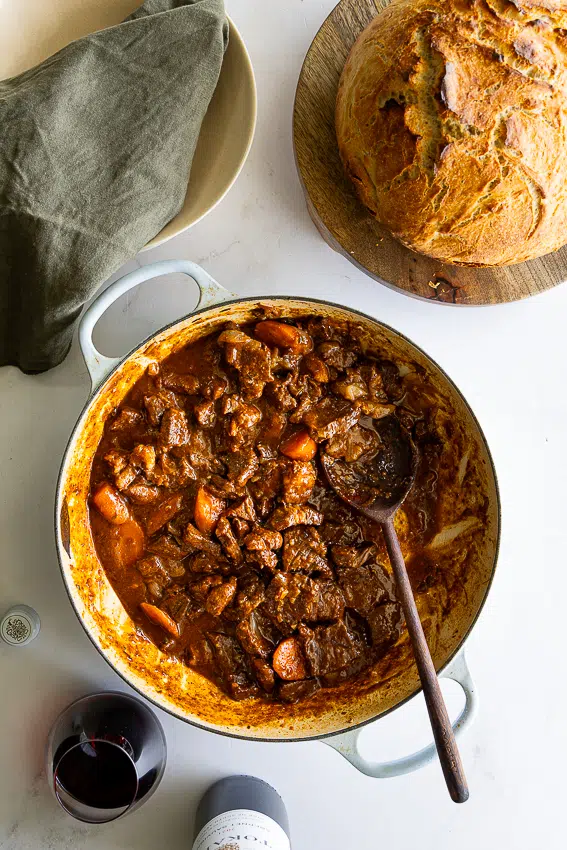
Soup is always delicious with fresh bread. Crusty bread, slathered in butter is the ultimate side to a warm bowl of soup.
Frequently Asked Questions
Yes. The technique works with virtually any leftover stew, curry, braise or slow-cooked dish. Beef stew, oxtail, braised lamb, chicken curry, coconut curry, bolognese, ragu. If it has meat, sauce and built-in flavor, it can become soup.
Even a cup or two of leftover stew is enough. The stock stretches it and the fresh vegetables add bulk. You’re not recreating the original dish, you’re building a new one that uses the leftover as a flavor base. More leftover means a richer soup. Less leftover means a lighter, brothier soup. Both are good.
You don’t have to but I’d recommend it. The vegetables in the original stew are usually very soft after hours of cooking. Adding fresh sautéed vegetables gives the soup texture and makes it feel like a new meal rather than diluted leftovers.
Yes. If you prefer a smooth soup, blend all or part of it with an immersion blender. This works especially well with leftover curry-based soups where a smooth, creamy consistency is appealing. For a chunkier soup, blend half and stir it back in. This thickens the base while keeping some texture.
Absolutely. If you regularly make stews, curries or braises, start freezing small portions of the leftover sauce and meat specifically for future soups. Label them “soup base” with the date. When you want soup, thaw a container, sauté some fresh vegetables and build the soup from there. It’s one of the best uses for those odds-and-ends containers that aren’t quite enough for a full meal.
More Soup Recipes
Easy Healthy Chicken Broccoli Soup
Roasted Butternut Soup
Creamy Chicken Noodle Soup
Mexican Chicken Soup
Vegetable Soup