
Creamy Coconut Curry Chicken Thighs (Easy Indian-Spiced Recipe)
These coconut curry chicken thighs are everything you want from a weeknight curry. Crispy-skinned chicken in a rich, aromatic coconut sauce loaded with warm Indian spices, finished with tender broccoli and served over rice. The whole thing comes together in under 30 minutes and tastes like something that took all afternoon.

What makes this recipe different from most coconut curry chicken recipes is the approach. Instead of using a store-bought curry paste, I build the sauce from scratch with a proper Indian spice blend of garam masala, coriander, cumin, turmeric and chilli powder. It takes an extra minute of measuring spices and the depth of flavor is on another level. The chicken thighs are seared until the skin is deeply golden and crispy, then nestled back into the sauce skin-side up so the skin stays crunchy while the meat absorbs all that coconut curry flavour.
What Spices Go in Coconut Curry?
The spice blend is what sets this curry apart. Rather than relying on a jar of curry paste, this recipe uses individual spices that you probably already have in your cupboard:
- Garam masala is the backbone. It’s a warm, aromatic blend of cinnamon, cardamom, cloves and black pepper that gives the curry its signature depth. Every brand is slightly different, so find one you like and stick with it. My Masala spice blend is a great option.
- Ground coriander adds a subtle, citrusy earthiness that rounds out the other spices. It’s one of those ingredients you don’t notice on its own, but the curry tastes flat without it.
- Ground cumin brings a warm, slightly smoky, savory note. It pairs naturally with coriander and the two together form the base of most Indian curry spice blends.
- Turmeric adds color and a gentle, earthy bitterness. It’s what gives the sauce that gorgeous golden hue. You don’t need much as it can become overpowering if you’re heavy-handed.
- Paprika adds a mild sweetness and deepens the colour of the sauce. I use regular paprika here, but smoked paprika adds a lovely extra dimension if you have it.
- Chilli powder brings the heat. The amount is up to you. I use enough for a gentle warmth rather than a burn, but you can easily increase or decrease to suit your family’s heat tolerance.
The key to getting the best flavour from these spices is toasting them briefly in the pan with the garlic and ginger before adding the liquid. That 30 seconds of heat wakes up the essential oils in the spices and transforms them from dusty and flat to warm and fragrant.
Ingredients and Substitutions
- Chicken thighs (bone-in, skin-on). Bone-in, skin-on thighs are my first choice for this curry. The bone keeps the meat incredibly juicy during cooking and the skin crisps up beautifully when seared. They’re also more forgiving than breast, so even if you overshoot the cooking time by a few minutes they’ll still be tender. See below for notes on using boneless thighs, drumsticks or chicken breast instead.
- Avocado oil. Any neutral oil (vegetable, canola, sunflower) works perfectly well. Olive oil is fine too, though the flavor is slightly different.
- Onion. One large onion, diced. It forms the base of the sauce along with the garlic and ginger. Cook it until soft and translucent before adding the spices so it sweetens and mellows.
- Garlic and ginger. Fresh is best for both. Mince the garlic and grate the ginger finely. Store-bought garlic and ginger paste works well if you’re short on time and want to cut down on prep.
- Spices. Garam masala, ground coriander, ground cumin, paprika, turmeric, and chilli powder. See the section above for what each one does. If you have a homemade masala spice mix, use that instead for an even more personal touch.
- Coconut milk. Use full-fat coconut milk for the richest, creamiest sauce. Light coconut milk will work but the sauce will be thinner and less luxurious. Give the tin a good shake before opening as the cream tends to separate and settle at the top.
- Cream. A splash of cream at the end adds richness and rounds out the sauce. It’s optional, but it makes a noticeable difference to the texture and silkiness. Leave it out for a dairy-free version.
- Honey. Just a small drizzle to balance the heat and the acidity from the lemon juice. It smooths out the flavor and adds a subtle sweetness that ties everything together. Maple syrup or sugar works as a substitute.
- Lemon juice. Fresh lemon juice brightens the curry and stops it from tasting heavy. Add it with the coconut milk so it has time to meld into the sauce. Don’t skip this as it makes more of a difference than you’d expect.
- Salt and black pepper. Season generously. Curry spices need salt to really sing. Taste the sauce before serving and adjust as needed.
- Broccoli. I love broccoli in this curry but it’s not the only option. Sugar snap peas, green beans, spinach or baby corn all work beautifully. See the vegetable variations section below for more ideas.
Chicken Options: Bone-In vs Boneless
Bone-in, skin-on thighs (recommended). This is my preferred cut for this curry. The bone keeps the meat juicy, the skin crisps beautifully, and they’re incredibly forgiving with timing. Cook for 15-20 minutes in the sauce.
Boneless, skinless thighs. These work well if you prefer less hands-on cooking. You won’t get the crispy skin, but the thigh meat is still juicy and flavorful. Sear them for 2 to 3 minutes per side, then simmer in the sauce for about 10 minutes. They cook faster so keep an eye on them.
Drumsticks. A great budget-friendly option. Sear until golden all over, then simmer in the sauce for 20 to 25 minutes as they take longer to cook through than thighs due to the thicker meat around the bone.
Chicken breast. If you prefer breast, slice it into thick pieces so it has enough surface area to stay moist in the sauce. Sear quickly over high heat then simmer in the sauce for 8 to 10 minutes. Be careful not to overcook as breast dries out much faster than thigh meat. Thighs are more forgiving and my recommendation for this recipe, but breast works if that’s your preference.
Vegetable Variations
Broccoli is my go-to for this curry but it’s very flexible:
- Spinach. Stir a few large handfuls of baby spinach into the sauce in the last 2 minutes of cooking. It wilts down quickly and adds a lovely color and mild flavour.
- Sweet potato. Peel and cube a medium sweet potato and add it to the sauce when you return the chicken. It needs the full 20 minutes of simmering to cook through and adds a natural sweetness that works beautifully with the coconut and spices.
- Chickpeas. Drain and rinse a tin of chickpeas and add them with the coconut milk. They bulk out the curry and add protein, making it even more filling. Great for stretching the recipe to serve more people.
- Bell peppers. Slice and add them to the pan after the onion has softened. They add color and a gentle sweetness that complements the curry spices.
- Green beans or sugar snap peas. Add them in the last 3 to 4 minutes of cooking so they stay crisp and bright green. They add a fresh crunch that contrasts nicely with the rich sauce.
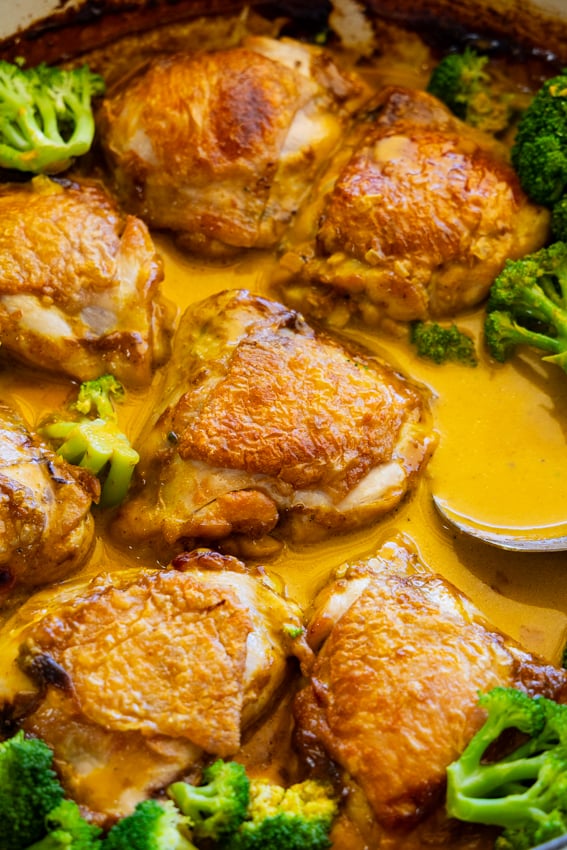
How to Make Coconut Curry Chicken Thighs
This whole recipe comes together in under 30 minutes, making it perfect for a weeknight.
Step 1: Sear the chicken thighs. Place the chicken thighs skin-side down in a cold pan with the coconut oil. Starting in a cold pan is the key here. It allows the chicken fat under the skin to render out slowly as the pan heats up, which gives you the crispiest, most golden skin you’ll ever get on a chicken thigh. Cook without moving them until the skin is deep golden brown and crispy, about 8-10 minutes. Flip and cook for another 5 minutes to get some color on the other side. Remove from the pan and set aside.
Step 2: Build the curry sauce. In the same pan with all that rendered chicken fat and flavor, add the diced onion. Cook until soft and translucent, about 3 to 4 minutes. Add the minced garlic, grated ginger and all the spices. Stir and cook for about 30 seconds until the spices are fragrant and start to stick slightly to the pan. This brief toasting is what brings the spices to life.
Step 3: Add the liquid. Pour in the coconut milk, chicken stock if using, honey and lemon juice. Stir everything together, scraping up any spices or fond from the bottom of the pan. Bring to a gentle simmer and let the sauce reduce slightly for 2 to 3 minutes.
Step 4: Return the chicken. Nestle the chicken thighs back into the sauce, skin-side up. This is important as keeping the skin above the liquid preserves that crispy texture you worked for in step one. Let the curry simmer gently for 15-20 minutes (or pop it in a hot oven and let it bake – this also ensures the chicken skin stays super crispy) until the chicken is cooked through and the sauce has thickened.
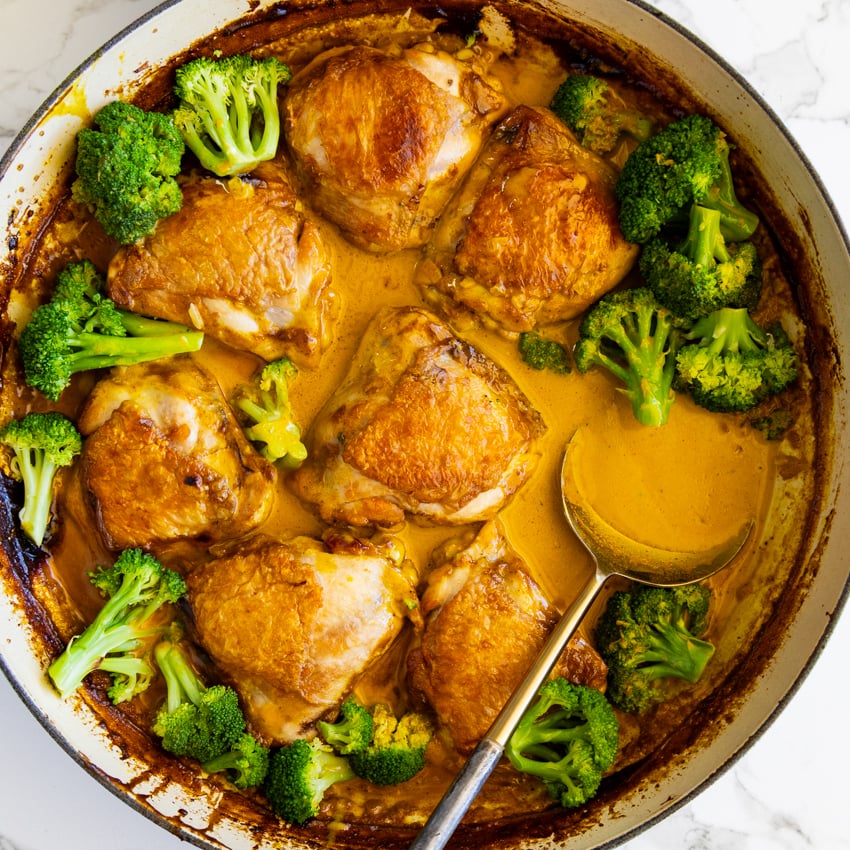
Step 5: Add vegetables and finish. If using broccoli, steam it separately until just tender, then add it to the curry to finish in the sauce for the last minute or two. This keeps the broccoli vibrant green and slightly crunchy rather than mushy. Finish with a splash of cream, taste the sauce and adjust seasoning with salt and pepper. Serve over basmati rice.
How to Store and Reheat Coconut Curry Chicken
- Fridge. Store leftovers in an airtight container in the fridge for up to 3 days. The flavors actually develop and deepen overnight, so leftovers are often even better the next day.
- Reheating. Warm gently in a pan over medium-low heat, adding a splash of water or coconut milk if the sauce has thickened too much. Avoid high heat as it can cause the coconut milk to split. The microwave works in a pinch but the stovetop gives you more control.
- Freezing. This curry freezes well for up to 3 months. Let it cool completely, then transfer to freezer-safe containers. The chicken stays tender when reheated from frozen. Thaw overnight in the fridge and reheat gently on the stove. If you’ve added broccoli, it may soften after freezing so you might prefer to add fresh vegetables when you reheat.
- Meal prep. This is a great recipe for meal prepping. Make a double batch of the curry and portion it into containers with rice for easy grab-and-go lunches during the week.
Tips for the Best Coconut Curry Chicken Thighs
Start the chicken in a cold pan. I know this sounds wrong, but it works brilliantly. Cold pan, skin-side down. The fat renders slowly as the pan heats, giving you crispier skin than any other method. Don’t touch or move the thighs until the skin releases easily from the pan.
Toast your spices. That 30 seconds of cooking the spices in the hot pan with the garlic and ginger makes an enormous difference. Raw spices taste dusty and flat. Toasted spices taste warm, fragrant and complex.
Keep the skin above the sauce. When you add the chicken back to the curry, make sure the skin stays above the liquid. Submerging it undoes all the work you did getting it crispy.
Use full-fat coconut milk. Light coconut milk makes a thin, watery sauce. Full-fat gives you the rich, creamy curry you want. It’s worth it.
Don’t skip the lemon juice. It might seem odd in a curry, but the acidity brightens everything and prevents the dish from tasting one-dimensional. A squeeze of fresh lemon at the end lifts the whole thing.
Steam the broccoli separately. Adding raw broccoli directly to the sauce gives you overcooked, grey-green broccoli. Steaming it first until just tender, then adding it to the curry at the very end, keeps the color vibrant and the texture right.
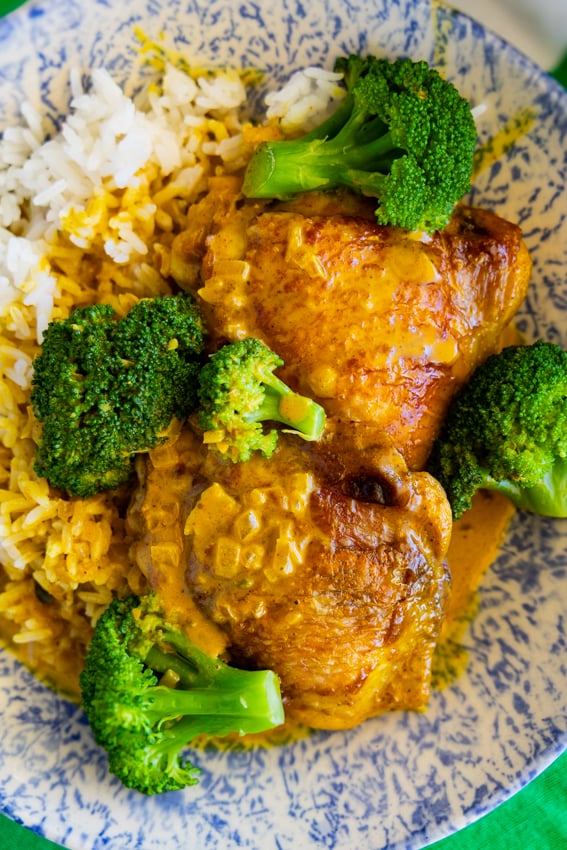
What to Serve with Coconut Curry Chicken
- Basmati rice. The classic choice and my recommendation. Fluffy basmati absorbs the sauce beautifully and keeps things simple. Rinse the rice before cooking for the fluffiest result. For a leveled-up version, try my curry rice recipe.
- Naan. Warm naan is perfect for scooping up the sauce. Store-bought naan warmed in a dry pan or under the grill for a minute works perfectly well.
- Roti or flatbread. A lighter alternative to naan that’s just as good for mopping up sauce.
- Cucumber raita. Grated or chopped cucumber, yogurt, a pinch of salt and a squeeze of lemon. Takes 2 minutes to make and adds a cool, creamy contrast to the warm, spiced curry. I’d highly recommend this alongside the curry.
- Mango chutney. A spoonful of sweet mango chutney on the side adds another flavour dimension. The sweetness plays off the heat in the curry beautifully.
- Steamed greens. If you haven’t added vegetables to the curry itself, a side of steamed broccoli, green beans, or wilted spinach rounds out the plate.
For more curry recipes, try my Shrimp Curry, Easy Weeknight Chicken Curry, Cauliflower Korma Curry, or Easy Cauliflower Tikka Masala Curry. And if you love chicken thighs as much as I do, check out my Chicken Thighs in Creamy Garlic Parmesan Sauce, Rosemary Lemon Chicken Thighs, or Crispy Chicken Thighs on Cheesy Broccoli Rice.
Video
Ingredients
- 1 tbsp avocado oil
- 6-8 chicken thighs skin-on, bone-in
- 1 onion finely chopped
- 3 garlic cloves crushed
- 1 tsp crushed ginger
- 2 tsp curry powder I used Garam Masala
- 1 tsp ground coriander
- 1 tsp ground cumin
- 1 tsp ground turmeric
- 1/2 tsp smoked paprika
- 1/2 tsp chilli powder/cayenne pepper optional
- ½ cup chicken stock
- 400 g (14o) coconut milk
- 2 tbsp cream optional
- 1 tsp honey optional
- juice of 1/2 lemon
- salt and pepper to taste
- 2 cups broccoli florets
Instructions
- Drizzle the avocado oil in a large frying pan then add the chicken thighs, skin-side down. Place the pan over medium-high heat and fry the chicken until golden and crisp, remove and set aside.
- Fry the onion in the same pan (add a little more oil if needed) until soft and translucent then add the ginger, garlic and spices and fry for another 30 seconds until fragrant.
- Pour in the coconut milk, chicken stock, cream and honey and allow to come to a simmer. Add the chicken thighs to the sauce then turn down the heat and allow to cook for 15-20 minutes until the chicken is cooked.
- In the meantime, steam the broccoli until almost cooked through and transfer to the chicken and coconut curry sauce to finish cooking.
- Season the chicken with lemon juice, salt and pepper and serve.
Nutrition
Frequently Asked Questions
Yes, but the texture will be different. Chicken breast is leaner and dries out more easily than thigh meat. Cut it into thick pieces so it holds up in the sauce and reduce the simmering time to about 8 to 10 minutes. You won’t get the crispy skin element, but the sauce will still be delicious. Thighs are more forgiving and my recommendation for this recipe, but breast works if that’s what you prefer.
Absolutely. Boneless, skinless thighs work well here. Sear them for 2 to 3 minutes per side, then simmer in the sauce for about 10 minutes. They cook faster than bone-in so watch the timing. You’ll lose the crispy skin, but the meat will still be juicy and flavorful.
Yes. Reduce or leave out the chilli powder entirely and add a little more cream at the end to mellow the sauce. The remaining spices (garam masala, coriander, cumin, turmeric) provide plenty of warm flavor without any heat. My kids eat this version happily.
Not in this case. Thai curries typically use a prepared curry paste (red, green or yellow) made with lemongrass, galangal and kaffir lime. This recipe uses individual Indian spices (garam masala, cumin, coriander, turmeric) which give it a completely different flavour profile. Both use coconut milk, but the spice base is what makes them distinct.
Yes. It freezes well for up to 3 months. Cool completely before transferring to freezer-safe containers. The chicken stays tender when reheated. If you’ve included broccoli, it may soften after freezing, so consider adding fresh vegetables when you reheat instead.
Coconut milk can split if heated too aggressively, especially full-fat varieties. Keep the curry at a gentle simmer rather than a rolling boil and stir occasionally. If it does split, the flavor is unaffected, just the appearance. A splash of cream stirred through at the end usually brings it back together.
For a lighter sauce, use half coconut milk and half chicken stock. For a completely coconut-free version, a combination of chicken stock and cream gives you a rich sauce, though the flavor will be different. Greek yogurt stirred in at the end (off the heat so it doesn’t split) adds creaminess without coconut.
This depends on serving size and whether you include rice, but a serving of the curry alone (2 thighs with sauce and broccoli) is approximately 450 to 500 calories. Full-fat coconut milk is calorie-dense, so using light coconut milk or reducing the amount will lower this. Using skinless chicken thighs will also reduce the calories. Serving with a measured portion of rice adds approximately 200 calories.
Yes. I would suggest using skinless chicken thighs as the skin won’t stay crisp in the slow-cooker. Cook on low for 4 to 6 hours or high for 2 to 3 hours. The skin won’t stay crispy in the slow cooker, but the meat will be incredibly tender and the sauce will be deeply flavored. Add the broccoli or other vegetables in the last 30 minutes so they don’t overcook. You may need to reduce the sauce on the stove afterwards if it’s thinner than you’d like.
Yes. Again, I would suggest using skinless chicken. Use the sauté function to sear the chicken thighs and build the sauce directly in the pot. Pressure cook on high for 8 to 10 minutes with a natural release. Add steamed vegetables after releasing the pressure. If the sauce is too thin, switch back to the sauté function and let it reduce for a few minutes until it thickens.
Absolutely delicious. Really loved the sauce flavour. I used skinless and boneless thighs and put them in the slow cooker after frying, then finished the sauce and added that with some mushrooms as we were going out. Lovely to come home to.
Love your substitutions! So glad you enjoyed this recipe, Diana!
The recipe tastes good but the chicken took 1hr to cook through, not 15minutes.
Hi there! I’m glad you liked the flavor of the dish – were your chicken thighs very large? The chicken thighs should take around 25-30 minutes in total (if you add up the initial cook in the pan before adding the sauce).
I made this tonight and it was pretty good, the family enjoyed it. Served over seasoned couscous. I think it may be better with boneless skinless thighs though.
Creamy and delicious!! Already saved for next time!
Thanks Sarah, the coconut curry food is amazing
I cooked at the weekend, it tasted great thanks
I’m coming to this a bit late but without trying it I can tell how good this would be. So I’m going to have a go with it very soon. The coconut and spice will all make it a supreme Chicken madras if I use a good amount of chilli powder. Lovely recipe thank you