
White Wine Garlic Salmon
You’re going to love this easy white wine garlic salmon recipe. Juicy, tender salmon pan fried and cooked in a delicious white wine garlic sauce is an easy,fool-proof recipe. Perfect served with greens for dinner.
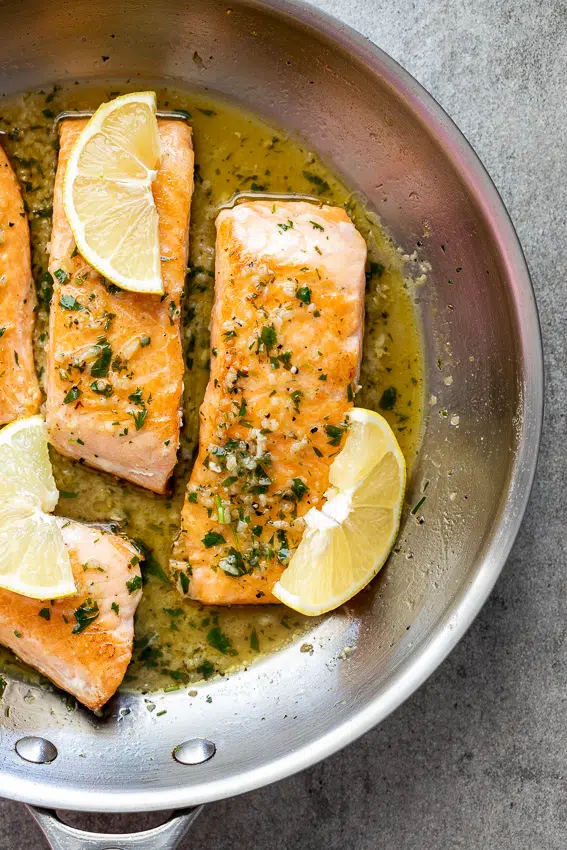
Ingredients and Substitutions
- Salmon. Fresh or frozen salmon filets can be used for this recipe. King salmon, Alaska salmon, Norwegian Salmon, etc. can all be used. Use whatever is local/seasonal to your area. Look for fresh, bright-colored salmon with no fishy smell. Wild-caught (like sockeye or coho) has firmer texture and deeper flavor, while Atlantic (usually farm-raised) is milder and fattier. Both work great! Choose center-cut fillets for even thickness. This recipe will also work with any white fish.
- Butter. I used salted butter but unsalted butter can be substituted. Olive oil can be used but the sauce won’t be quite as creamy and delicious.
- Fresh garlic cloves. I prefer using fresh garlic but garlic powder can be used in a pinch.
- White wine. Chicken stock can be substituted. I used Sauvignon Blanc but any dry white wine of your choice can be used. Chardonnay, Pinot Grigio, Chenin Blanc, etc.
- Fresh lemon juice.
- Fresh parsley. Other herbs like chives, thyme, oregano and dill are all delicious with salmon.
- Salt and black pepper.
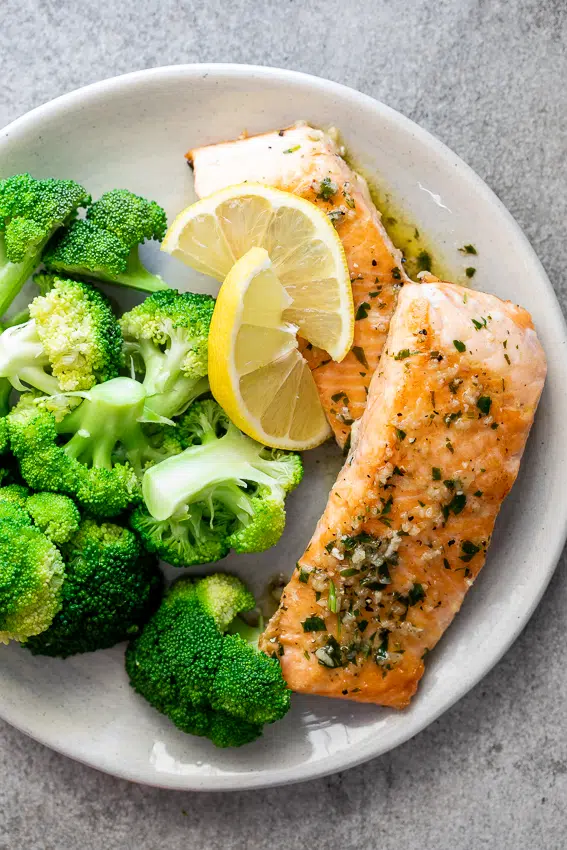
How to cook salmon in a pan
- To prevent salmon from sticking to a frying pan, make sure the pan you’re cooking with is very hot – if you add a splash of water the water should form little beads and “dance” across the pan. Pat the salmon dry on all sides with paper towel then preheat a neutral cooking oil (like canola oil or avocado oil) until hot and shimmering then carefully place the salmon in the pan, skin-side down. If the salmon starts to curl up, gently press it down with a spatula to allow to the skin to make full contact with the pan.
- Cook the salmon for 3-4 minutes on the skin side before flipping over and cooking for 1-2 minutes further. At this stage I remove the salmon from the pan and make the white wine pan sauce. You can serve the seared salmon with garlic butter sauce or lemon butter sauce as well.
How long to cook salmon
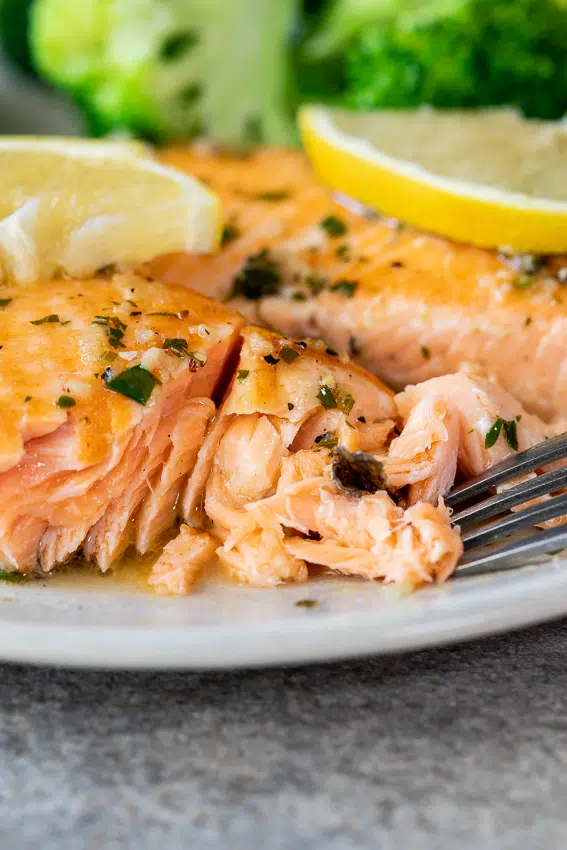
Salmon is cooked when the flesh flakes easily. It’s best not overcooked so cooking for 3-4 minutes on the skin side and another 1-2 minutes on the flesh-side should result in perfectly cooked fish (depending on thickness). Salmon is safe to eat when the internal temperature reaches 145°F/63°C on a meat thermometer.
Can I make this ahead?
The salmon is definitely best served immediately after cooking but leftover salmon can be kept in an airtight container in the fridge for up to 3-4 days and reheated in the microwave oven before serving.
Serving Suggestions
This salmon and the pan sauce is delicious served with pretty much any side dish for busy weeknights. We love it with rice, mashed potatoes or crusty bread to soak up all the sauce. We also love it with veggies like broccoli, sugar snap peas, cauliflower or green beans or a big salad.
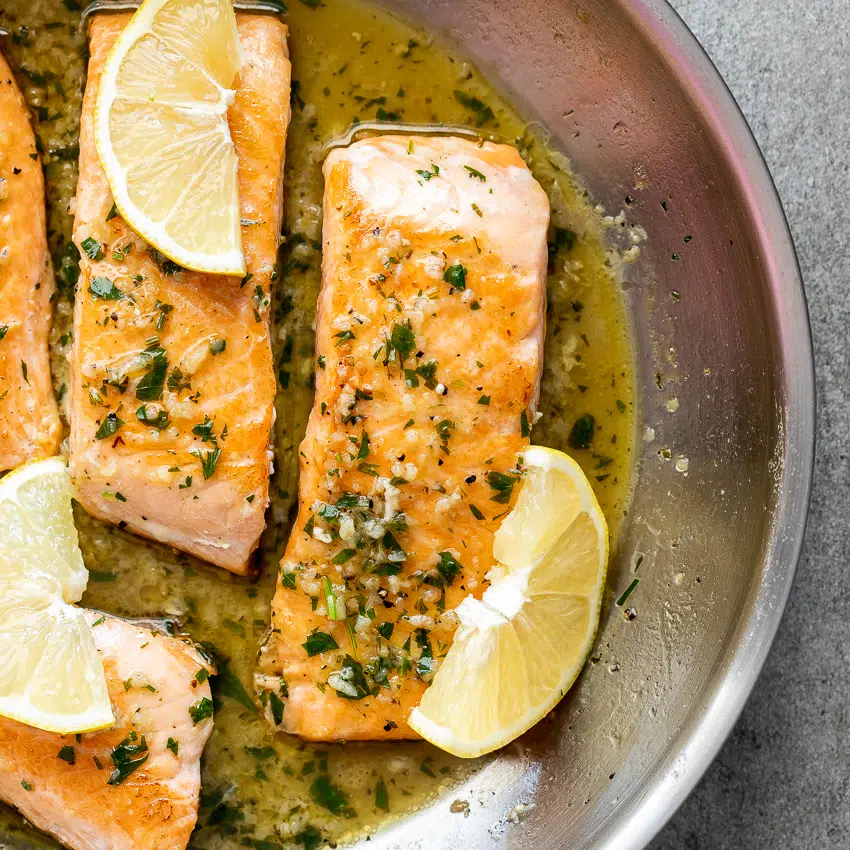
Video
Ingredients
- 4 x 150g (5-6oz) salmon fillets skin on
- 2 tbsp butter
- 3-4 garlic cloves crushed
- 1 cup dry white wine
- 1-2 tbsp lemon juice
- 2 tbsp chopped parsley
Instructions
- Heat a large frying pan over high heat and add a splash of canola oil.
- Dry the salmon fillets with paper towel and season generously with salt.
- Carefully place the salmon into the hot pan, skin-side down, and turn down the heat to medium-high. Cook the salmon for 3-4 minutes until the skin is golden brown and crisp then flip over. Cook for another 1-2 minutes on the flesh-side until the salmon is cooked through. Remove from the pan and set aside.
- Melt the butter in the pan and add the garlic. Fry until fragrant then add the wine and lemon juice.
- Allow to simmer and reduce for 4-5 minutes then add the parsley and season to taste.
- Add the salmon back into the pan and baste with the sauce, allowing the salmon to heat back up.
- Serve with extra lemon wedges.
Nutrition
FAQ
Yes! Thaw it completely in the refrigerator overnight first. Pat it very dry with paper towels before cooking – excess moisture will prevent proper browning and make the sauce watery. It can also cause the salmon to stick to the pan.
Make sure the pan is hot enough before adding salmon, use enough oil, and don’t move the fish too soon – it will release naturally when a crust forms (usually 3-4 minutes). Pat the salmon very dry before cooking.
The salmon should flake easily with a fork and reach an internal temperature of 145°F/62°C. It should be opaque throughout but still moist in the center. Slightly underdone is better than overdone – it will continue cooking slightly after you remove it from heat.
Yes! Substitute with chicken or vegetable broth plus a tablespoon of lemon juice for acidity. The flavor will be slightly different but still delicious. You could also use a splash of white wine vinegar diluted with broth.
This is a thinner sauce, but you can let it simmer a bit longer to reduce, or whisk in a small pat of cold butter at the end (this also adds richness and shine). You can also make a quick slurry with 1 teaspoon cornstarch mixed with 1 tablespoon cold water, then whisk it into the simmering sauce if you want a thicker consistency.
It’s up to you! Skin-on helps hold the fillet together during cooking and adds flavor. If keeping it on, cook skin-side down first until crispy, then flip. If you prefer skinless, that works perfectly too.
Fresh garlic is really best for this recipe since it’s a star flavor, but in a pinch, use ½ teaspoon garlic powder. Add it with the wine so it doesn’t burn. The flavor won’t be quite as vibrant.
Fresh lemon juice is strongly recommended – it makes a noticeable difference in brightness and flavor. Bottled lemon juice has a more bitter, less fresh taste that won’t complement the salmon as well.
Best I ever had.
Fast, simple & extremely tasty. The garlic lemon & white wine make a delicious complement to the salmon. Will definitely make this one again
Omg! I made this with a skinless filet. It took about 14 minutes from start to finish. I served it with steamed broccoli over some leftover white rice. I used a little less lemon and added some Aleppo pepper to the sauce – just a pinch – as it was simmering. Fantastic!! Thanks for yet another impressive yet simple recipe that is immediately going into regular rotation!!
That is so great to hear Elaine! I’m so glad you liked this recipe. The Aleppo pepper sounds like an AMAZING addition!
Hello I made this sauce as written but the way it’s written isn’t right. The sauce would never emulsify. It stayed separated. I ended up needing to add a couple cold pats of butter at the end to try to emulsify. And I didn’t want to add too much butter to make it even fattier. So I ended up with a very loose sauce. I do enjoy the flavor though.
Butter should be added at the end to emulsify, not the beginning. For this kind of sauce anyway.
I would start with an oil with the garlic, then do the other steps, then do butter at the very end. And it does need more butter to properly emulsify it. At least, with the measurements provided.
The flavor is quite nice though.
Hi Samantha. This white wine garlic sauce isn’t an emulsified sauce in the style of French sauces. If you want an emulsified sauce you are totally right, you’ll add the cold butter to the sauce and whisk to create a cohesive sauce.
This recipe made the salmon quite tender! No overbearing garlic, or lemon flavor. Easy to make.
Simply beautiful! Thanks Alida,
So delicious!!!
I made this tonight and it was FANTASTIC!! We love garlic, so I added a bit more. Definitely a new favorite in our house!! I wish I could share a picture
So happy you liked it Felicia. If you go to the recipe on Pinterest, you can upload a photo there: https://www.pinterest.com/pin/3940718411412199/
What type of white wine would you suggest?
I like something like Sauvignon Blanc or Chenin Blanc. Chardonnay’s oakiness can be a little overpowering.
Delicious ! Looking forward to making it again. I served green beans and a quinoa & wild rice mixtire with it.
That sounds fantastic. So happy you liked it!
Succulent salmon in the most delicious sauce. A new favorite of ours! Thanks!
Glad you liked it! 🙂
Such an easy, tasty dish Alida. I bet my husband could even manage this one on his own. So nice and light for spring and summer!
He would rock this, it’s SO easy!