
The Science of Marinating
Every marinade you’ve ever made follows the same formula. Whether it’s a lemon herb marinade, a teriyaki glaze, a tandoori yogurt rub or a simple balsamic and olive oil marinade, the structure never changes. Once you understand the science behind why marinades work, you don’t need a recipe and can start building your own from whatever you have on hand.
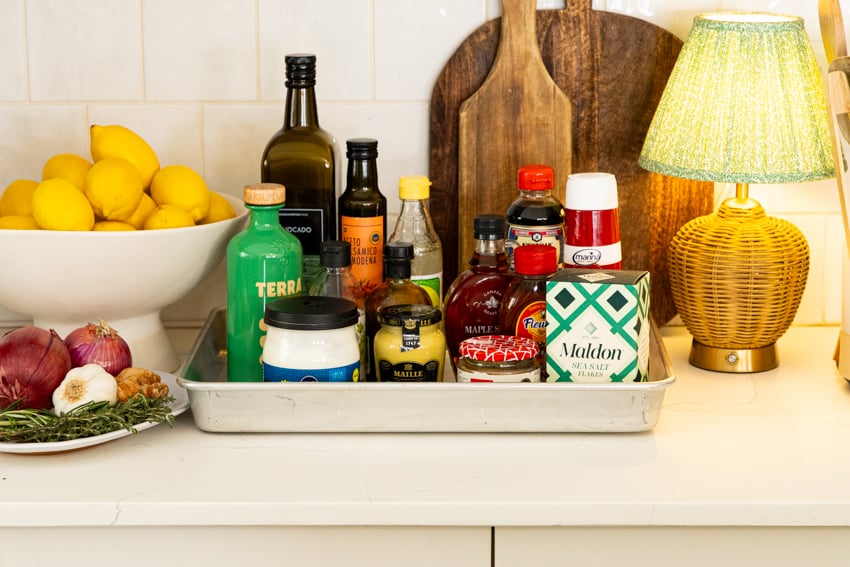
I’ve shared my favorite chicken marinades and steak marinades on the blog before. But I wanted to go a bit deeper on the science behind marinating and why it makes such a big difference to protein. Explaining the formula behind marinades also gives you the information to come up with your own without always having to follow a recipe. This way you can marinate any protein for any cuisine or any occasion.
What Marinating Actually Does
When you marinate meat, three things happen at once:
- You add flavor. The aromatics, spices, herbs and seasonings in the marinade infuse the surface of the meat with flavor. The longer the meat sits in the marinade, the deeper that flavor penetrates. Most of the flavor stays in the outer layer of the meat (marinades don’t penetrate all the way to the center of a thick cut) which is why thin cuts, slashed or scored surfaces and longer marinating times give you more flavor.
- You tenderize the surface. The acid in a marinade (lemon juice, vinegar, yogurt, buttermilk) gently breaks down proteins and connective tissue on the surface of the meat. This makes the outer layer more tender and creates a surface that browns and caramelizes beautifully when cooked. A word of caution: too much acid or too long in an acidic marinade can make the surface mushy rather than tender. A few hours is enough for most acidic marinades. Yogurt-based marinades are gentler and can go overnight.
- You brine it. The salt in a marinade (whether it’s actual salt, soy sauce, fish sauce or miso) penetrates the meat and changes how the proteins hold water. A brined piece of meat holds onto its juices during cooking rather than squeezing them out, which means a juicier end result.
The Formula
Every marinade is built from four components:
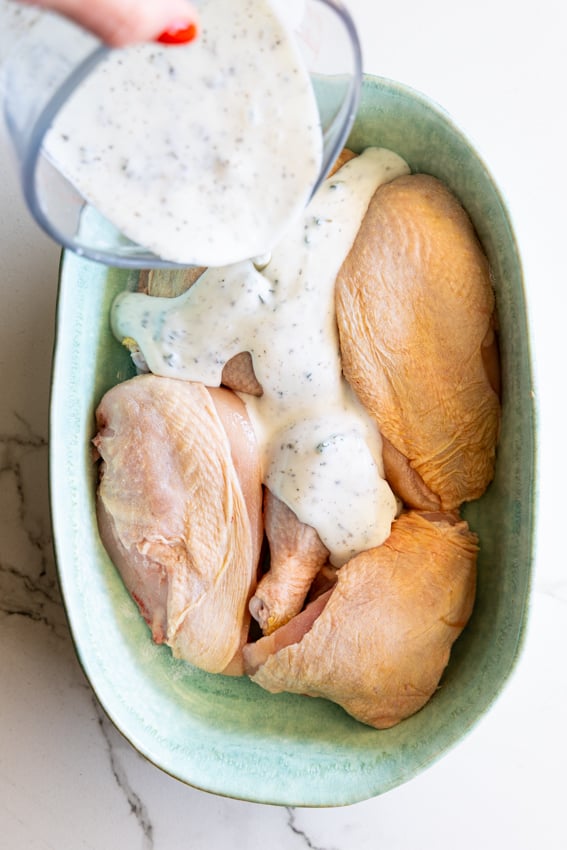
1. Fat
Olive oil, avocado oil, sesame oil, yogurt or coconut milk. The fat serves three purposes: it carries fat-soluble flavors into the meat (many spices and aromatics release their flavor compounds in fat, not water), it keeps the meat moist during cooking by creating a thin coating on the surface and it helps the meat brown rather than steam when it hits a hot pan or grill.
My go-to fats: Olive oil or avocado oil for Mediterranean, Mexican and general-purpose marinades. Sesame oil for Asian marinades. Greek yogurt for Indian-style marinades (yogurt acts as both the fat and the acid).
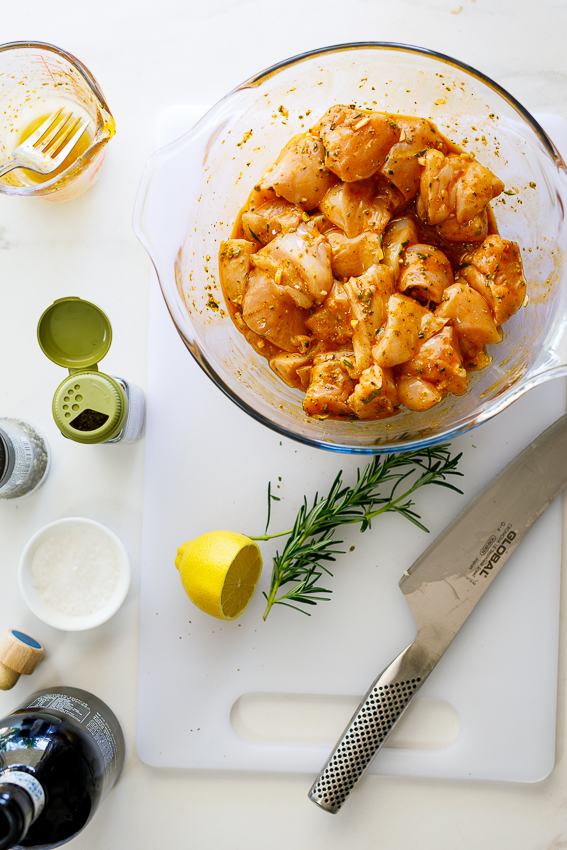
2. Acid
Lemon juice, lime juice, vinegar (red wine, apple cider, balsamic, rice), buttermilk, yogurt or wine. The acid tenderizes the surface of the meat by breaking down connective tissue. It also cuts through richness and balances the other flavors in the marinade so nothing tastes flat or one-dimensional.
The type of acid you choose determines the cuisine. Lemon and red wine vinegar = Mediterranean. Lime = Mexican. Rice vinegar = Asian. Balsamic = Italian. Buttermilk or yogurt = Southern or Indian.
Important: Acid is powerful. Too much or too long turns the surface of the meat mushy rather than tender. For acidic marinades (lemon, vinegar), 30 minutes to 2 hours is the sweet spot, depending on the protein used. Chicken, fish and pork tenderloin will soften quicker than thick cuts of steak. For gentler acids (yogurt, buttermilk), overnight is fine and actually beneficial because the dairy proteins protect the meat while the acid works slowly.
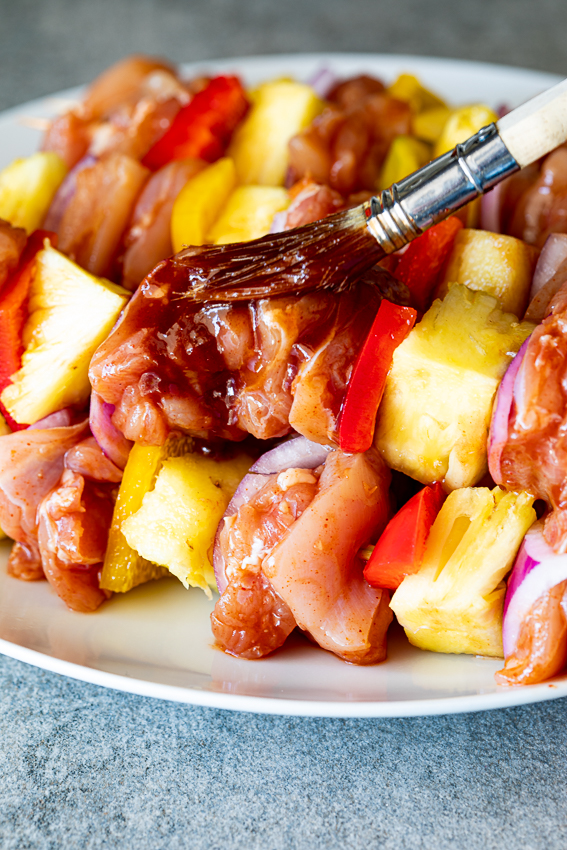
3. Salt
Salt, soy sauce, fish sauce, miso paste or Worcestershire sauce. Salt is the most important ingredient in any marinade. It enhances every other flavor (including the natural flavor of the meat itself) and it brines the meat so it retains moisture during cooking.
Without enough salt, a marinade tastes flat regardless of how many aromatics you’ve added.
The choice of salt source determines the flavor profile. Soy sauce adds umami depth for Asian marinades. Fish sauce adds a funky, savory backbone for Thai and Vietnamese flavors. Miso adds a rich, fermented complexity for Japanese-inspired marinades. Plain salt keeps things neutral when you want the other flavors to lead.
4. Flavor
Garlic, ginger, onion, fresh herbs, dried spices, honey, brown sugar, maple syrup, mustard, chili, citrus zest. This is the component that gives each marinade its identity and determines the cuisine.
This is where you decide whether your marinade is Mediterranean (oregano, garlic, lemon zest), Asian (ginger, garlic, chili), Mexican (cumin, chili, lime zest, cilantro), Indian (garam masala, turmeric, ginger, garlic), etc.
Sweetness is underrated in marinades. A touch of honey, brown sugar or maple syrup balances the acid, caramelizes on the surface during cooking and creates a beautiful glaze. You don’t need much. A tablespoon per batch adds dimension without making the marinade sweet.
The Ratio
My preferred ratio is:
3 parts fat : 1 to 2 parts acid : a generous pinch of salt (or a splash of soy sauce) : as much flavor as you want.
I tend to go heavier on the acid because I like the brightness it adds.
Marinades are forgiving so play around with the ratios until you find what you love. A bit more oil or a bit less lemon doesn’t ruin anything. The ratio is a starting point, not a rule. Once you’ve made a few marinades using this framework, you’ll stop measuring and start eyeballing because you’ll understand what the balance should feel and taste like.
5 Easy Marinade Recipes
Each of these uses the same four-component structure. Same formula, five completely different results.
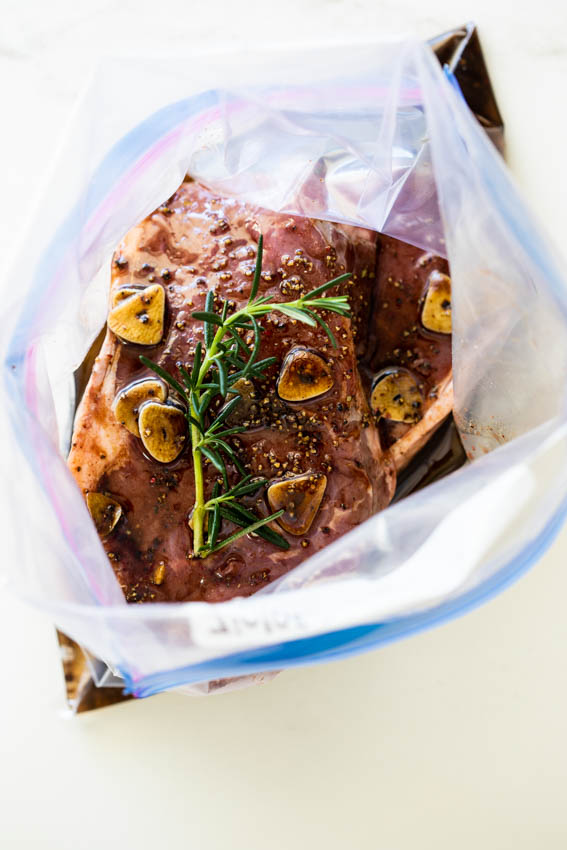
Balsamic Steak Marinade
Fat: Olive oil
Acid: Balsamic vinegar
Salt: Salt and pepper
Flavor: Garlic, rosemary, brown sugar
My go-to steak marinade because the balsamic caramelizes beautifully on a hot grill or pan and delivers the most delicious crust every time. The brown sugar amplifies the caramelization and the rosemary adds a woody, aromatic depth.

Garlic Herb
Fat: Olive oil
Acid: Lemon juice
Salt: Salt
Flavor: Garlic, mustard, fresh rosemary, thyme, parsley, black pepper
This works on absolutely any protein and is packed with all the good stuff. It’s great on steak and chicken but fantastic on lamb chops. The fresh herbs infuse the oil and create a fragrant coating that chars and crisps on the grill.
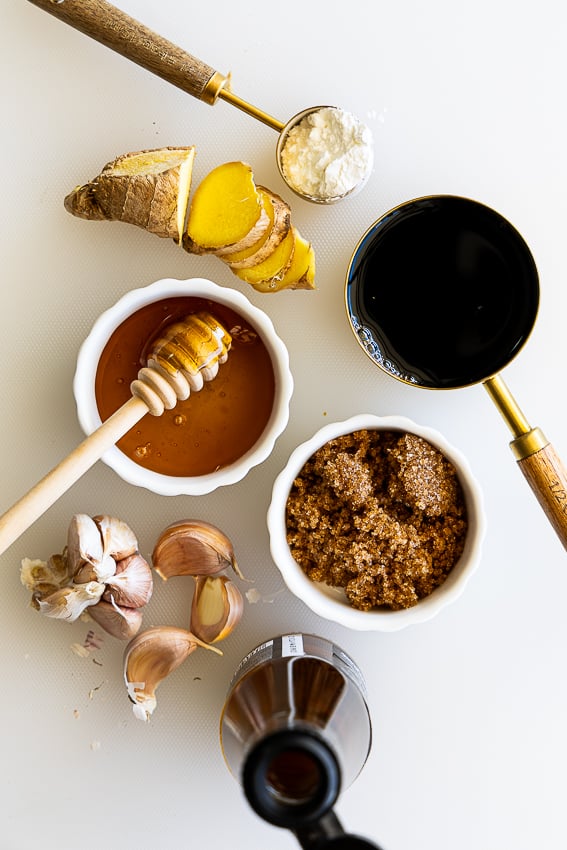
Teriyaki
Fat: Sesame oil
Acid: Rice vinegar
Salt: Soy sauce
Flavor: Garlic, ginger, honey, chili flakes
Works well on chicken, salmon and pork. The soy sauce and honey create a sticky, glossy glaze during cooking. The ginger and garlic add warmth and the sesame oil ties it all into an unmistakably Asian flavor profile.
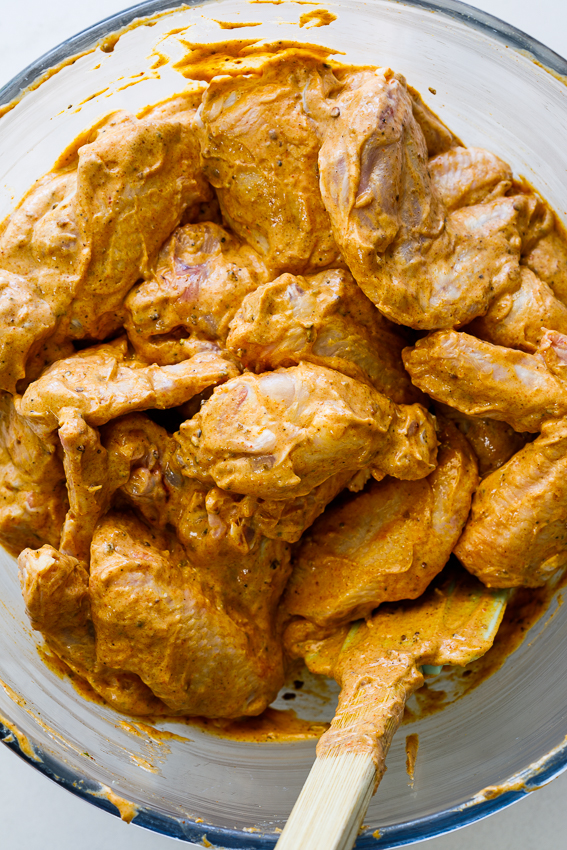
Tandoori (Yogurt-Based)
Fat and Acid: Greek yogurt (serves as both)
Salt: Salt
Flavor: Garlic, ginger, garam masala, turmeric, chili, lemon juice
So good on any form of chicken and delivers truly delicious, juicy meat. The yogurt tenderizes gently over a long marination (overnight is ideal) while protecting the surface from becoming mushy. The garam masala and turmeric stain the chicken a deep golden color that looks stunning when charred on a grill.
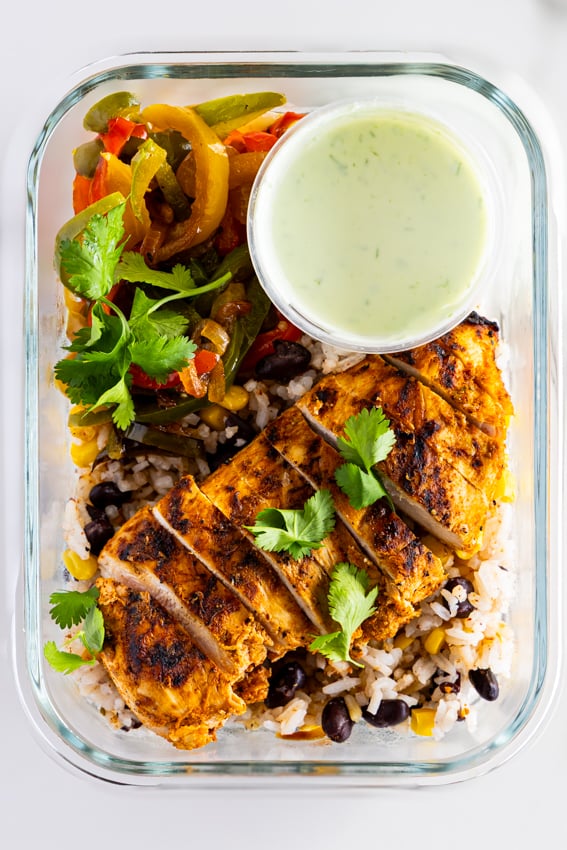
Fajita
Fat: Olive oil
Acid: Lime juice
Salt: Salt
Flavor: Cumin, chili powder, smoked paprika, garlic, oregano
What I use when I need chicken or steak that packs a flavor punch. The smoked paprika and cumin give it a warm, smoky depth and the lime juice adds the brightness that makes Mexican-inspired food so addictive. Best on sliced chicken or steak for fajitas, tacos and bowls.
Build Your Own
Once you know the formula (fat + acid + salt + flavor), you can build a marinade from whatever’s in your kitchen. Here are a few combinations to try:
- Korean: Sesame oil + rice vinegar + soy sauce + garlic, ginger, gochujang, brown sugar
- Chimichurri-style: Olive oil + red wine vinegar + salt + garlic, parsley, oregano, chili flakes
- Jerk: Olive oil + lime juice + soy sauce + allspice, thyme, scotch bonnet, garlic, ginger, brown sugar
- Honey mustard: Olive oil + apple cider vinegar + salt + whole grain mustard, honey, garlic, thyme
- Peri peri: Olive oil + lemon juice + salt + peri peri sauce, garlic, smoked paprika