
Creamy Lemon Butter Sauce Recipe
This lemon butter sauce is bright, rich and incredibly versatile. Made with butter, fresh lemon juice and a hint of garlic, it comes together easily and elevates everything from chicken and fish to pasta and vegetables. The lemon provides brightness, the butter adds richness and the garlic gives it depth without overpowering the other flavors.
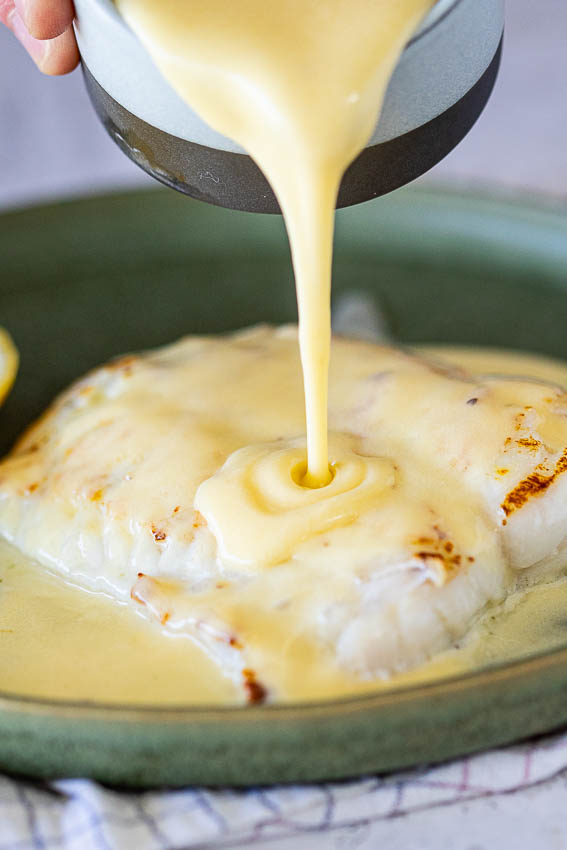
This recipe is slightly different to other lemon butter recipes as this is more of a sauce and not just melted butter with lemon juice added. This recipe is very loosely based on a French Beurre Blanc sauce (an emulsified butter sauce) and delivers the creamiest, perfectly tangy sauce. It might take slightly longer than an easy lemon butter sauce recipe but the end result is so worth it.
Lemon Butter Sauce vs. Beurre Blanc
Traditional beurre blanc is notoriously finicky – it’s made by emulsifying butter into a reduction of white wine, shallots and vinegar with no cream, which means it can easily break or separate if the temperature isn’t perfectly controlled. This version adds a splash of cream which stabilizes the sauce. The cream prevents the sauce from breaking and gives you a much wider margin for error, so you get that same luxurious, restaurant-quality result without the stress. If you want the technique and elegance of beurre blanc without the anxiety, this is your sauce.
Ingredients needed
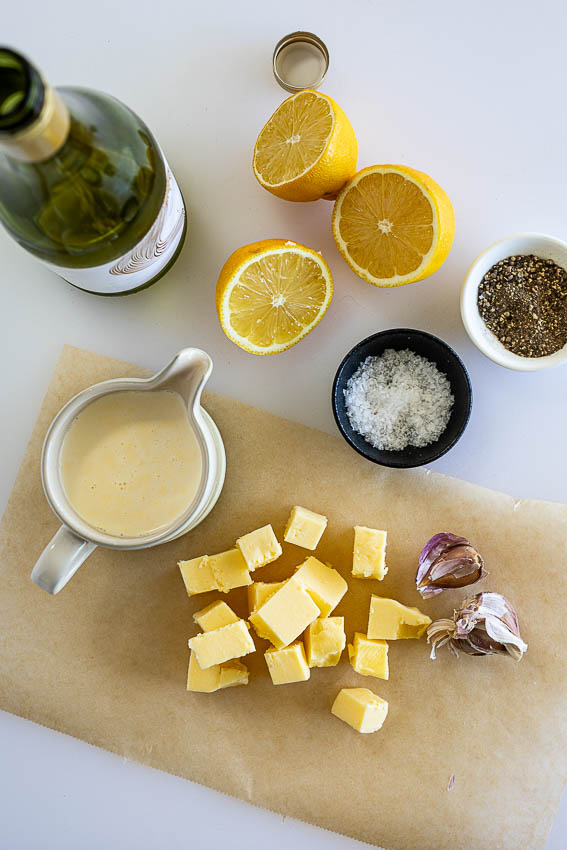
- White wine. The wine adds some complexity to the finished sauce and you’ll be reducing it which will burn off any alcohol but if you’d prefer to substitute, use good chicken broth/stock. I used sauvignon blanc but chardonnay, Chenin blanc or Pinot Grigio will all work.
- Fresh garlic clove. Just one or two cloves add subtle depth and savory notes without overwhelming the delicate lemon flavor.
- Heavy cream. Use heavy whipping cream with a high fat content for this sauce.
- Fresh lemon juice.
- Butter. I used salted butter but unsalted butter is fine too.
- Salt and pepper. Feel free to use black pepper but I like using white pepper as it’s a little milder in the sauce.
- Optional: While this sauce is delicious on its own, fresh parsley is a classic addition. Add 2 tablespoons of chopped fresh parsley at the end for what’s often called lemon butter parsley sauce. You can also use fresh dill (especially good with fish), chives or tarragon. In French cuisine, this type of sauce is a variation of beurre meunière or beurre blanc.
How to Make Lemon Butter Sauce
Infuse the wine. Start by reducing the wine and garlic clove in a small saucepan set over medium heat. The liquid should reduce by half.
Add cream and simmer. Pour in the cream and bring to a simmer and let it reduce again, about 3-4 minutes, then stir in the lemon juice. Simmer for 1-2 minutes, whisking regularly.
Add the butter. Remove the pan from heat and whisk in the remaining cold butter, one tablespoon at a time, until the sauce is smooth and glossy. The butter will emulsify into the sauce, creating a rich, velvety texture.
Season. Season with salt and pepper to taste and stir in fresh herbs (if using). Serve immediately while warm.
How to Thicken Lemon Butter Sauce
The key to a thick, glossy lemon butter sauce is proper reduction and emulsification – no flour or cornstarch needed.
If your sauce is too thin:
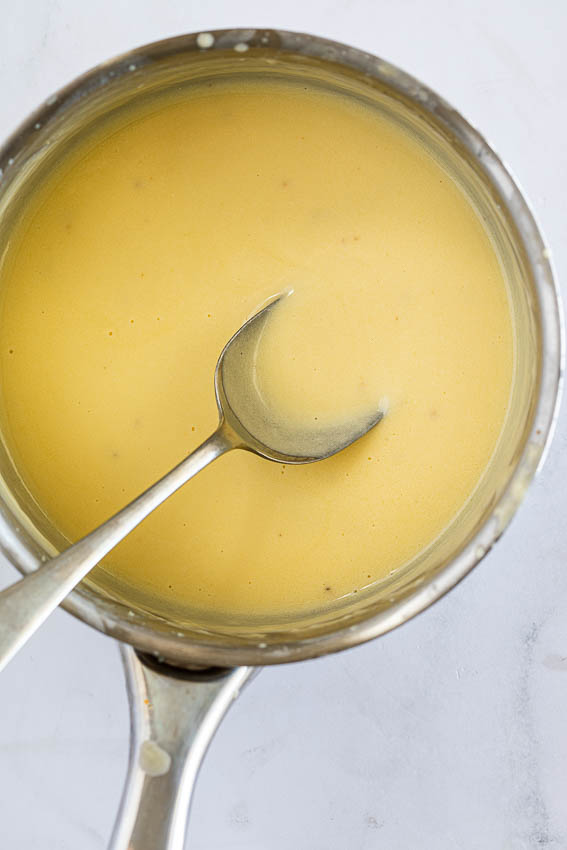
- Keep simmering. Let the lemon juice and cream reduce for another 1-2 minutes. The sauce should coat the back of a spoon when it’s ready. For a visual queue, take a look at the video in the recipe card. Your finger should leave a line when dragged through the sauce on the back of a spoon.
- Add more butter. Off the heat, whisk in an extra tablespoon or two of cold butter. This thickens the sauce through emulsification and adds richness.
- Swirl, don’t whisk aggressively. Once you’ve added the butter, gently swirl the pan or whisk lightly. Over-whisking can break the emulsion.
What NOT to do: Don’t add flour or cornstarch. This is a butter-emulsified sauce, not a roux-based sauce. Adding thickeners will give it a gluey texture and dull the bright lemon flavor. The thickness comes from reduction and butter emulsification, which creates that signature glossy, restaurant-quality finish.
Why is my sauce thin? Usually it’s because the liquid wasn’t reduced enough before adding the butter, or the butter was added over heat (which can prevent proper emulsification). If it’s already made and too thin, return it to low heat and whisk in another tablespoon of cold butter off the heat.
Can I make this ahead?
I wouldn’t recommend making this lemon butter sauce ahead of time. It won’t reheat well and will likely split as the butter will melt and cause it to break. You could reduce the wine in advance to save some time if you are planning on serving this sauce to guests.
Lemon Butter Sauce for Fish (Especially Salmon)
This lemon butter sauce is absolutely perfect for fish and salmon in particular. The rich, buttery sauce with bright lemon cuts through the natural fattiness of salmon beautifully, while the garlic complement rather than overpower the delicate flavor. Whether you’re pan-searing, baking or grilling, this sauce elevates any fish dish.
Best Fish for Lemon Butter Sauce
- Salmon (the ultimate pairing): The richness of salmon pairs perfectly with the bright acidity of this sauce. Use it with Atlantic salmon, sockeye, coho or king salmon. Scottish salmon and Norwegian salmon are excellent if you’re in Europe. Both skin-on and skinless fillets work beautifully.
- Other fatty fish: Trout, arctic char and mackerel all benefit from the acidity of lemon butter sauce.
- White fish: Cod, halibut, sea bass, hake, snapper and mahi-mahi are excellent choices. The sauce adds richness to these leaner fish.
- Delicate fish: Sole, flounder and tilapia work well, though use a lighter hand with the sauce so it doesn’t overpower the mild flavor.
How to Serve Lemon Butter Sauce with Salmon
How much sauce: Use 2-3 tablespoons per salmon fillet (6 oz/170g). Enough to coat the fish without drowning it.
Application: Pour the warm sauce directly over pan-seared or baked salmon just before serving. For grilled salmon, serve on the side to keep the charred exterior crisp, or do half and half – a light drizzle on top with extra on the side.
Timing: Make this sauce while your salmon cooks or immediately after. It only takes 5 minutes and is best served warm.
Salmon-Specific Variations
- Add capers: Stir in 1-2 tablespoons of drained capers for a classic lemon-caper butter sauce. The briny flavor is perfect with salmon.
- Use fresh dill: Dill and salmon are a classic pairing. Infuse it into the sauce with the garlic or sprinkle over right before serving.
Serving suggestions
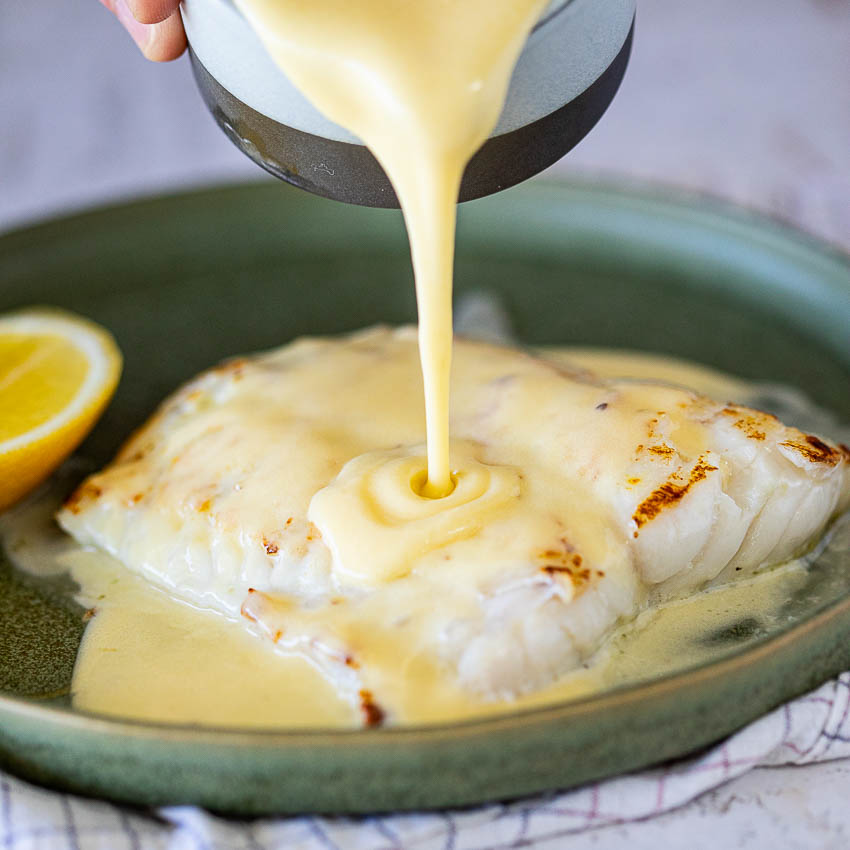
This lemon sauce is fantastic over seared fish (cod, halibut, tilapia, etc) , salmon, seafood/shellfish (shrimp or prawns, lobster, calamari) or chicken and it’s delicious served with vegetables, rice or pasta. It’s also similar to hollandaise sauce so can easily be served over poached eggs.
Lemon Butter Sauce for Pasta
This lemon butter sauce is perfect tossed with pasta for a simple, elegant dish. Use about ¼ cup (4 tablespoons) of sauce per serving of pasta, or roughly 1 cup of sauce for a pound of cooked pasta.
Best pasta shapes: Linguine, fettuccine and angel hair work beautifully – the long strands catch the sauce perfectly. Spaghetti, bucatini and pappardelle are also excellent choices.
How to serve: Toss the hot, drained pasta directly with the warm sauce in the pan, adding a splash of pasta water if needed to help the sauce coat evenly. For a restaurant-style presentation, you can also plate the pasta and drizzle the sauce over the top. Add grilled chicken, shrimp or sautéed vegetables to make it a complete meal.
Pro tip: Reserve ½ cup of starchy pasta water before draining. If the sauce seems too thick or isn’t coating the pasta well, add a tablespoon or two of pasta water and toss – it helps the sauce cling to every strand.
Video
Ingredients
- 1 cup white wine
- 1 garlic clove smashed
- 1 cup cream
- 2 tbsp fresh lemon juice
- 4 tbsp cold butter
- salt and pepper to taste
Instructions
- Pour the white wine into a saucepan and add a smashed garlic clove.
- Set the pan over medium heat then bring to a simmer and allow the liquid to reduce by half, approximately 10 minutes.
- Whisk in the cream and allow to simmer, whisking regularly, until the cream has reduced and coats the back of a spoon easily.
- Stir in the lemon juice and cook, whisking regularly, for another 1-2 minutes.
- Take the pan off the heat then whisk in the cold butter, one cube at a time, until the butter is emulsified into the sauce.
- By adding the butter off of the heat, the butter won't melt quickly and cause the sauce to split.
- Taste and season with salt and pepper then serve.
Notes
- I prefer using a small saucepan to give me more control over the speed the liquid will reduce but you could use a skillet or frying pan, just make sure you control the heat and whisk continuously.
- You could mince the garlic clove if you want stronger flavor but smashing it will just infuse the wine slightly without being overpowering.
Nutrition
FAQ
Yes! Use chicken or vegetable broth/stock instead of wine.
The trick to a luscious butter sauce is to allow the cream and lemon juice to reduce before whisking in the cold butter. The butter will also help to to thicken the sauce but it’s important for the cream to have reduced before whisking in the butter.
Freshly squeezed lemon juice adds acidity/tang to a sauce and brightens all the other flavors. Often when food tastes bland, all it needs is a squeeze of lemon juice.
If you whisk the butter into the sauce while it’s still on the heat, the butter will melt too quickly and will cause the sauce to break.
Because there is a lot of fat in the cream, the lemon juice won’t curdle the sauce. You’re also not leaving the lemon juice in the cream for a long period of time so it shouldn’t curdle at all.
Lemon butter sauce features bright, tangy lemon as the star flavor with just a hint of garlic for depth. Garlic butter sauce is the opposite – bold, savory garlic is the main flavor. If you want a sauce where garlic is front and center, try my Garlic Butter Sauce instead. This creamy lemon butter sauce is perfect when you want brightness and acidity with subtle garlic notes in the background.
Salmon, hake, tilapia, sea bass, cod and halibut are all great options.
So easy & sooo good!
Do you have a video of this? I searched your many youtube videos but did not find one.
The video is in the recipe card 🙂
Loved this recipe! Used it on Yellow Fin Tuna and it was perfect. Thanks!
This sauce was perfect just as it is. I used it over Mahi-Mahi. It paired very nicely and really dressed up the dish! I did not have any trouble with the sauce breaking or being too runny. This will be a favorite go-to whenever I make fish 🙂 Yum!
This was just what I was looking for to elevate pasta. My 91 year old Mom raved about it! My question is how do you re-warm it without breaking it? Once I take it off the heat to whisk in the butter, it lowers the temperature of the cream.
The sauce ended up breaking😔
Oh no! 🙁 Did it break with adding the cream or when you whisked in the butter?
What type of white wine do I need to use.
I used a Sauvignon Blanc but Chardonnay, Pinot Grigio, Chenin Blanc etc. will all work.
We loved this recipe. I did modify it a bit. I used whole milk instead of cream and added cooked shrimp. I also used 2 TB gluten free flour (I have Celiac) to thicken the sauce and added the juice of a lime and lime zest. I did add the lemon juice that it called for but didn’t think it was quite enough,. I added about a tablespoon of capers that I had on hand and made peas and carrots and added them and the shrimp to the sauce and poured it over rice. Fantastic and far less calories!
So basically…nothing like the recipe!
Can this sauce be made ahead of time?
I wouldn’t suggest it – the butter can split. You can make the reduction ahead then just whisk in the butter right before serving.
This was extra yummy. I served on top of grilled salmon with grilled jumbo shrimp. Both the shrimp and salmon were covered with jalapeño peppers, lemon juice and zest.
Because I’m that girl I added lemon zest to the sauce.
Can you say yummy!
fantastic. added a little more lemon juice and used fish stock instead of wine pan fried some gurnard and made some veges. delicious on both!! many thanks
Wow this was awesome. So easy to make and was delish. Recommend to use with shrimp.
This must be where the saying “Awesome Sauce” originated!
I do love lemon, but I had never before had a creamy lemon sauce for fish or pasta. This stuff is dangerously delicious! Took me to heaven and I am thankful! (I did modify this by adding lemon zest, because I need all the lemony goodness!)
I absolutely loved the flavor! Unfortunately mine turned out really soupy like. I think the recipe needs an update with viscosity type where it says “coats the back of spoon”. The heavy cream its self leaves a coating on the spoon.
I am going to try it again later and see about reducing it a bit more than 1/2 both at wine stage and at cream stage. Being my 1st time I was so worried about scoring the sauce.
I put this over a mix of spinach, baby shrimp and lemon ricotta cheese stuffed ravioli. Again the flavors were awesome!
Thank you!
Thanks for your comment! Yes, the wine mixture needs to be reduced down quite a bit and even once the cream is added, simmering for a few minutes will give the sauce a lovely viscosity. It is though important to note this isn’t a thick sauce, very pourable. But you don’t want it to be soupy. The coating on the spoon needs to be more substantial than whipping cream – as is showed in the video.